
Title
Inventing the Cotton Gin: Machine and Myth in Antebellum America (Johns Hopkins Studies in the History of Technology),Used
Sold by Ergodebooks, an authorized reseller.
Returns accepted within 30 days | support@ergodebooks.com
Shipping Information
- Free Standard Shipping — United States only
- Processing Time: 3–5 business days
- Estimated Delivery: 6–10 business days after dispatch
- Double-boxed, fully insured & discreetly packaged
- Tracking number sent via email once dispatched
Returns & Refund
Returns accepted within 30 days of delivery.
Damaged or Defective Item
Free return shipping + replacement or full refund
Wrong Item Received
Free return shipping + replacement or full refund
Change of Mind
Return shipping at customer's expense · 25% restocking fee applies
Payment Option

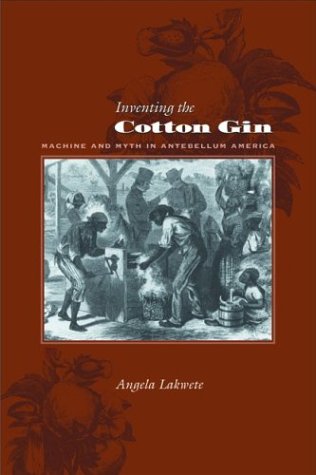
Winner of the 2004 Edelstein Prize given by the Society for the History of Technology'The cotton gin animates the American imagination in unique ways. It evokes no images of antique machinery or fluffy fiber but rather scenes of victimized slaves and battlefield dead. It provokes the suspicion that had Eli Whitney never invented the gin, United States history would have been somehow different. Yet cotton gins existed for centuries before Whitney invented his gin in 1794. Nineteenthcentury scholars overlooked them as well as gins made by southernand northernmechanics, in order to create a history meant to chasten some southerners and demean others. Using the gin as evidence, they read failure back from the Civil War into the choices that southerners made from the American Revolution, tracing the steps that led them to Appomattox.'In Inventing the Cotton Gin, Lakwete explores the history of the cotton gin as an aspect of global history and an artifact of southern industrial development. She examines gin invention and innovation in Asia and Africa from the earliest evidence to the seventeenth century, when British colonizers introduced an Asian handcranked roller gin to the Americas. Lakwete shows how indentured British, and later enslaved Africans, built and used footpowered models to process the cotton they grew for export. After Eli Whitney patented his wiretoothed gin, southern mechanics transformed it into the saw gin, offering stiff competition to northern manufacturers. Far from being a record of southern failure, Lakwete concludes, the cotton gincorrectly understoodsupplies evidence that the slave laborbased antebellum South innovated, industrialized, and modernized.
⚠️ WARNING (California Proposition 65):
This product may contain chemicals known to the State of California to cause cancer, birth defects, or other reproductive harm.
For more information, please visit www.P65Warnings.ca.gov.