
Title
Inventing the Spectator: Subjectivity and the Theatrical Experience in Early Modern France,Used
Sold by Ergodebooks, an authorized reseller.
Returns accepted within 30 days | support@ergodebooks.com
Shipping Information
- Free Standard Shipping — United States only
- Processing Time: 3–5 business days
- Estimated Delivery: 6–10 business days after dispatch
- Double-boxed, fully insured & discreetly packaged
- Tracking number sent via email once dispatched
Returns & Refund
Returns accepted within 30 days of delivery.
Damaged or Defective Item
Free return shipping + replacement or full refund
Wrong Item Received
Free return shipping + replacement or full refund
Change of Mind
Return shipping at customer's expense · 25% restocking fee applies
Payment Option

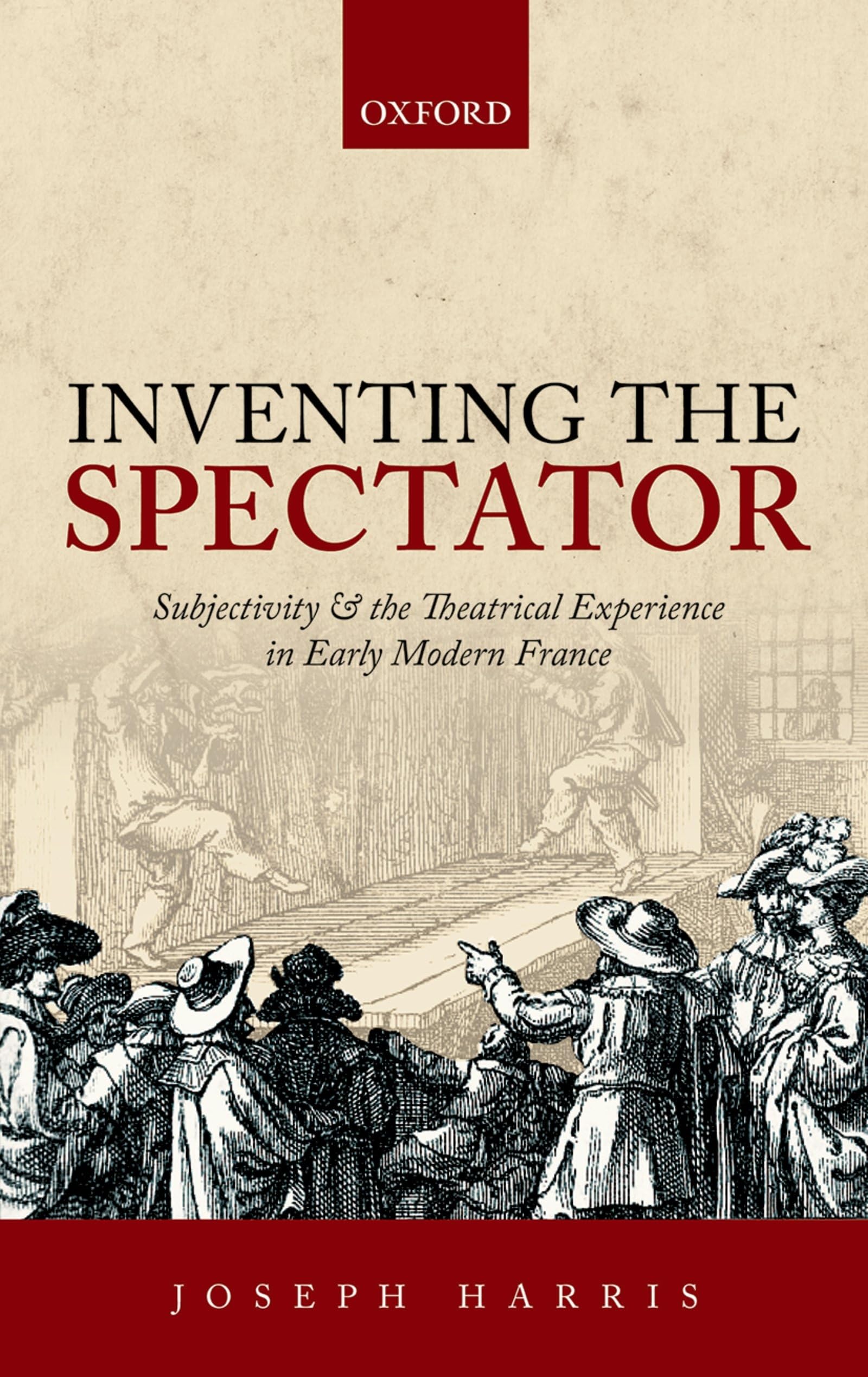
During the seventeenth and eighteenth centuries, France became famous notorious even across Europe for its ambitious attempts to codify and theorise a system of universally valid dramatic 'rules'. So fundamental and formative was this 'classical' conception of drama that it still underpins our modern conception of theatre today. Yet rather than rehearsing familiar arguments about plays, Inventing the Spectator reads early modern France's dramatic theory against the grain, tracing instead the profile and characteristics of the spectator that these arguments imply: the living, breathing individual in whose mind, senses, and experience the theatre comes to life. In so doing, Joseph Harris raises numerous questions of imagination and illusion, reason and emotion, vision and aurality, to name but a few that strike at the very heart of human psychology, cognition, and experience. Bridging the gap between literary and theatre studies, history of psychology, and intellectual history, Inventing the Spectator thus reconstructs the theatre spectator's experience as it was understood and theorised within French dramatic theory between the Renaissance and the Revolution. It explores early modern spectatorship through three main themes (illusion and the senses; pleasure and narrative; interest and identification) and five key dramatic theoreticians (d'Aubignac, Corneille, Dubos, Rousseau, and Diderot). As it demonstrates, the period's dramatic rules are at heart rules of psychology, cognition, and affect that emerged out of a complex dialogue with human subjectivity in all its richness.
⚠️ WARNING (California Proposition 65):
This product may contain chemicals known to the State of California to cause cancer, birth defects, or other reproductive harm.
For more information, please visit www.P65Warnings.ca.gov.