
Title
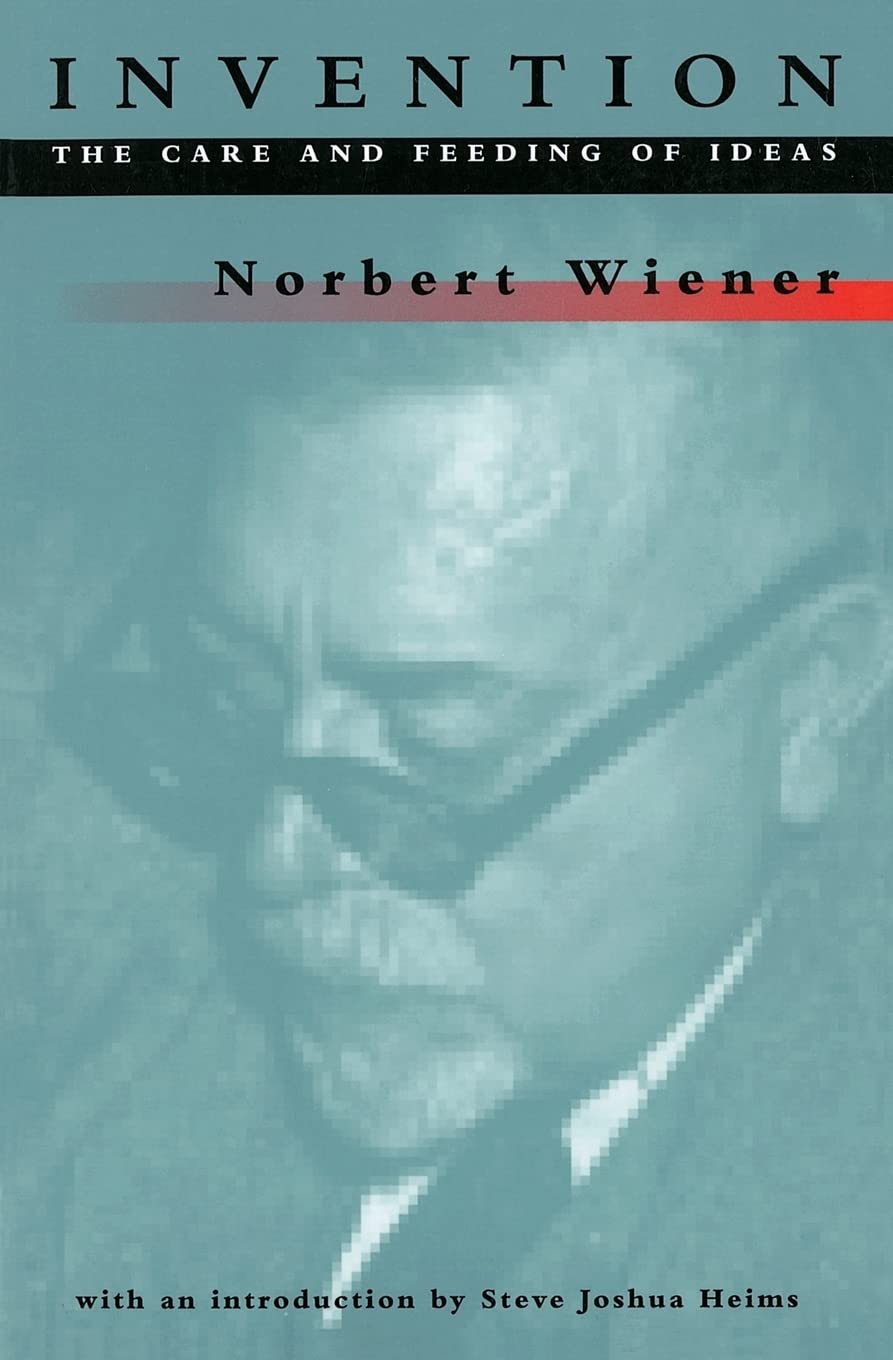
Invention: The Care and Feeding of Ideas,Used
Sold by Ergodebooks, an authorized reseller.
Returns accepted within 30 days | support@ergodebooks.com
Shipping Information
- Free Standard Shipping — United States only
- Processing Time: 3–5 business days
- Estimated Delivery: 6–10 business days after dispatch
- Double-boxed, fully insured & discreetly packaged
- Tracking number sent via email once dispatched
Returns & Refund
Returns accepted within 30 days of delivery.
Damaged or Defective Item
Free return shipping + replacement or full refund
Wrong Item Received
Free return shipping + replacement or full refund
Change of Mind
Return shipping at customer's expense · 25% restocking fee applies
Payment Option

Internationally honored for brilliant achievements throughout his career, author of Cybernetics, ExProdigy, and the essay God and Golem, Inc., which won the National Book Award in 1964, Norbert Wiener was no ordinary mathematician. With the ability to understand how things worked or might work at a very deep level, he linked his own mathematics to engineering and provided basic ideas for the design of all sorts of inventions, from radar to communications networks to computers to artificial limbs. Wiener had an abiding concern about the ethics guiding applications of theories he and other scientists developed. Years after he died, the manuscript for this book was discovered among his papers. The world of science has changed greatly since Wiener's day, and much of the change has been in the direction he warned against. Now published for the first time, this book can be read as a salutary corrective from the past and a chance to rethink the components of an environment that encourages inventiveness.Wiener provides an engagingly written insider's understanding of the history of discovery and invention, emphasizing the historical circumstances that foster innovations and allow their application. His message is that truly original ideas cannot be produced on an assembly line, and that their consequences are often felt only at distant times and places. The intellectual and technological environment has to be right before the idea can blossom. The best course for society is to encourage the best minds to pursue the most interesting topics, and to reward them for the insights they produce. Wiener's comments on the problem of secrecy and the importance of the freelance scientist are particularly pertinent today.Steve Heims provides a brief history of Wiener's literary output and reviews his contributions to the field of invention and discovery. In addition, Heims suggests significant ways in which Wiener's ideas still apply to dilemmas facing the scientific and engineering communities of the 1990s.
⚠️ WARNING (California Proposition 65):
This product may contain chemicals known to the State of California to cause cancer, birth defects, or other reproductive harm.
For more information, please visit www.P65Warnings.ca.gov.