If you have any questions, you are always welcome to contact us. We'll get back to you as soon as possible, withing 24 hours on weekdays.
Customer service
All questions about your order, return and delivery must be sent to our customer service team by e-mail at yourstore@yourdomain.com
Sale & Press
If you are interested in selling our products, need more information about our brand or wish to make a collaboration, please contact us at press@yourdomain.com
Help
If you have any questions, you are always welcome to contact us. We'll get back to you as soon as possible, withing 24 hours on weekdays.
Customer service
All questions about your order, return and delivery must be sent to our customer service team by e-mail at yourstore@yourdomain.com
Sale & Press
If you are interested in selling our products, need more information about our brand or wish to make a collaboration, please contact us at press@yourdomain.com
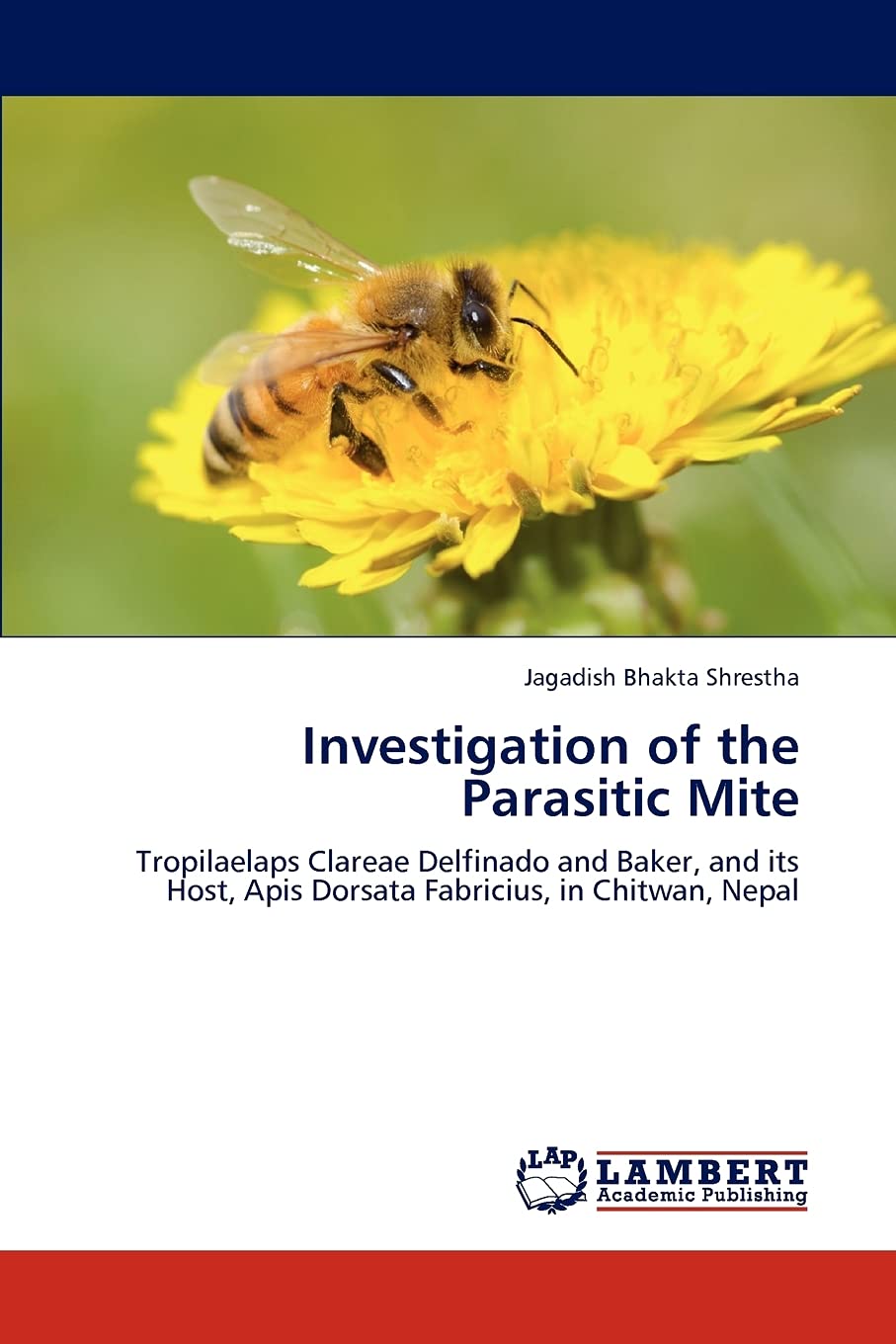
As it has been established that Tropilaelapidae (the family of T. clareae) tends to be associated with A. dorsata complex showing an old phylogenetic relationship of natural host and parasite, the results of the present research corroborate the theory of such relationship with the finding that T. clareae was the only parasitic mite attacking the colonies of A. dorsata. The rate of infestation of mite was initially low but it increased steadily with time, as the colonies became older and long staying in situ. Grooming (behavior) and migration/absconding are the mechanisms by which A. dorsata are presumably reckoned to regulate or suppress the infestation level of mites up to the limit beyond which it becomes harmful and intolerable for them. Maintaining the low level of infestation of mite may apparently be relatively less expensive in A. dorsata colonies than eliminating the mite completely from the colonies, since T. clareae is found in most of the A. dorsata colonies and can reinfest the colonies easily. T. clareae of A. dorsata colonies may act as a source of infestation for the bees like A. mellifera, which entails avoiding robbing or using chemicals for control of mites.
⚠️ WARNING (California Proposition 65):
This product may contain chemicals known to the State of California to cause cancer,
birth defects, or other reproductive harm.
For MAP (Minimum Advertised Price) violations and Intellectual Property (IP) or Trademark concerns, please contact:
support@ergodebooks.com
⚠️ California Proposition 65 Warning: Some products sold on this website may expose you to chemicals known to the State of California to cause cancer, birth defects, or other reproductive harm. For more information, visit www.P65Warnings.ca.gov.