
Title
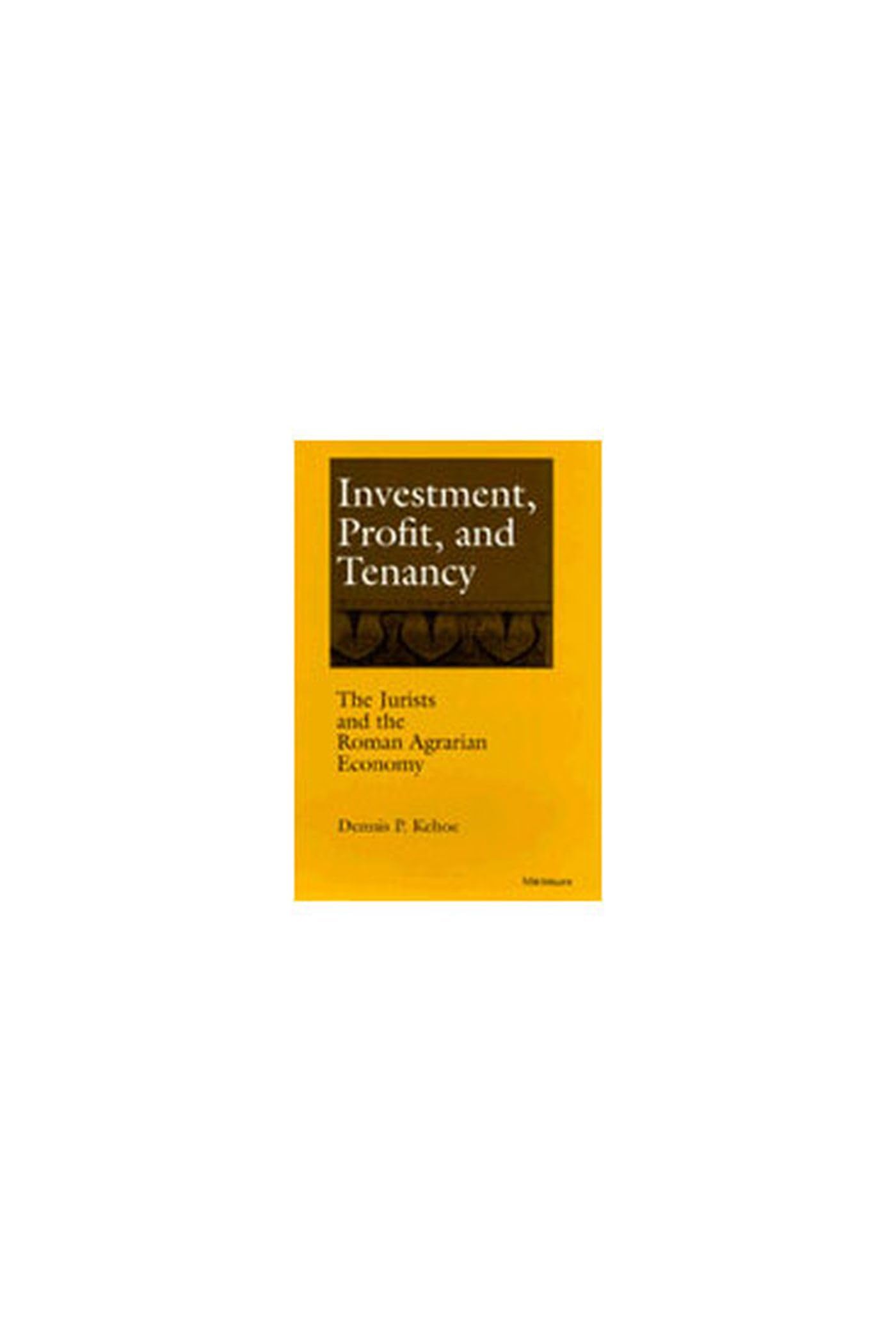
Investment, Profit, and Tenancy: The Jurists and the Roman Agrarian Economy,Used
Sold by Ergodebooks, an authorized reseller.
Returns accepted within 30 days | support@ergodebooks.com
Shipping Information
- Free Standard Shipping — United States only
- Processing Time: 3–5 business days
- Estimated Delivery: 6–10 business days after dispatch
- Double-boxed, fully insured & discreetly packaged
- Tracking number sent via email once dispatched
Returns & Refund
Returns accepted within 30 days of delivery.
Damaged or Defective Item
Free return shipping + replacement or full refund
Wrong Item Received
Free return shipping + replacement or full refund
Change of Mind
Return shipping at customer's expense · 25% restocking fee applies
Payment Option

The economy of the Roman Empire was dominated by the business of agriculture. It employed the vast majority of the Empire's labor force and provided the wealth on which the upper classes depended for their social privileges. Consequently, the way in which upperclass Romans maintained and profited from their agricultural investments played a crucial role in shaping the basic relationships characterizing the Roman economy.In Investment, Profit, and Tenancy Dennis P. Kehoe defines the economic mentality of upperclass Romans by analyzing the assumptions that Roman jurists in the Digest of Justinian made about investment and profit in agriculture as they addressed legal issues involving private property. In particular the author analyzes the duties of guardians in managing the property of their wards, and the bequeathing of agricultural property. He bases his analysis on Roman legal sources, which offer a comprehensive picture of the economic interests of upperclass Romans. Farm tenancy was crucial to these interests, and Kehoe carefully examines how Roman landowners contended with the legal, social, and economic institutions surrounding farm tenancy as they pursued security from their agricultural investments.Kehoe argues that Roman jurists offer a consistent picture of agriculture as a form of investment that was grounded in upperclass conceptions of the Roman economy. In the eyes of the jurists, agriculture represented the only form of investment capable of providing upperclass Romans with economic security, and this situation had important implications for the relationship between landowners and tenants. Landowners who sought economic stability from their agricultural holdings preferred to simplify the task of managing their estates by delegating the work and costs to their tenants. This tended to make landowners depend on the expertise and resources of tenants, which in turn gave the tenants significant bargaining power. This dynamic relationship is traced in the jurists' regulation of farm tenancy, as the jurists adapted Roman law to the economic realities of the Roman empire.Investment, Profit, and Tenancy will be of interest to classicists as well as to scholars of preindustrial comparative economics.Dennis P. Kehoe is Professor of Classical Studies, Tulane University.
⚠️ WARNING (California Proposition 65):
This product may contain chemicals known to the State of California to cause cancer, birth defects, or other reproductive harm.
For more information, please visit www.P65Warnings.ca.gov.