
Title
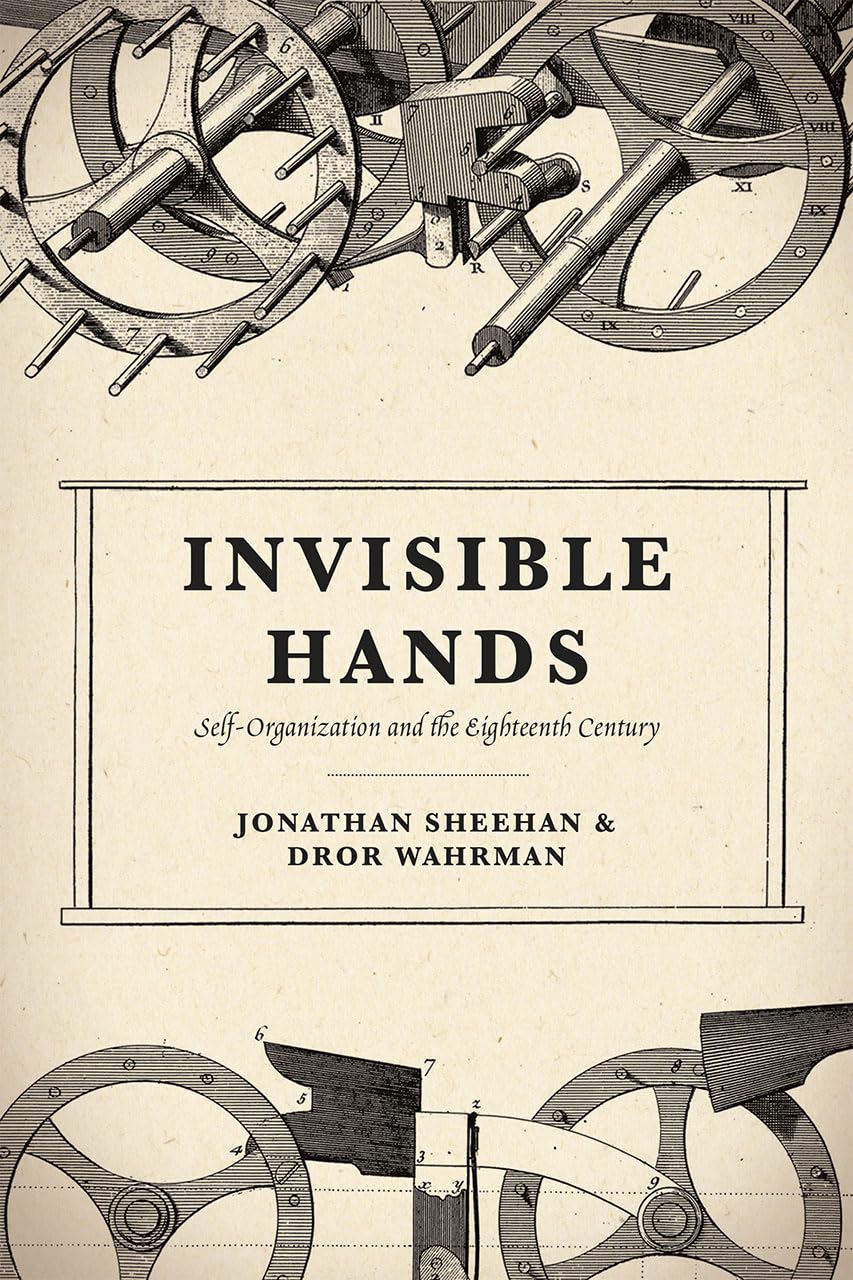
Invisible Hands: SelfOrganization and the Eighteenth Century,Used
Sold by Ergodebooks, an authorized reseller.
Returns accepted within 30 days | support@ergodebooks.com
Shipping Information
- Free Standard Shipping — United States only
- Processing Time: 3–5 business days
- Estimated Delivery: 6–10 business days after dispatch
- Double-boxed, fully insured & discreetly packaged
- Tracking number sent via email once dispatched
Returns & Refund
Returns accepted within 30 days of delivery.
Damaged or Defective Item
Free return shipping + replacement or full refund
Wrong Item Received
Free return shipping + replacement or full refund
Change of Mind
Return shipping at customer's expense · 25% restocking fee applies
Payment Option

A synthesis of eighteenthcentury intellectual and cultural developments that offers an original explanation of how Enlightenment thought grappled with the problem of divine agency.Why is the world orderly, and how does this order come to be? Human beings inhabit a multitude of apparently ordered systemsnatural, social, political, economic, cognitive, and otherswhose origins and purposes are often obscure. In the eighteenth century, older certainties about such orders, rooted in either divine providence or the mechanical operations of nature, began to fall away. In their place arose a new appreciation for the complexity of things, a new recognition of the worlds disorder and randomness, new doubts about simple relations of cause and effectbut with them also a new ability to imagine the worlds orders, whether natural or manmade, as selforganizing. If large systems are left to their own devices, eighteenthcentury Europeans increasingly came to believe, order will emerge on its own without any need for external design or direction.In Invisible Hands, Jonathan Sheehan and Dror Wahrman trace the many appearances of the language of selforganization in the eighteenthcentury West. Across an array of domains, including religion, society, philosophy, science, politics, economy, and law, they show how and why this way of thinking came into the public view, then grew in prominence and arrived at the threshold of the nineteenth century in versatile, multifarious, and often surprising forms. Offering a new synthesis of intellectual and cultural developments, Invisible Hands is a landmark contribution to the history of the Enlightenment and eighteenthcentury culture.
⚠️ WARNING (California Proposition 65):
This product may contain chemicals known to the State of California to cause cancer, birth defects, or other reproductive harm.
For more information, please visit www.P65Warnings.ca.gov.