
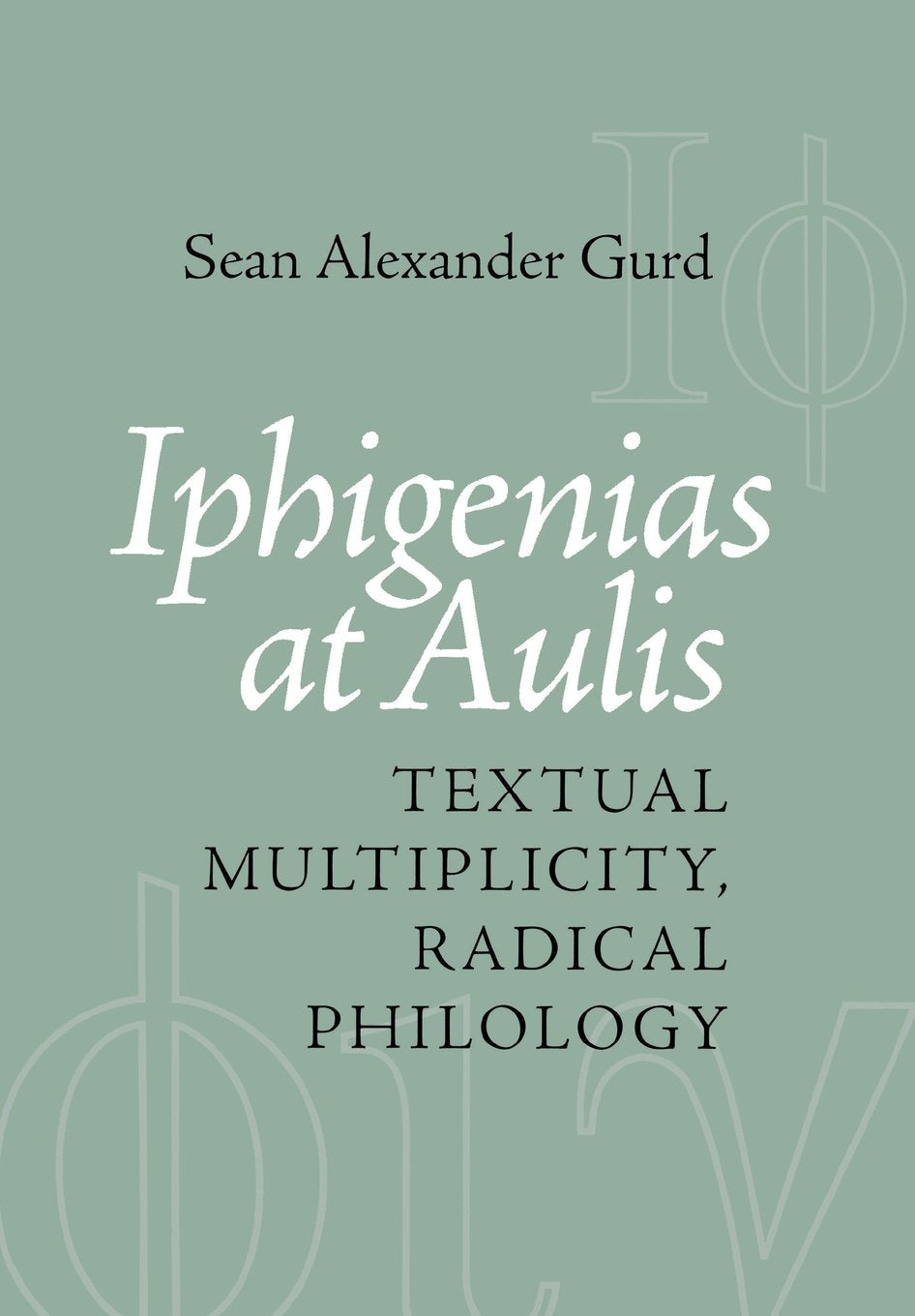
Title


Iphigenias At Aulis: Textual Multiplicity, Radical Philology
Sold by Ergodebooks, an authorized reseller.
Returns accepted within 30 days | support@ergodebooks.com
Shipping Information
- Free Standard Shipping — United States only
- Processing Time: 3–5 business days
- Estimated Delivery: 6–10 business days after dispatch
- Double-boxed, fully insured & discreetly packaged
- Tracking number sent via email once dispatched
Returns & Refund
Returns accepted within 30 days of delivery.
Damaged or Defective Item
Free return shipping + replacement or full refund
Wrong Item Received
Free return shipping + replacement or full refund
Change of Mind
Return shipping at customer's expense · 25% restocking fee applies
Payment Option

How Should A Literary Scholar Approach A Text Characterized Not By Stability But By Variation And Flux? This Book Offers A Radical New Perspective On The Limitsand The Accomplishmentsof The Modern Traditions Of Textual Criticism In Classics.Sean Alexander Gurd Takes As His Starting Point The Case Of A Single Greek Tragedy By Euripides, One Of His Last. According To Ancient Accounts, The Iphigenia At Aulis Was Produced At The City Dionysia, The Great Festival Of Athenian Tragedy, Sometime After Euripides Died (Between 407 And 405 Bce). Whether The Text Performed Then Was Entirely The Work Of Euripides, And Whether The Version That Appears In The Manuscripts Reflects Either That Performance Or Its Defunct Author'S Design, Are Unknown. But Since The Mideighteenthcentury The Mysteries And Conflicting Evidence Concerning Iphigenia At Aulis Have Given Rise To An Array Of Different Attempts To Reconstruct The Original, And Every Generation Has Seen A Version Of The Play That Is Radically Different From Those That Came Before. Gurd Pioneers A Literary Philology Comfortable With This Textual Multiplicity, Capable Of Reading Iphigenias At Aulis In The Plural.Regarding The Dossier Of Successive Editions Of Iphigenia At Aulis As A Symbol For The Condition Of Modern Textual Reason, Gurd Shows Lovers Of Classical Literature Exactly How Contingent The Texts They Read Really Are.
⚠️ WARNING (California Proposition 65):
This product may contain chemicals known to the State of California to cause cancer, birth defects, or other reproductive harm.
For more information, please visit www.P65Warnings.ca.gov.
- Q: What is the binding type of 'Iphigenias at Aulis'? A: The binding type is hardcover. This durable format is ideal for preserving the book's integrity over time.
- Q: How many pages are in 'Iphigenias at Aulis'? A: There are two hundred pages in this book. It provides a comprehensive analysis of textual multiplicity in classical literature.
- Q: What are the dimensions of 'Iphigenias at Aulis'? A: The dimensions are six inches wide, nine inches tall, and zero point eighty-eight inches thick. These measurements make it a manageable size for reading.
- Q: Who is the author of 'Iphigenias at Aulis'? A: The author is Sean Alexander Gurd. He offers a fresh perspective on classical texts and their interpretations.
- Q: What genre does 'Iphigenias at Aulis' belong to? A: The book belongs to the Ancient & Classical genre. It delves into classical literature and textual criticism.
- Q: Is 'Iphigenias at Aulis' suitable for academic study? A: Yes, it is suitable for academic study. The book provides critical insights into the complexities of textual criticism in classics.
- Q: How should I approach reading 'Iphigenias at Aulis'? A: You should read it with an appreciation for textual variability. Gurd encourages readers to engage with the text's multiplicity.
- Q: Is 'Iphigenias at Aulis' appropriate for beginners in literary studies? A: Yes, it is appropriate for beginners. The author presents complex ideas in an accessible manner.
- Q: What themes are explored in 'Iphigenias at Aulis'? A: The book explores themes of textual multiplicity and the evolution of classical literature. Gurd challenges traditional views of textual stability.
- Q: How do I care for my copy of 'Iphigenias at Aulis'? A: To care for your copy, keep it in a cool, dry place. Avoid exposure to direct sunlight to preserve the cover and pages.
- Q: What should I do if my copy of 'Iphigenias at Aulis' arrives damaged? A: If it arrives damaged, contact the seller for a potential return or exchange. Many sellers offer customer support for such issues.
- Q: Does 'Iphigenias at Aulis' have any scholarly reviews? A: Yes, it has received scholarly reviews. Many academics appreciate Gurd's innovative approach to textual criticism.
- Q: Can 'Iphigenias at Aulis' be used in a classroom setting? A: Yes, it can be used in a classroom setting. Its insights promote discussion on textual analysis and literary interpretation.
- Q: Is 'Iphigenias at Aulis' a good gift for literature enthusiasts? A: Yes, it is a great gift for literature enthusiasts. The book offers unique perspectives that can spark thoughtful conversations.
- Q: What makes 'Iphigenias at Aulis' stand out from other classical texts? A: It stands out due to its focus on textual multiplicity. Gurd's radical philology challenges conventional notions of textual criticism.