If you have any questions, you are always welcome to contact us. We'll get back to you as soon as possible, withing 24 hours on weekdays.
Customer service
All questions about your order, return and delivery must be sent to our customer service team by e-mail at yourstore@yourdomain.com
Sale & Press
If you are interested in selling our products, need more information about our brand or wish to make a collaboration, please contact us at press@yourdomain.com
Help
If you have any questions, you are always welcome to contact us. We'll get back to you as soon as possible, withing 24 hours on weekdays.
Customer service
All questions about your order, return and delivery must be sent to our customer service team by e-mail at yourstore@yourdomain.com
Sale & Press
If you are interested in selling our products, need more information about our brand or wish to make a collaboration, please contact us at press@yourdomain.com
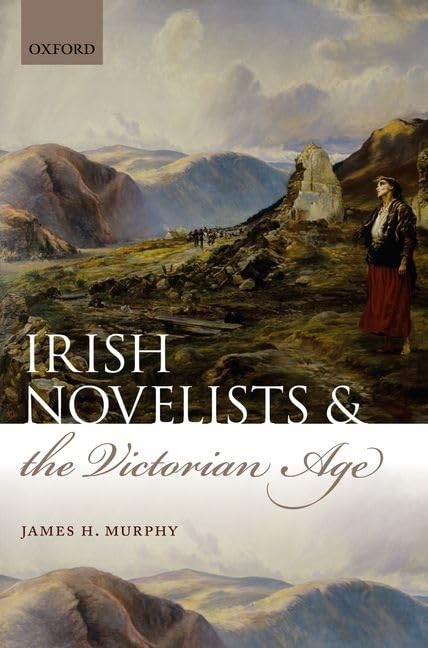
This is the first comprehensive study of the neglected Irish writers of the Victorian age, whose work was highly popular with the British reading audience and therefore disparaged and largely forgotten from the era of W.B. Yeats and the Irish Literary Revival, with its culturally nationalist agenda, onwards. It is based on a reading of around 370 novels by 150 authors, including William Carleton, the peasant novelist who wielded much influence, and Charles Lever, whose serious work was destroyed by the slur of 'rollicking', as well as Joseph Sheridan LeFanu, George Moore, Emily Lawless, Somerville and Ross, Bram Stoker, and three of the leading authors from the newwoman movement, Sarah Grand, Iota, and George Egerton. James H. Murphy examines their writing in a variety of contexts: the political, economic, and cultural developments of the time; the vicissitudes of the reading audience; the realities of a publishing industry that was for the most part Londonbased; the often difficult circumstances of the lives of the novelists; and the ever changing genre of the novel itself, to which Irish authors often made a contribution. Politics, history, religion, gender and, particularly, land, over which nineteenthcentury Ireland was deeply divided, featured as key themes for fiction. Finally, the book engages with the critical debate of recent times concerning the supposed failure of realism in the nineteenthcentury Irish novel, looking for deeper causes than have hitherto been offered and discovering occasions on which realism turned out to be possible.
⚠️ WARNING (California Proposition 65):
This product may contain chemicals known to the State of California to cause cancer,
birth defects, or other reproductive harm.
For MAP (Minimum Advertised Price) violations and Intellectual Property (IP) or Trademark concerns, please contact:
support@ergodebooks.com
⚠️ California Proposition 65 Warning: Some products sold on this website may expose you to chemicals known to the State of California to cause cancer, birth defects, or other reproductive harm. For more information, visit www.P65Warnings.ca.gov.