
Title
Iron Horse Imperialism: The Southern Pacific Of Mexico, 18801951,Used
Sold by Ergodebooks, an authorized reseller.
Returns accepted within 30 days | support@ergodebooks.com
Shipping Information
- Free Standard Shipping — United States only
- Processing Time: 3–5 business days
- Estimated Delivery: 6–10 business days after dispatch
- Double-boxed, fully insured & discreetly packaged
- Tracking number sent via email once dispatched
Returns & Refund
Returns accepted within 30 days of delivery.
Damaged or Defective Item
Free return shipping + replacement or full refund
Wrong Item Received
Free return shipping + replacement or full refund
Change of Mind
Return shipping at customer's expense · 25% restocking fee applies
Payment Option

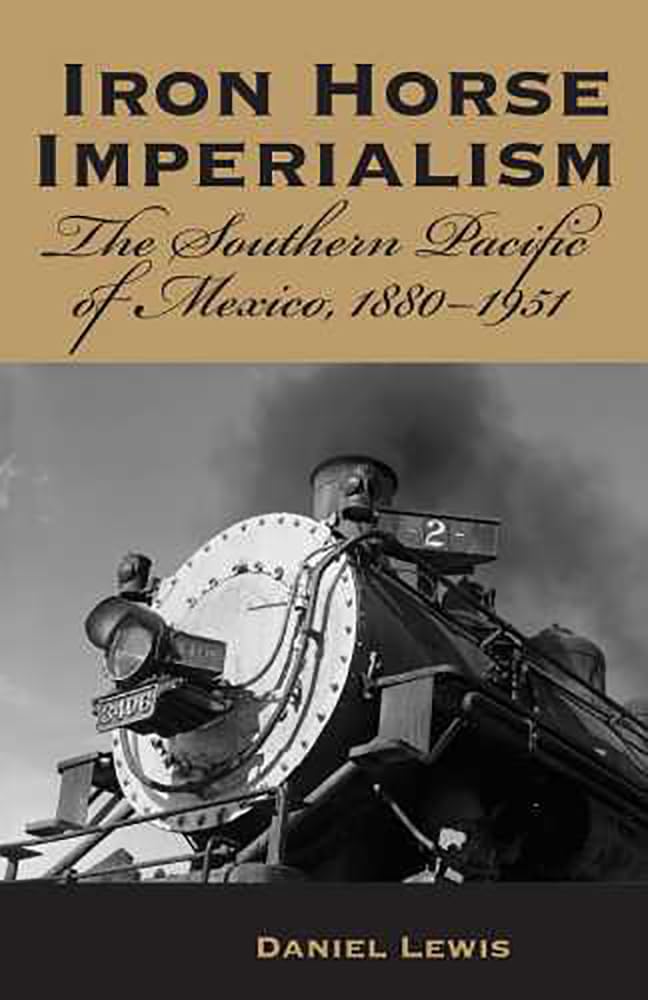
The Southern Pacific of Mexico was a U.S.owned railroad that operated between 1898 and 1951, running from the Sonoran town of Nogales, just across the border from Arizona, to the city of Guadalajara, stopping at several northwestern cities and port towns along the way. Owned by the Southern Pacific Company, which operated a highly profitable railroad system north of the border, the SP de Mex transported millions of passengers as well as millions of tons of freight over the years, both within Mexico and across its northern border. However, as Daniel Lewis discloses in this thoroughly researched investigation of the railroad, it rarely turned a profit. So why, Lewis wonders, did a savvy, moneyminded U.S. corporation continue to operate the railroad until it was nationalized by the Mexican government more than a halfcentury after it was constructed? Iron Horse Imperialism reveals that the relationship between the Mexican government and the Southern Pacific Company was a complex one, complicated by Mexicos defeat by U.S. forces in the midnineteenth century and by SPs failure to understand that it was conducting business in a country whose leaders were ambivalent about its presence. Lewis contends that SP executives, urged on by the media of the day, operated with a reflexive imperialism that kept the company committed to the railroad long after it ceased to make business sense. Incorporating information discovered in both Mexican and American archives, some of which was previously unavailable to researchers, this comprehensive book deftly describes the complicated, decadeslong dance between oblivious U.S. entrepreneurs and wary Mexican officials. It is a fascinating story.
⚠️ WARNING (California Proposition 65):
This product may contain chemicals known to the State of California to cause cancer, birth defects, or other reproductive harm.
For more information, please visit www.P65Warnings.ca.gov.