If you have any questions, you are always welcome to contact us. We'll get back to you as soon as possible, withing 24 hours on weekdays.
Customer service
All questions about your order, return and delivery must be sent to our customer service team by e-mail at yourstore@yourdomain.com
Sale & Press
If you are interested in selling our products, need more information about our brand or wish to make a collaboration, please contact us at press@yourdomain.com
Help
If you have any questions, you are always welcome to contact us. We'll get back to you as soon as possible, withing 24 hours on weekdays.
Customer service
All questions about your order, return and delivery must be sent to our customer service team by e-mail at yourstore@yourdomain.com
Sale & Press
If you are interested in selling our products, need more information about our brand or wish to make a collaboration, please contact us at press@yourdomain.com
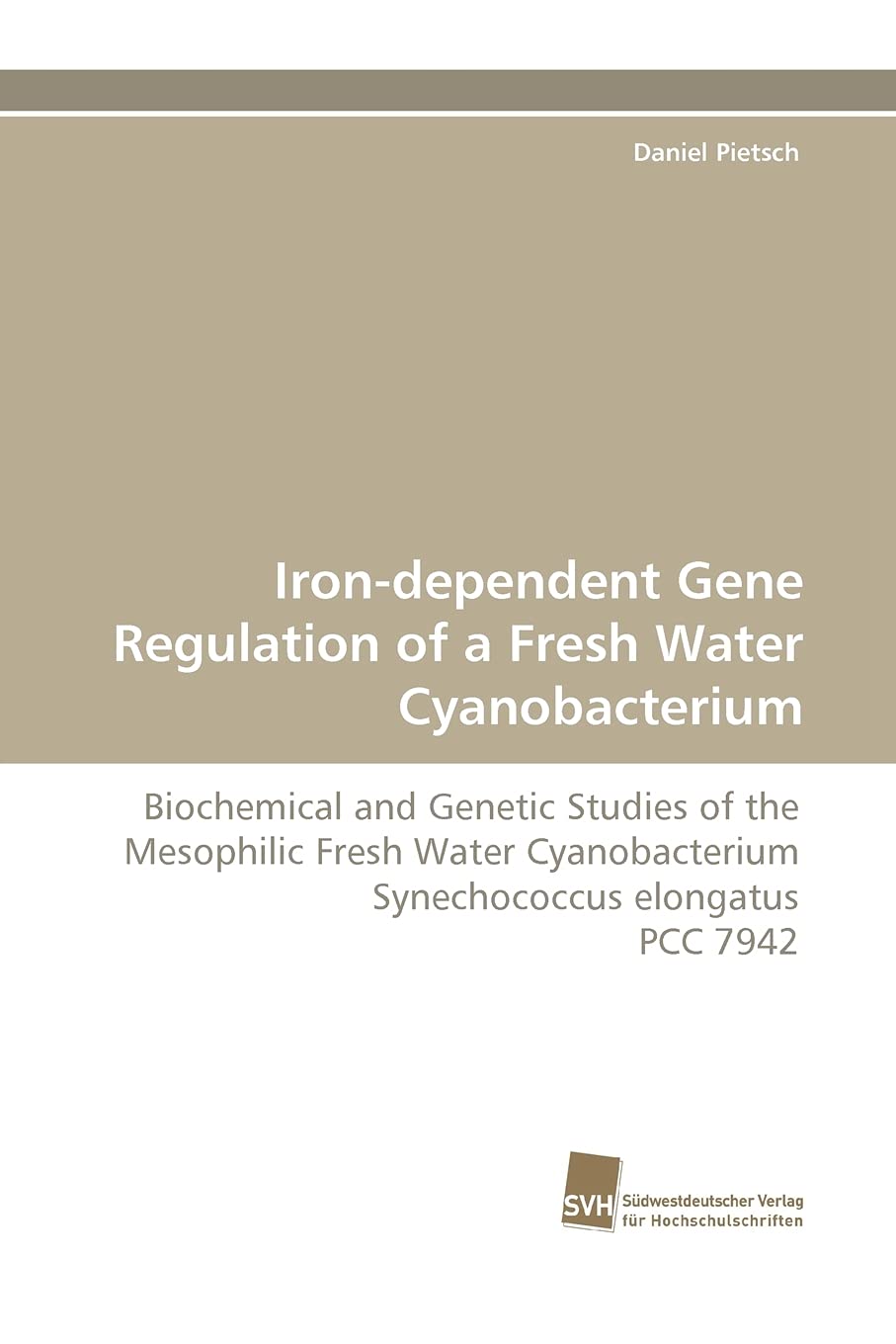
The absolute requirement for iron as a cofactor of oxygenic photosynthetic lifestyle is in sharp contrast to the severely limited bioavailability of iron. This situation is partly caused by the fact that the photosynthetic and the respiratory electron transport systems contain a high number of ironcontaining compounds. Investigations of Synechococcus elongatus PCC 7942 revealed that acclimation to iron starvation includes various physiological alterations. Iron acquisition becomes strongly improved by expression of two further novel putative iron uptake systems. In addition, permeability of the outer membrane becomes upshifted by a modified expression of outer membrane porins. Sophisticated modifications of the electron transport systems lead to a decreased photosynthetic linear and an increased photosynthetic cyclic and respiratory electron transport. The potential switch to an alternative recruitment of ATP contributes additionally to the acclimation to iron limitation. This process is complemented by the upregulation of aerobic respiration via expression of a novel NDH1 subunit and downregulation of other important cellular functions such as the assimilation of nitrogen.
⚠️ WARNING (California Proposition 65):
This product may contain chemicals known to the State of California to cause cancer,
birth defects, or other reproductive harm.
For MAP (Minimum Advertised Price) violations and Intellectual Property (IP) or Trademark concerns, please contact:
support@ergodebooks.com
⚠️ California Proposition 65 Warning: Some products sold on this website may expose you to chemicals known to the State of California to cause cancer, birth defects, or other reproductive harm. For more information, visit www.P65Warnings.ca.gov.