
Title
Irony in the Medieval Romance,Used
Sold by Ergodebooks, an authorized reseller.
Returns accepted within 30 days | support@ergodebooks.com
Shipping Information
- Free Standard Shipping — United States only
- Processing Time: 3–5 business days
- Estimated Delivery: 6–10 business days after dispatch
- Double-boxed, fully insured & discreetly packaged
- Tracking number sent via email once dispatched
Returns & Refund
Returns accepted within 30 days of delivery.
Damaged or Defective Item
Free return shipping + replacement or full refund
Wrong Item Received
Free return shipping + replacement or full refund
Change of Mind
Return shipping at customer's expense · 25% restocking fee applies
Payment Option

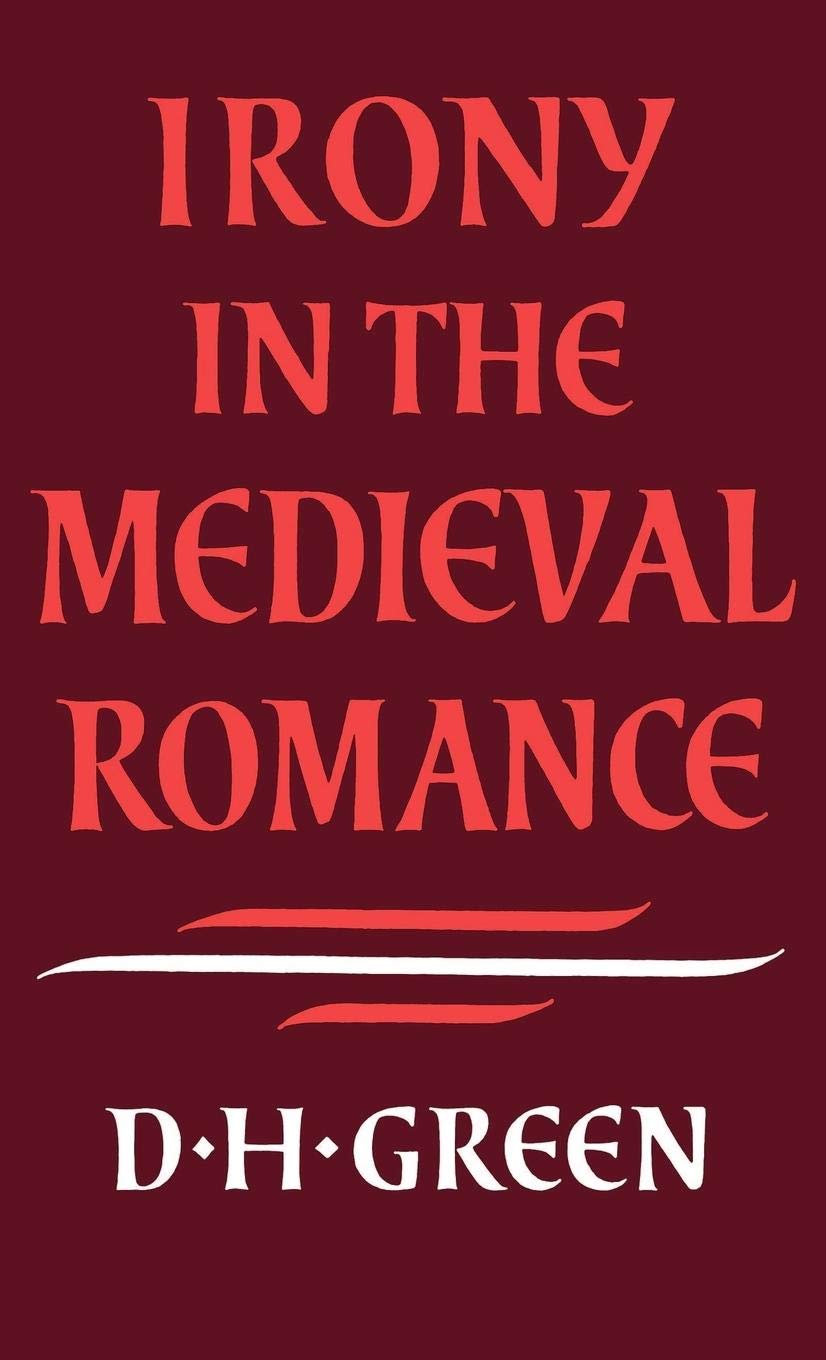
Despite the fashionable standing of irony in studies of modern literature and its occasional application to medieval studies in a number of recent works, no sustained analysis of this phenomenon has yet been attempted for medieval literature. Professor Green attempts to fill the most important part of this lacuna by discussing irony in the medieval genre in which it is employed most frequently and with the greatest sophistication, the romance. The approach is therefore directed more towards the genre as such than to any specific example, and, although the book is written primarily from a Germanist's point of view, it also takes into account the romances of Chrtien de Troyes and their German adaptations, various examples from the Tristan tradition in France and Germany, Flamenca as an example from Provence, as well as Chaucer's Troilus and Criseyde, and Sir Gawain and the Green Knight from England. Proceeding from a working definition of medieval irony and a survey of the signals which may allow us to perceive its presence, Professor Green considers the possibilities, rhetorical and otherwise, of registering irony in courtly literature at large. From this he moves on to discuss the major themes to which irony may be applied (chivalry and love), as well as the ways in which the narrative is organised so as to bring out any ironic implications of these themes. Subsequent chapters are concerned with the various types of irony to be distinguished: verbal irony, irony of the narrator, dramatic irony, the irony of values, and structural irony. A concluding chapter sums up the reasons, aesthetic and social, for the prevalence of irony in this particular genre of medieval literature.
⚠️ WARNING (California Proposition 65):
This product may contain chemicals known to the State of California to cause cancer, birth defects, or other reproductive harm.
For more information, please visit www.P65Warnings.ca.gov.