If you have any questions, you are always welcome to contact us. We'll get back to you as soon as possible, withing 24 hours on weekdays.
Customer service
All questions about your order, return and delivery must be sent to our customer service team by e-mail at yourstore@yourdomain.com
Sale & Press
If you are interested in selling our products, need more information about our brand or wish to make a collaboration, please contact us at press@yourdomain.com
Help
If you have any questions, you are always welcome to contact us. We'll get back to you as soon as possible, withing 24 hours on weekdays.
Customer service
All questions about your order, return and delivery must be sent to our customer service team by e-mail at yourstore@yourdomain.com
Sale & Press
If you are interested in selling our products, need more information about our brand or wish to make a collaboration, please contact us at press@yourdomain.com
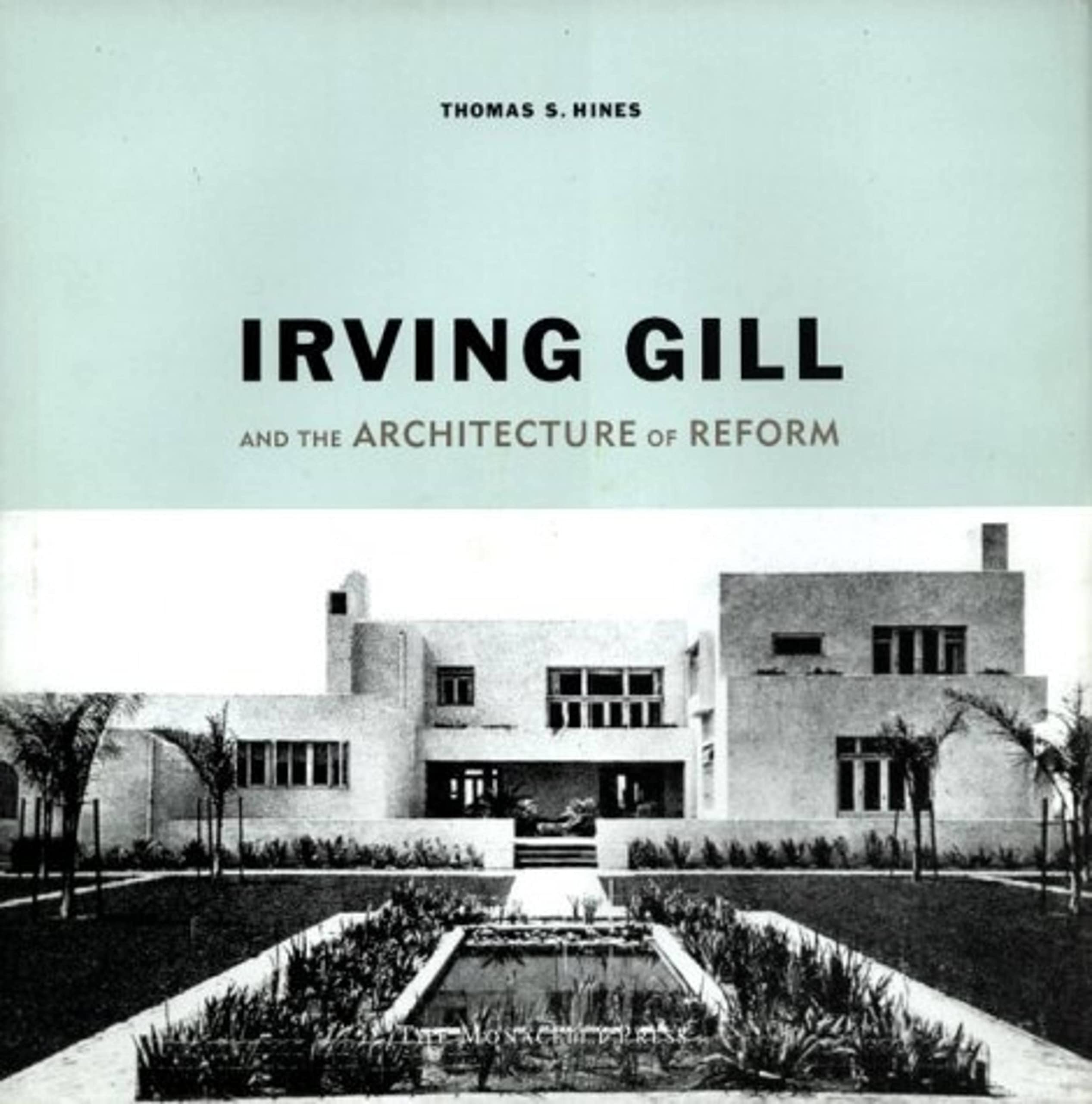
During the first third of the twentieth century, the work of American architect Irving Gill radically redefined the architectural landscape of Southern Californiaespecially San Diego, where his practice was basedand set the stage for a later, more widely celebrated generation of modernists who would continue his experiments with new forms and construction techniques. This first definitive study of the architect traces his journey from his native Syracuse to a Chicago apprenticeship with Louis Sullivan and Frank Lloyd Wright to the development of his career as an early modernist and his singular role in the genesis of the modern movement. Architectural historian Thomas S. Hines places Gill's work within an international context: as his identification with the modern movement developed, his work evolved from the influence of the East Coast Shingle Style and Wright's Midwest Prairie Style to become closer in spirit to the work of the Austrian Adolf Loos. Hines also explores the social dimensions of Gill's work, notably his interest in the contemporary Progressive Movement and its ethos of social, gender, and economic equality. The buildings shown (illustrated with archival photographs as well as color plates) include the Lewis Courts, Sierra Madre; the Dodge House, Hollywood; and Horatio West Court, Santa Monica.
⚠️ WARNING (California Proposition 65):
This product may contain chemicals known to the State of California to cause cancer,
birth defects, or other reproductive harm.
For MAP (Minimum Advertised Price) violations and Intellectual Property (IP) or Trademark concerns, please contact:
support@ergodebooks.com
⚠️ California Proposition 65 Warning: Some products sold on this website may expose you to chemicals known to the State of California to cause cancer, birth defects, or other reproductive harm. For more information, visit www.P65Warnings.ca.gov.