
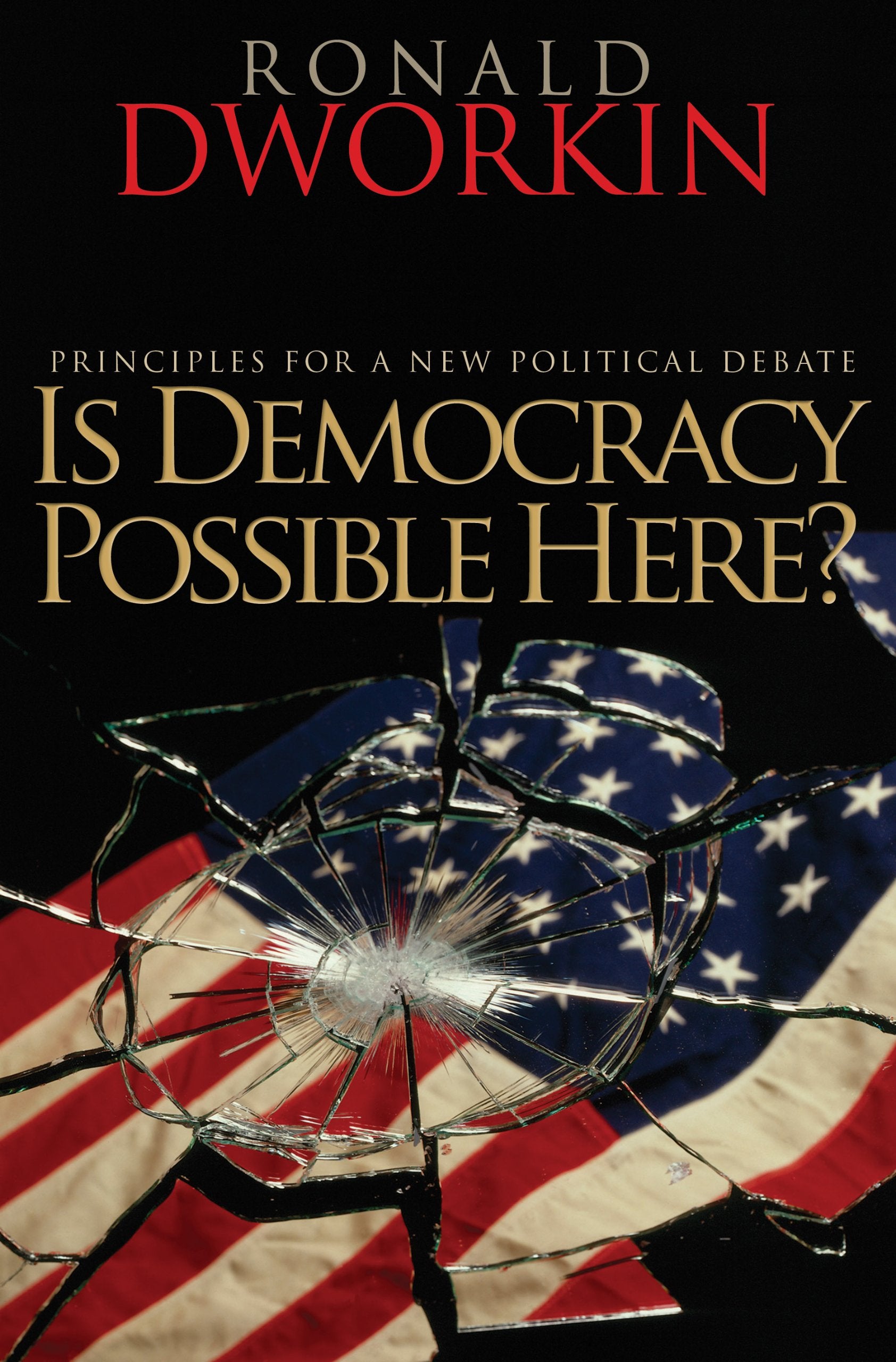
Title
Is Democracy Possible Here?: Principles For A New Political Debate,Used
Sold by Ergodebooks, an authorized reseller.
Returns accepted within 30 days | support@ergodebooks.com
Shipping Information
- Free Standard Shipping — United States only
- Processing Time: 3–5 business days
- Estimated Delivery: 6–10 business days after dispatch
- Double-boxed, fully insured & discreetly packaged
- Tracking number sent via email once dispatched
Returns & Refund
Returns accepted within 30 days of delivery.
Damaged or Defective Item
Free return shipping + replacement or full refund
Wrong Item Received
Free return shipping + replacement or full refund
Change of Mind
Return shipping at customer's expense · 25% restocking fee applies
Payment Option

Politics In America Are Polarized And Trivialized, Perhaps As Never Before. In Congress, The Media, And Academic Debate, Opponents From Right And Left, The Red And The Blue, Struggle Against One Another As If Politics Were Contact Sports Played To The Shouts Of Cheerleaders. The Result, Ronald Dworkin Writes, Is A Deeply Depressing Political Culture, As Ill Equipped For The Perennial Challenge Of Achieving Social Justice As For The Emerging Threats Of Terrorism. Can The Hope For Change Be Realized? Dworkin, One The World'S Leading Legal And Political Philosophers, Identifies And Defends Core Principles Of Personal And Political Morality That All Citizens Can Share. He Shows That Recognizing Such Shared Principles Can Make Substantial Political Argument Possible And Help Replace Contempt With Mutual Respect. Only Then Can The Full Promise Of Democracy Be Realized In America And Elsewhere.Dworkin Lays Out Two Core Principles That Citizens Should Share: First, That Each Human Life Is Intrinsically And Equally Valuable And, Second, That Each Person Has An Inalienable Personal Responsibility For Identifying And Realizing Value In His Or Her Own Life. He Then Shows What Fidelity To These Principles Would Mean For Human Rights, The Place Of Religion In Public Life, Economic Justice, And The Character And Value Of Democracy. Dworkin Argues That Liberal Conclusions Flow Most Naturally From These Principles. Properly Understood, They Collide With The Ambitions Of Religious Conservatives, Contemporary American Tax And Social Policy, And Much Of The War On Terror. But His More Basic Aim Is To Convince Americans Of All Political Stripesas Well As Citizens Of Other Nations With Similar Culturesthat They Can And Must Defend Their Own Convictions Through Their Own Interpretations Of These Shared Values.
⚠️ WARNING (California Proposition 65):
This product may contain chemicals known to the State of California to cause cancer, birth defects, or other reproductive harm.
For more information, please visit www.P65Warnings.ca.gov.
- Q: What is the page count of 'Is Democracy Possible Here?' A: This book has one hundred ninety-two pages. It provides a concise yet impactful exploration of political principles.
- Q: What type of binding does this book have? A: The book is bound in hardcover. This offers durability and a premium feel compared to paperback options.
- Q: What are the dimensions of the book? A: The book measures six point two six inches in length, zero point five one inches in width, and nine point five inches in height.
- Q: Who is the author of 'Is Democracy Possible Here?' A: The author is Ronald Dworkin. He is a renowned legal and political philosopher known for his contributions to political theory.
- Q: What are the main themes discussed in the book? A: The book discusses political morality, social justice, and the principles of democracy. Dworkin emphasizes shared values among citizens.
- Q: Is this book suitable for beginners in political philosophy? A: Yes, the book is suitable for beginners. It presents complex ideas in an accessible manner, making it ideal for new readers.
- Q: Can this book be used for academic purposes? A: Yes, it is suitable for academic study. Its exploration of political principles makes it relevant for courses in political philosophy.
- Q: What is the recommended audience for this book? A: The book is recommended for general readers and anyone interested in political theory. It appeals to a wide audience across political spectrums.
- Q: How should I store this book to maintain its condition? A: Store the book upright in a cool, dry place. Avoid direct sunlight to prevent fading and keep it away from moisture.
- Q: What is the best way to clean the book? A: To clean the book, gently wipe the cover with a soft, dry cloth. Avoid using water or cleaning solutions that may damage the material.
- Q: Is there a return policy for this book? A: Yes, there is a return policy. If you are unsatisfied, you can return the book within a specified time frame for a refund.
- Q: What should I do if the book arrives damaged? A: If the book arrives damaged, contact customer service immediately. They will assist you with the return and replacement process.
- Q: Is this book appropriate for children? A: No, this book is not specifically designed for children. Its themes and discussions are more suited for adult readers.
- Q: How does this book compare to other political philosophy texts? A: This book stands out for its focus on shared moral principles. Unlike others, it emphasizes mutual respect among differing political views.
- Q: Are there any specific political ideologies discussed in the book? A: Yes, the book critically examines liberalism and its implications for democracy. It also addresses conservative viewpoints in political discourse.
- Q: What makes this book a good choice for understanding democracy? A: It provides a clear framework for understanding democracy through shared moral values. Dworkin's insights aim to foster constructive political dialogue.