If you have any questions, you are always welcome to contact us. We'll get back to you as soon as possible, withing 24 hours on weekdays.
Customer service
All questions about your order, return and delivery must be sent to our customer service team by e-mail at yourstore@yourdomain.com
Sale & Press
If you are interested in selling our products, need more information about our brand or wish to make a collaboration, please contact us at press@yourdomain.com
Help
If you have any questions, you are always welcome to contact us. We'll get back to you as soon as possible, withing 24 hours on weekdays.
Customer service
All questions about your order, return and delivery must be sent to our customer service team by e-mail at yourstore@yourdomain.com
Sale & Press
If you are interested in selling our products, need more information about our brand or wish to make a collaboration, please contact us at press@yourdomain.com
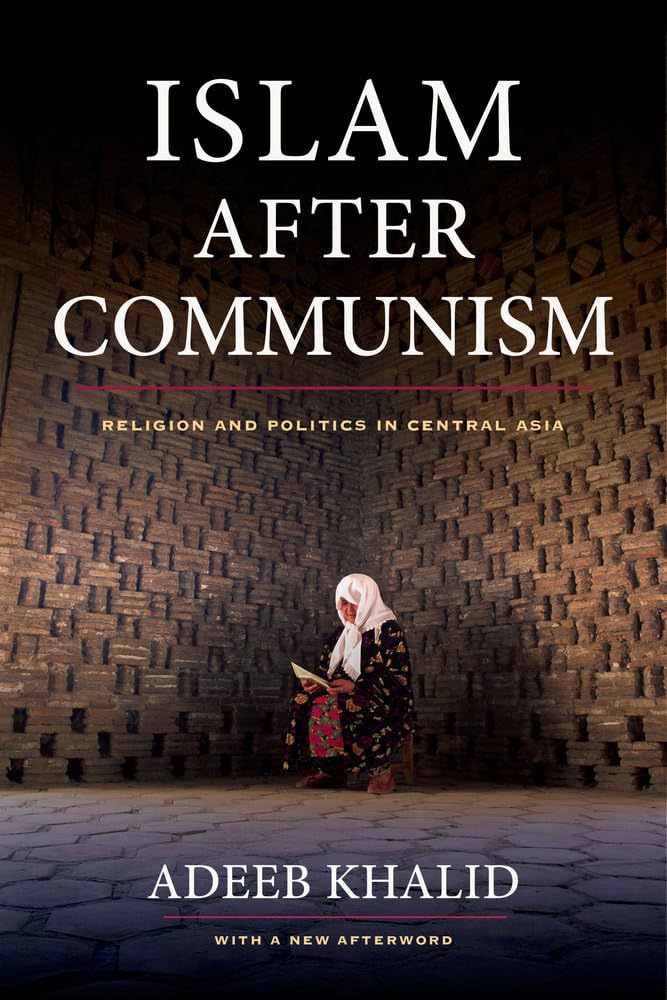
How do Muslims relate to Islam in societies that experienced seventy years of Soviet rule? How did the utopian Bolshevik project of remaking the world by extirpating religion from it affect Central Asia? Adeeb Khalid combines insights from the study of both Islam and Soviet history to answer these questions. Arguing that the sustained Soviet assault on Islam destroyed patterns of Islamic learning and thoroughly deIslamized public life, Khalid demonstrates that Islam became synonymous with tradition and was subordinated to powerful ethnonational identities that crystallized during the Soviet period. He shows how this legacy endures today and how, for the vast majority of the population, a return to Islam means the recovery of traditions destroyed under Communism.Islam after Communism reasons that the fear of a rampant radical Islam that dominates both Western thought and many of Central Asias governments should be tempered with an understanding of the politics of antiterrorism, which allows governments to justify their own authoritarian policies by casting all opposition as extremist. Placing the Central Asian experience in the broad comparative perspective of the history of modern Islam, Khalid argues against essentialist views of Islam and Muslims and provides a nuanced and wellinformed discussion of the forces at work in this crucial region.
⚠️ WARNING (California Proposition 65):
This product may contain chemicals known to the State of California to cause cancer,
birth defects, or other reproductive harm.
For MAP (Minimum Advertised Price) violations and Intellectual Property (IP) or Trademark concerns, please contact:
support@ergodebooks.com
⚠️ California Proposition 65 Warning: Some products sold on this website may expose you to chemicals known to the State of California to cause cancer, birth defects, or other reproductive harm. For more information, visit www.P65Warnings.ca.gov.