
Title

Islamic Legal Orthodoxy,Used
Sold by Ergodebooks, an authorized reseller.
Returns accepted within 30 days | support@ergodebooks.com
Shipping Information
- Free Standard Shipping — United States only
- Processing Time: 3–5 business days
- Estimated Delivery: 6–10 business days after dispatch
- Double-boxed, fully insured & discreetly packaged
- Tracking number sent via email once dispatched
Returns & Refund
Returns accepted within 30 days of delivery.
Damaged or Defective Item
Free return shipping + replacement or full refund
Wrong Item Received
Free return shipping + replacement or full refund
Change of Mind
Return shipping at customer's expense · 25% restocking fee applies
Payment Option

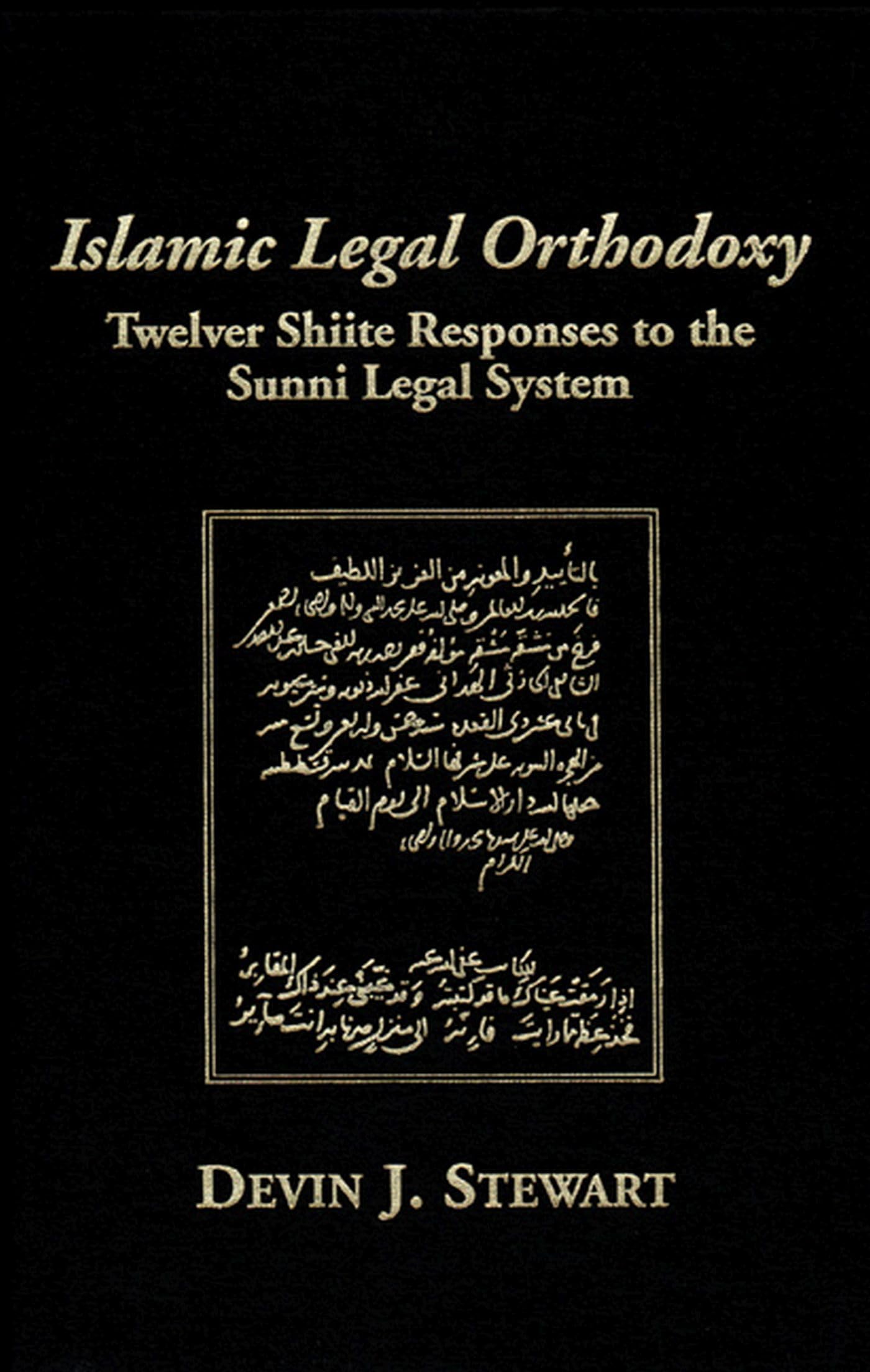
Stewart points to an underlying tension in Shi'ite intellectual history between assimilationist and nativist impulses in the debate over consensus, dissimulation, and in the lives of certain Shi'ite scholars who lived and studied among Sunnis.One of the most farreaching developments in the history of Islam was the rise of the four classic Sunni schools of law between the ninth and eleventh centuries CE. Consolidation of these schools went hand in hand with the establishment of jurists dominance over religious discourse and social institutions. Orthodoxy came to be defined as the consensus (ijma) of the Sunni jurists. Devin Stewart argues that it is to the margins of the emerging system that investigators must look to understand its historical dynamics. The development of Twelve Shiite jurisprudence in relation and reaction to the Sunni schools is particularly informative.In Islamic Legal Orthodoxy, Stewart explores the process by which Shiite jurists participated in the mainstream of Islamic jurisprudence and were influenced by Sunni legal doctrines. He identifies three main reactions to Sunni legal definitions of othodoxy and the concept of consensus on which it was based. The Akhbaris rejected Sunni legal consensus and juristic authority for a scripturebased system; many Shiite outwardly accepted the ground rules of Sunni legal consensus and joined the Shafii school of jurisprudence; a third option was to adopt the concept of consensus to create a fifth, Shiite, legal system.The development of the Sunni legal system effectively set the ground rules for the marginal sects negotiation of their identity with respect to Islamic legal orthodoxy. Accordingly, Shiite jurists developed a legal institution that is structurally similar to the four Sunni madhhabs and even today serves as means to position themselves in the Muslim world. Stewart points to an underlying tension in Shiite intellectual history between assimilationist and nativist impulses in the debate over consensus, dissmulation (taqiyyah) and the lives of certain Shiite scholars who lived and studies among Sunnis.
⚠️ WARNING (California Proposition 65):
This product may contain chemicals known to the State of California to cause cancer, birth defects, or other reproductive harm.
For more information, please visit www.P65Warnings.ca.gov.