
Title
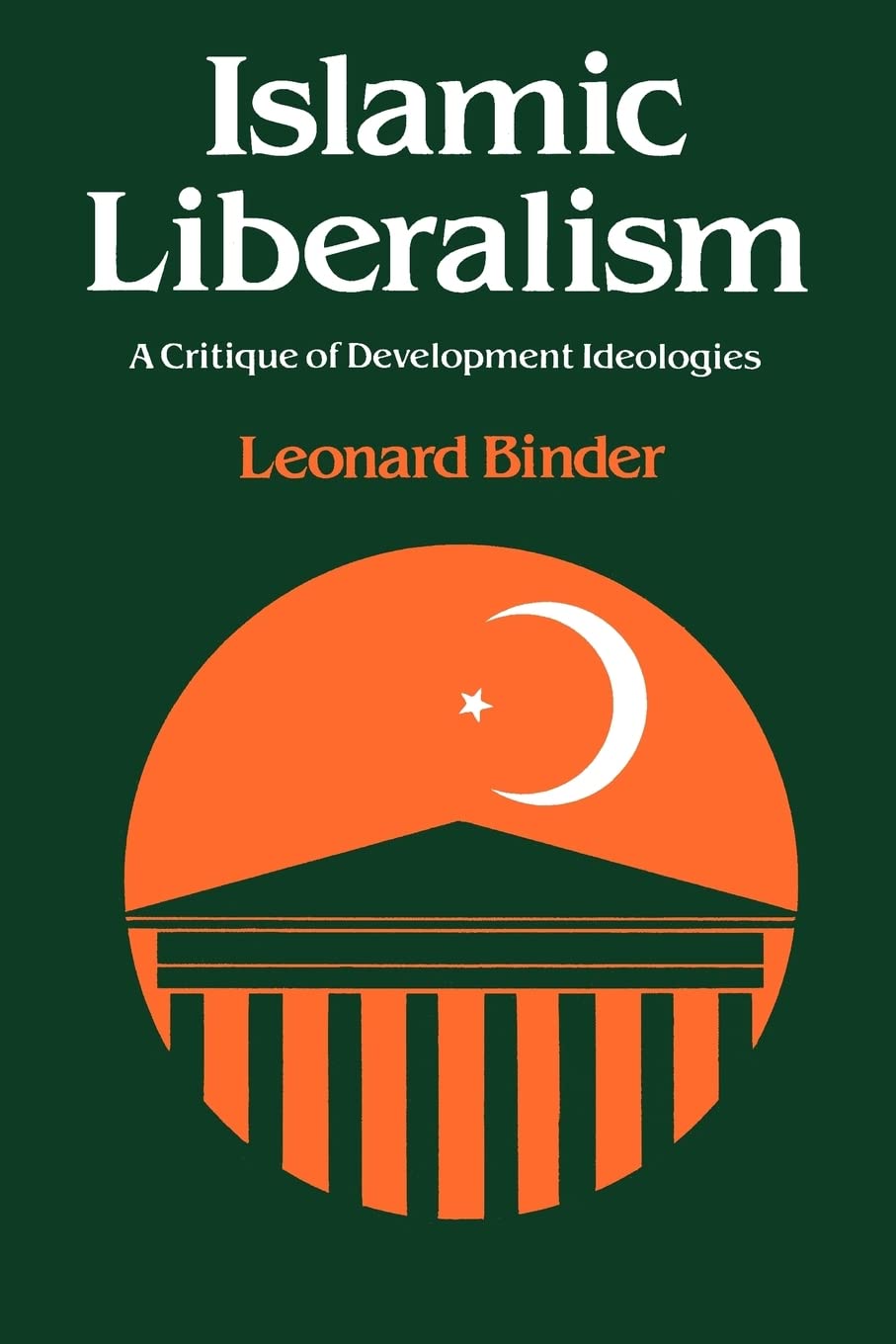
Islamic Liberalism: A Critique of Development Ideologies,Used
Sold by Ergodebooks, an authorized reseller.
Returns accepted within 30 days | support@ergodebooks.com
Shipping Information
- Free Standard Shipping — United States only
- Processing Time: 3–5 business days
- Estimated Delivery: 6–10 business days after dispatch
- Double-boxed, fully insured & discreetly packaged
- Tracking number sent via email once dispatched
Returns & Refund
Returns accepted within 30 days of delivery.
Damaged or Defective Item
Free return shipping + replacement or full refund
Wrong Item Received
Free return shipping + replacement or full refund
Change of Mind
Return shipping at customer's expense · 25% restocking fee applies
Payment Option

The resurgence of Islamic fundamentalism in the 1980s influenced many in the Islamic world to reject Western norms of liberal rationality and to return, instead, to their own tradition for political and cultural inspiration. This rejection of foreign thought threatens to end the centurieslong dialogue between Islam and the West, a dialogue that has produced a nascent Middle Eastern liberalism, along with many less desirable forms of discourse. With Islamic Liberalism, Leonard Binder hopes to reinvigorate that dialogue, asking whether political liberalism can take root in the Middle East without a vigorous Islamic liberalism. But, Binder asks, is an Islamic liberalism possible?The Islamic political community presents special problems to the development of an indigenous liberalism. That community is conceived of as divinely ordained, and its notions of the good are to be derived from scriptural revelation, not arrived at through rational discourse. Liberal politics would seem to stand little chance of surviving in such an atmosphere, let alone thriving.Binder responds to the challenge of Edward Said's critique of Orientalism, of a range of neoMarxian development theorists, of Sayyid Qutb's fundamentalist vision, of Samir Amin's vision of Egypt's role in the Arab awakening, of Tariq alBishri's new populism, of Zaki Najib Mahmud's pragmatism, and the structuralism of Arkoun and Laroui. The deconstruction of these varied texts produces a number of persuasive hermeneutical conclusions that are sequentially woven together in a critical argument that refocuses our attention on the central question of political freedom and democracy. In the course of constructing this argument, Binder reopens the dialogue between Western modernity and Islamic authenticity and reveals the surprising extent to which there is a convergent interest in liberal, democratic, civil society. Finally, in a concluding chapter, he addresses the prospects for liberalism in the three major bourgeois states of IslamEgypt, Turkey, and Iran.
⚠️ WARNING (California Proposition 65):
This product may contain chemicals known to the State of California to cause cancer, birth defects, or other reproductive harm.
For more information, please visit www.P65Warnings.ca.gov.