
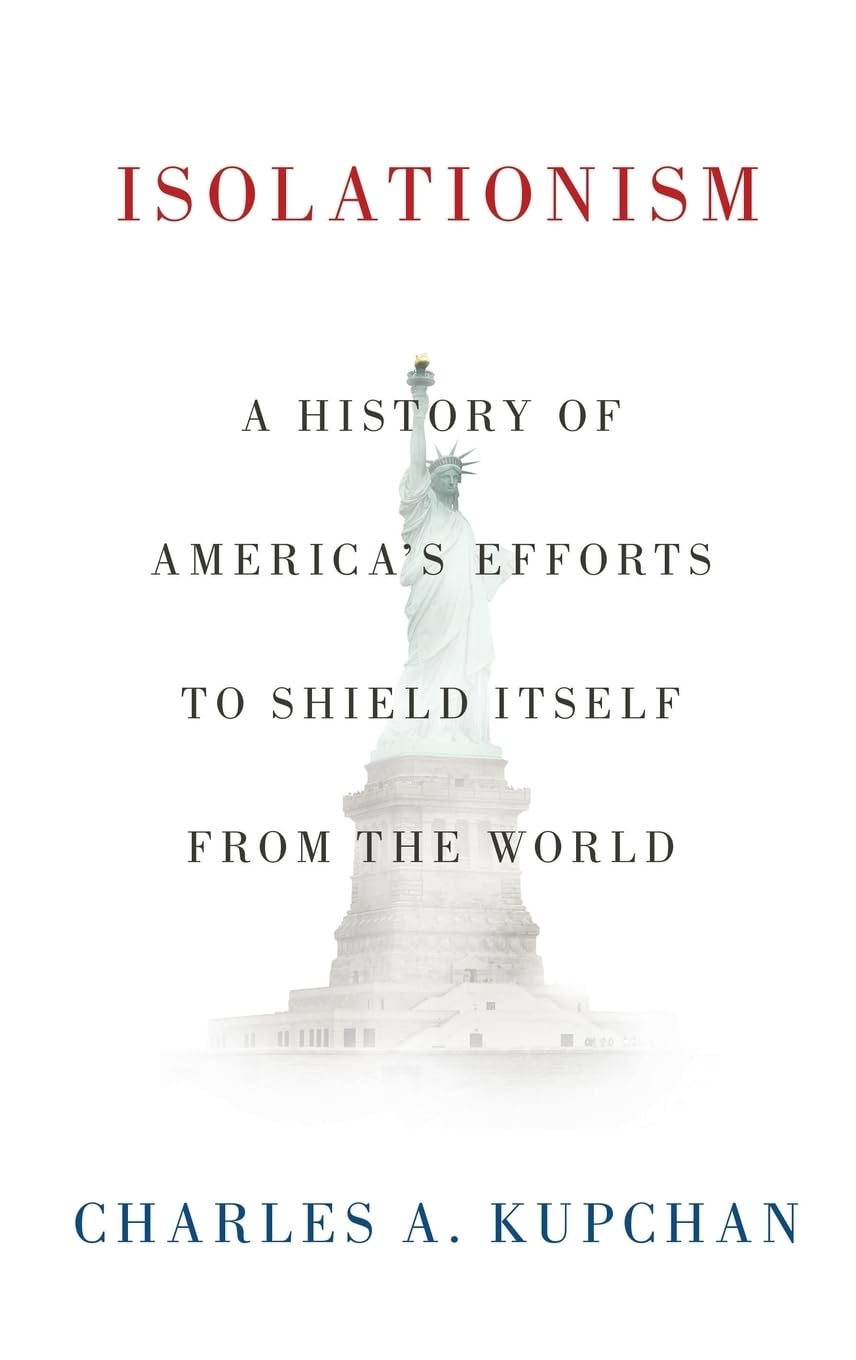
Title
Isolationism: A History Of America'S Efforts To Shield Itself From The World
Sold by Ergodebooks, an authorized reseller.
Returns accepted within 30 days | support@ergodebooks.com
Shipping Information
- Free Standard Shipping — United States only
- Processing Time: 3–5 business days
- Estimated Delivery: 6–10 business days after dispatch
- Double-boxed, fully insured & discreetly packaged
- Tracking number sent via email once dispatched
Returns & Refund
Returns accepted within 30 days of delivery.
Damaged or Defective Item
Free return shipping + replacement or full refund
Wrong Item Received
Free return shipping + replacement or full refund
Change of Mind
Return shipping at customer's expense · 25% restocking fee applies
Payment Option

The First Book To Tell The Full Story Of American Isolationism, From The Founding Era Through The Trump Presidency.In His Farewell Address Of 1796, President George Washington Admonished The Young Nation To Steer Clear Of Permanent Alliances With Any Portion Of The Foreign World. Isolationism Thereafter Became One Of The Most Influential Political Trends In American History. From The Founding Era Until The Japanese Attack On Pearl Harbor, The United States Shunned Strategic Commitments Abroad, Making Only Brief Detours During The Spanishamerican War And World War I. Amid World War Ii And The Cold War, Americans Abandoned Isolationism; They Tried To Run The World Rather Than Run Away From It. But Isolationism Is Making A Comeback As Americans Tire Of Foreign Entanglement. In This Definitive And Magisterial Analysisthe First Book To Tell The Fascinating Story Of Isolationism Across The Arc Of American Historycharles Kupchan Explores The Enduring Connection Between The Isolationist Impulse And The American Experience. He Also Refurbishes Isolationism'S Reputation, Arguing That It Constituted Dangerous Delusion During The 1930S, But Afforded The Nation Clear Strategic Advantages During Its Ascent.Kupchan Traces Isolationism'S Staying Power To The Ideology Of American Exceptionalism. Strategic Detachment From The Outside World Was To Protect The Nation'S Unique Experiment In Liberty, Which America Would Then Share With Others Through The Power Of Example. Since 1941, The United States Has Taken A Much More Interventionist Approach To Changing The World. But It Has Overreached, Prompting Americans To Rediscover The Allure Of Nonentanglement And An America First Foreign Policy. The United States Is Hardly Destined To Return To Isolationism, Yet A Strategic Pullback Is Inevitable. Americans Now Need To Find The Middle Ground Between Doing Too Much And Doing Too Little.
⚠️ WARNING (California Proposition 65):
This product may contain chemicals known to the State of California to cause cancer, birth defects, or other reproductive harm.
For more information, please visit www.P65Warnings.ca.gov.
- Q: How many pages does this book have? A: This book has four hundred sixty-four pages. It provides a comprehensive overview of American isolationism across different historical periods.
- Q: What are the dimensions of this book? A: The book measures six point one inches in length, one point three inches in width, and nine point three inches in height. These dimensions make it a suitable size for easy handling.
- Q: What type of binding does this book have? A: This book has a hardcover binding. The sturdy cover ensures durability and protection for the pages inside.
- Q: Who is the author of this book? A: The author of this book is Charles A. Kupchan. He offers a detailed analysis of the concept of isolationism in American history.
- Q: What is the main theme of this book? A: The main theme is American isolationism and its historical evolution. It examines how this political trend has influenced U.S. foreign policy over time.
- Q: Is this book suitable for young readers? A: No, this book is not specifically aimed at young readers. It discusses complex historical and political themes that require a mature understanding.
- Q: How can I apply the insights from this book? A: You can apply the insights by reflecting on current U.S. foreign policies and understanding the historical context that shapes them. This may enhance your critical thinking on international relations.
- Q: What is the reading level of this book? A: The reading level is aimed at adults and advanced students. It requires a background in American history or political science for full comprehension.
- Q: Is this book a good resource for academic research? A: Yes, this book is an excellent resource for academic research. It provides in-depth analysis and references historical events related to isolationism.
- Q: How should I store this book? A: Store this book in a cool, dry place, upright on a shelf. This will help maintain its condition and prevent any damage.
- Q: Can I clean the cover of this book? A: Yes, you can clean the cover with a soft, dry cloth. Avoid using water or cleaning solutions to prevent damage.
- Q: What if the book arrives damaged? A: If the book arrives damaged, contact the seller for a return or exchange. Most sellers have a policy in place for damaged items.
- Q: Is there a warranty for this book? A: No, books typically do not come with warranties. However, check with the seller for their return policies regarding defective items.
- Q: What makes this book different from others on the same topic? A: This book is unique due to its comprehensive historical analysis from the founding era to the present. It connects isolationism to American exceptionalism in a detailed narrative.
- Q: How does this book compare to other works on American foreign policy? A: This book offers a focused perspective on isolationism, while many others may cover broader foreign policy themes. It provides a deep dive into a specific historical trend.
- Q: What should I do if I have questions about the content? A: If you have questions about the content, consider discussing with peers or researching further for clarification. Engaging in discussions can enhance understanding.