
Title
IsraeliPalestinian negotiations in the 1990s: How NGOs facilitated the peace process,Used
Sold by Ergodebooks, an authorized reseller.
Returns accepted within 30 days | support@ergodebooks.com
Shipping Information
- Free Standard Shipping — United States only
- Processing Time: 3–5 business days
- Estimated Delivery: 6–10 business days after dispatch
- Double-boxed, fully insured & discreetly packaged
- Tracking number sent via email once dispatched
Returns & Refund
Returns accepted within 30 days of delivery.
Damaged or Defective Item
Free return shipping + replacement or full refund
Wrong Item Received
Free return shipping + replacement or full refund
Change of Mind
Return shipping at customer's expense · 25% restocking fee applies
Payment Option

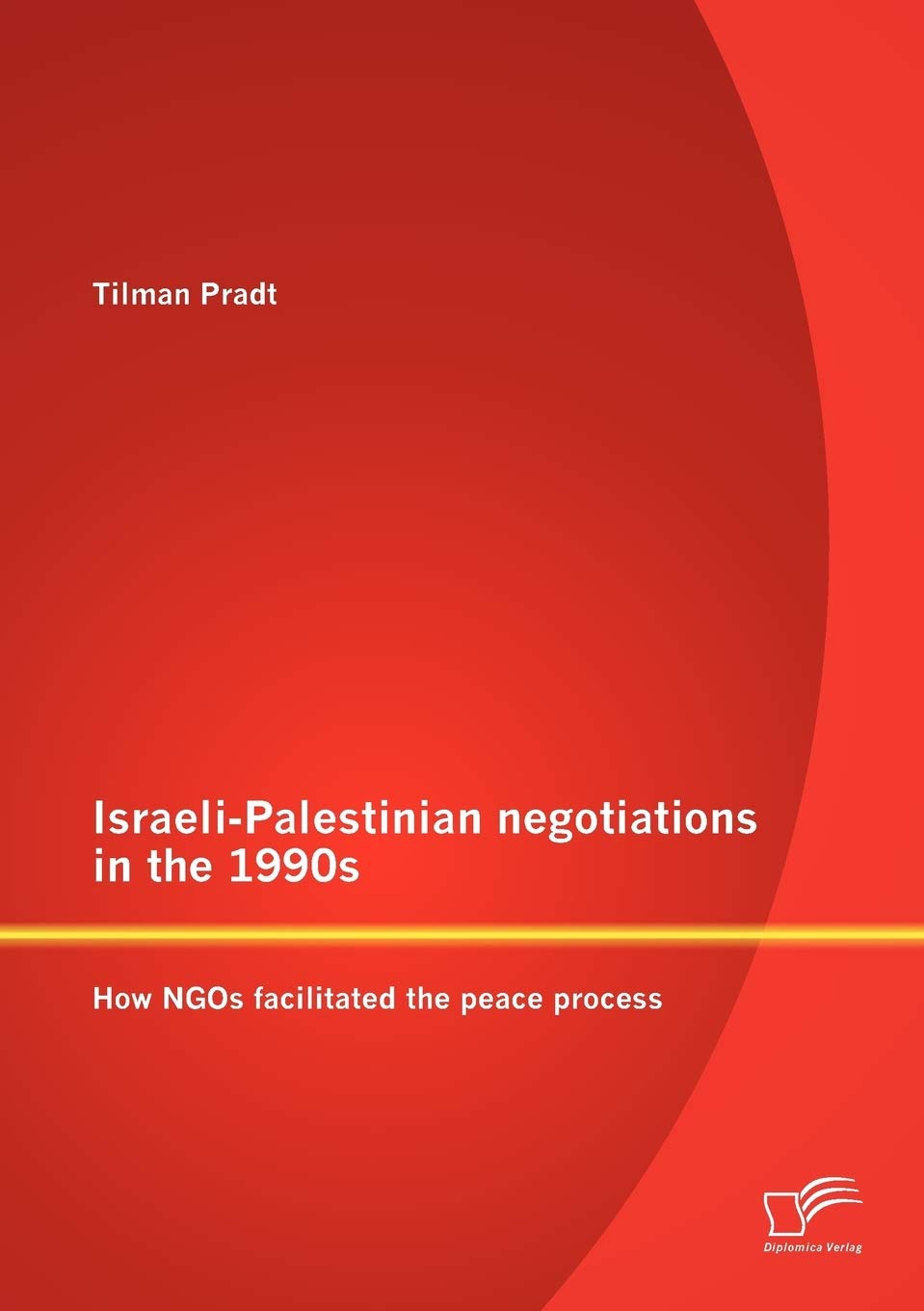
Product Description Nongovernmental organisations (NGOs) have become important actors in the globalised world. They run aid and relief programmes in the poorest countries, support international institutions (like the United Nations), or are watchdogs of them (for example watchdogs of the Bretton Woods institutions). In doing so, NGOs naturally work permanently with stateagencies and it is probably hard to find an NGO which is totally free of any governmental support (in financial, logistical or informative matters). Thus, there are strong NGOgovernment connections on a dailywork basis. NGOs run multiple attempts to contribute to the resolution of conflicts on all political levels. They bring together people on the grassroot level, they try to influence high officials through public pressure and they organise conferences and discussions with members and consultants of the concerned parties. The latter approach is analysed in this study. But how do NGOs influence the level of official international relations? To which degree can NGOs improve the relations of two conflicted parties, especially when the conflict is protracted and severe? The aim of this book is to define the preconditions of successful NGO mediation, to measure the NGO influence as an 'antecedent condition' for successful mediation, and to exhibit its limits. The underlying assumption is that conflict resolution is more likely if NGO mediation supports this attempt. This approach can be labelled as an 'assumption of constant effect' since the focus is on understanding the NGOs influence on international conflict resolution. About the Author Tilman Pradt, geboren 1979, studierte Politikwissenschaften am OttoSuhrInstitut der Freien Universitt Berlin. Der Schwerpunkt seiner Studien lag auf den Internationalen Beziehungen, besonders die Analyse von komplizierten internationalen Konflikten und Mglichkeiten inoffizieller Diplomatie faszinierten ihn. Praktika in NGOs fhrten ihn zum Thema seiner Diplomarbeit in der er die Mglichkeiten von Nichtregierungsorganisationen als Mediatoren in internationalen Konflikten untersuchte.
⚠️ WARNING (California Proposition 65):
This product may contain chemicals known to the State of California to cause cancer, birth defects, or other reproductive harm.
For more information, please visit www.P65Warnings.ca.gov.