
Title
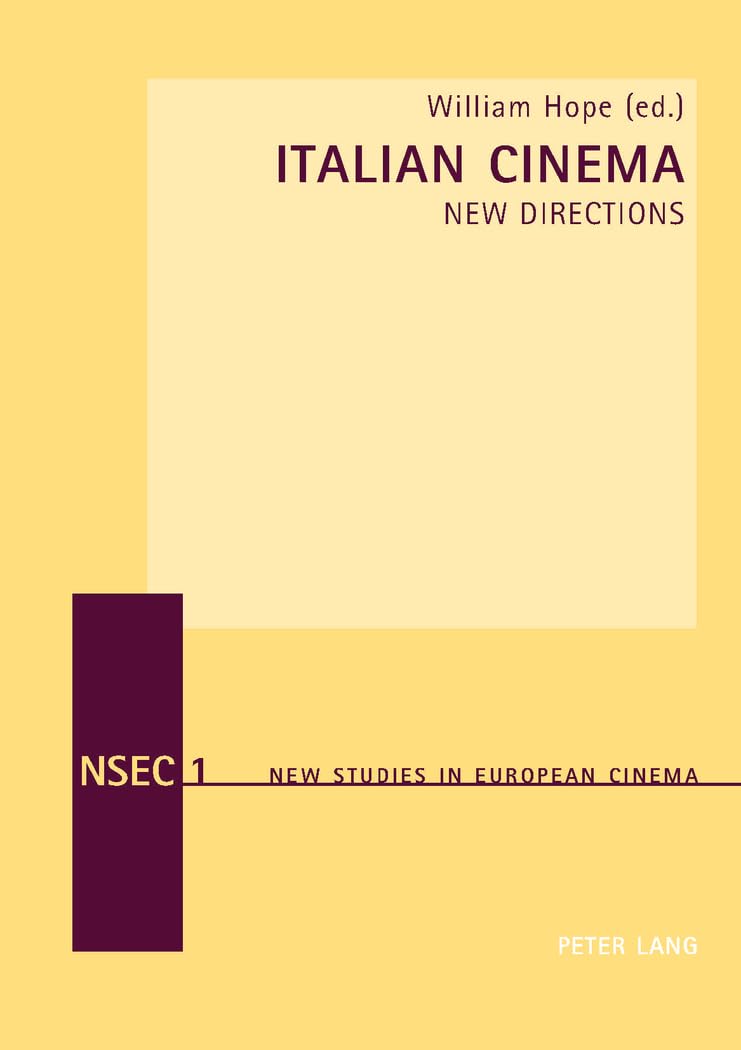
Italian Cinema: New Directions (New Studies In European Cinema),Used
Sold by Ergodebooks, an authorized reseller.
Returns accepted within 30 days | support@ergodebooks.com
Shipping Information
- Free Standard Shipping — United States only
- Processing Time: 3–5 business days
- Estimated Delivery: 6–10 business days after dispatch
- Double-boxed, fully insured & discreetly packaged
- Tracking number sent via email once dispatched
Returns & Refund
Returns accepted within 30 days of delivery.
Damaged or Defective Item
Free return shipping + replacement or full refund
Wrong Item Received
Free return shipping + replacement or full refund
Change of Mind
Return shipping at customer's expense · 25% restocking fee applies
Payment Option

Product Description Italian cinema currently finds itself in a transitional phase after a highly successful period in which it was associated with the work of directors such as Rossellini, Visconti, Fellini, and Pasolini, and with innovative styles of filmmaking, principally neorealism. This book explores the evolution of Italian cinema over the last twenty years, with particular reference to modern masterpieces such as Tornatores Oscarwinning Nuovo Cinema Paradiso. The volume focuses on the work of some of the most prominent directors of recent times, combining an auteurist perspective with an incisive overview of the most important thematic and stylistic developments in modern Italian filmmaking. A broad range of theoretical approaches has been selected, embracing cognitive, aesthetic, psychoanalytical, and sociological perspectives. This approach has been adopted with a view to providing the most illuminating analyses of the radically diverse work of different directors, rather than attempting to impose a single critical perspective or theme upon films that range from social realism to horror. Significantly, these different approaches are complemented by detailed discussions of the technical arrangements of given film sequences, since another of the volumes aims is to encourage a greater familiarity with the effects of miseenscne, montage, sound, and camera movement. About the Author The Editor: William Hope is a lecturer in Italian language, literature and cinema at the University of Salford. He graduated from the University of Kent, did a PGCE at the University of York and completed his Ph.D. at the University of Birmingham. He has published volumes on the films of Giuseppe Tornatore, and on the writings of the novelist and journalist Curzio Malaparte.
⚠️ WARNING (California Proposition 65):
This product may contain chemicals known to the State of California to cause cancer, birth defects, or other reproductive harm.
For more information, please visit www.P65Warnings.ca.gov.