
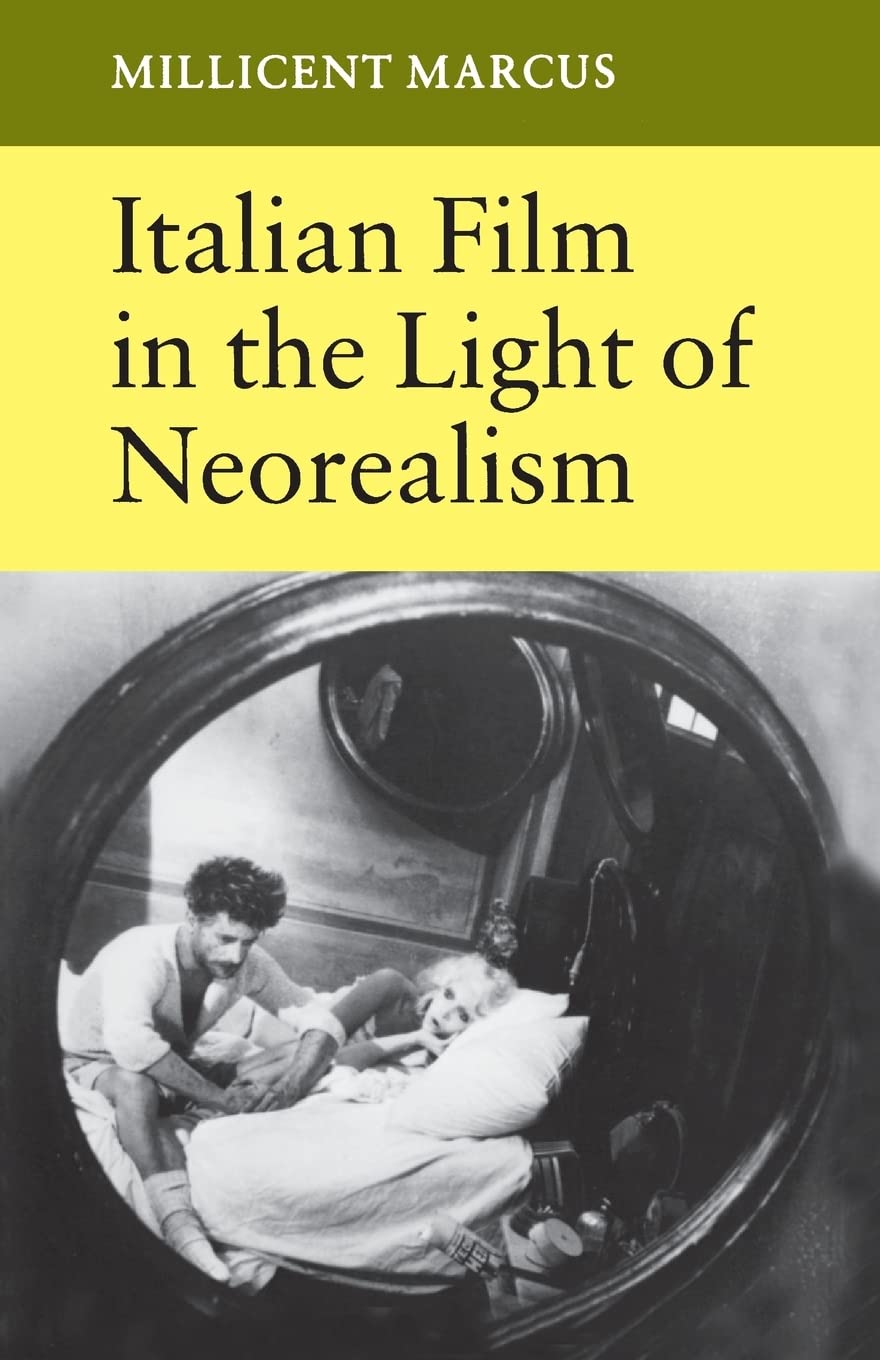
Title
Italian Film In The Light Of Neorealism,Used
Sold by Ergodebooks, an authorized reseller.
Returns accepted within 30 days | support@ergodebooks.com
Shipping Information
- Free Standard Shipping — United States only
- Processing Time: 3–5 business days
- Estimated Delivery: 6–10 business days after dispatch
- Double-boxed, fully insured & discreetly packaged
- Tracking number sent via email once dispatched
Returns & Refund
Returns accepted within 30 days of delivery.
Damaged or Defective Item
Free return shipping + replacement or full refund
Wrong Item Received
Free return shipping + replacement or full refund
Change of Mind
Return shipping at customer's expense · 25% restocking fee applies
Payment Option

The Movement Known As Neorealism Lasted Seven Years, Generated Only Twentyone Films, Failed At The Box Office, And Fell Short Of Its Didactic And Aesthetic Aspirations. Yet It Exerted Such A Profound Influence On Italian Cinema That All The Best Postwar Directors Had To Come To Terms With It, Whether In Seeming Imitation (The Early Olmi), In Commercial Exploitation (The Middle Comencini) Or In Ostensible Rejection (The Recent Tavianis). Despite The Reactionary Pressures Of The Marketplace And The Highly Personalized Visions Of Fellini, Antonioni. And Visconti, Italian Cinema Has Maintained Its Moral Commitment To Use The Medium In Socially Responsible Waysif Not To Change The World, As The First Neorealists Hoped, Then At Least To Move Filmgoers To Face The Pressing Economic, Political, And Human Problems In Their Midst. From Rossellini'S Open City (1945) To The Taviani Brothers' Night Of The Shooting Stars (1982). The Author Does Close Readings Of Seventeen Films That Tell The Story Of Neorealism'S Evolving Influence On Italian Postwar Cinematic Expression.Other Films Discussed Are De Sica'S Bicycle Thief And Umberto D. De Santis'S Bitter Rice, Comencini'S Bread, Love, And Fantasy, Fellini'S La Strada, Visconti'S Senso, Antonioni'S Red Desert, Olmi'S Il Posto, Germi'S Seduced And Abandoned, Pasolini'S Teorema, Petri'S Investigation Of A Citizen Above Suspicion, Bertolucci'S The Conformist, Rosi'S Christ Stopped At Eboli, And Wertmuller'S Love And Anarchy, Scola'S We All Loved Each Other So Much Provides The Occasion For The Author'S Own Retrospective Consideration Of How Italian Cinema Has Fulfilled, Or Disappointed, The Promise Of Neorealism.
⚠️ WARNING (California Proposition 65):
This product may contain chemicals known to the State of California to cause cancer, birth defects, or other reproductive harm.
For more information, please visit www.P65Warnings.ca.gov.
- Q: How many pages does this book have? A: This book has four hundred sixty-four pages. It's a paperback edition published by Princeton University Press.
- Q: What are the dimensions of this book? A: The book measures five point five one inches in length, one point zero six inches in width, and eight point five inches in height.
- Q: Who is the author of this book? A: The author of this book is Millicent Marcus. She explores the impact of neorealism on Italian cinema.
- Q: What is the binding type of this book? A: This book is paperback bound. Paperback editions are typically more flexible and lightweight than hardcover versions.
- Q: What genre does this book belong to? A: This book belongs to the Performing Arts genre. It specifically discusses Italian cinema and its historical context.
- Q: Is this book suitable for beginners in film studies? A: Yes, this book is suitable for beginners in film studies. It provides insightful analysis of significant films in Italian neorealism.
- Q: Can I use this book for academic purposes? A: Yes, this book can be used for academic purposes. It offers critical insights and analyses beneficial for film studies courses.
- Q: What themes does this book explore? A: This book explores themes of neorealism, social responsibility in cinema, and the evolution of Italian filmmaking post-World War II.
- Q: Is this book appropriate for young adults? A: Yes, this book is appropriate for young adults. It discusses cinematic themes that are relevant to contemporary social issues.
- Q: How should I care for this book? A: To care for this book, keep it in a dry, cool place and avoid exposure to direct sunlight. This will help preserve its condition.
- Q: Can I read this book while eating or drinking? A: It's not advisable to read this book while eating or drinking. Spills can damage the pages and cover.
- Q: What if the book arrives damaged? A: If the book arrives damaged, you should contact customer service for a return or exchange. They will assist you with the process.
- Q: Is there a return policy for this book? A: Yes, there is a return policy for this book. Typically, you can return it within a specified period if it’s in original condition.
- Q: How do I store this book properly? A: Store this book upright on a shelf, away from moisture and heat. Use a bookend to prevent it from falling over.
- Q: Are there any specific films discussed in this book? A: Yes, the book discusses several specific films, including 'Bicycle Thief' and 'Open City'. These films exemplify neorealism's influence.
- Q: Does this book include illustrations or images? A: No, this book does not include illustrations or images. It focuses on textual analysis of films.