
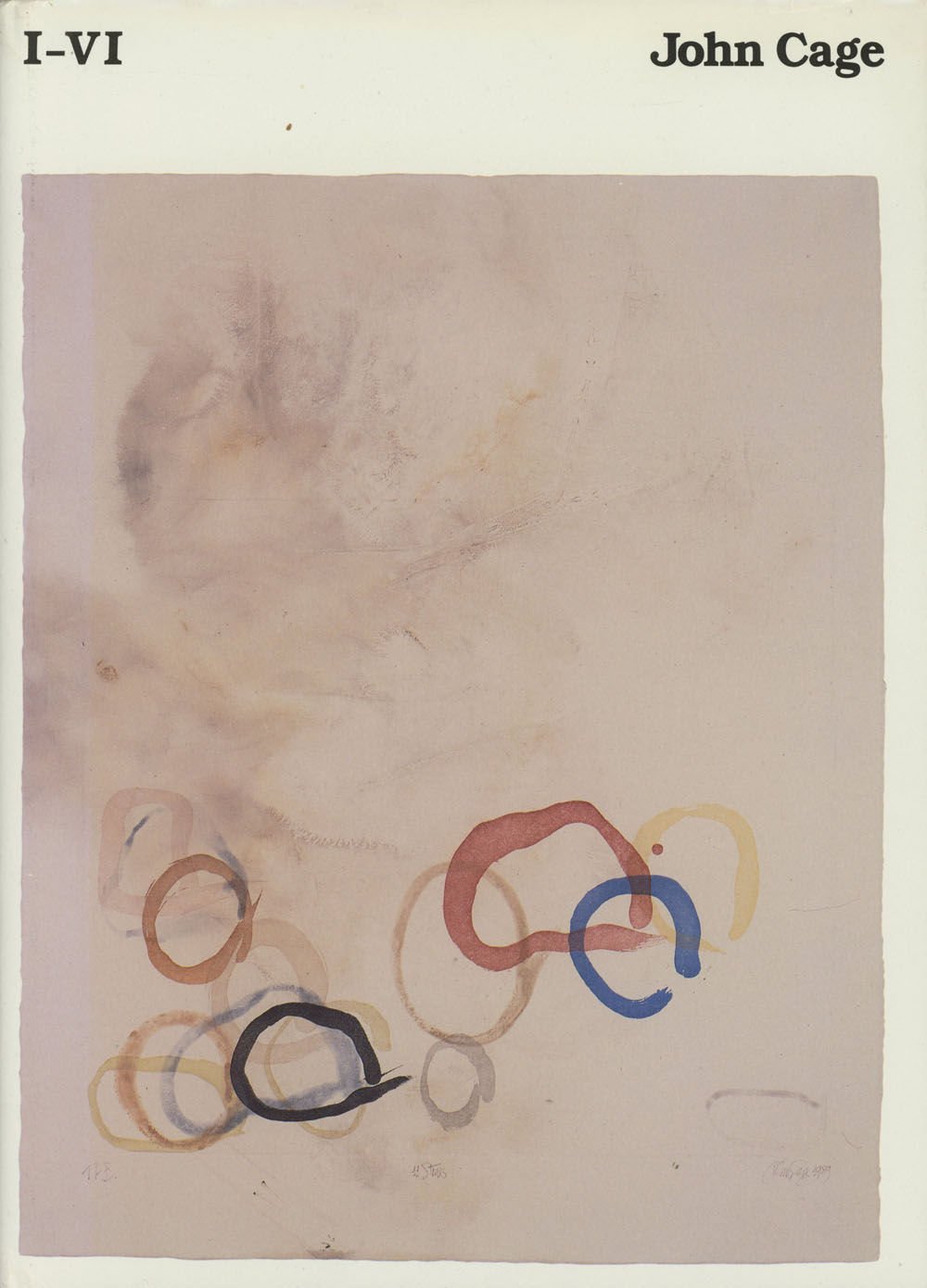
Title
IVI (The Charles Eliot Norton Lectures, 198889),Used
Sold by Ergodebooks, an authorized reseller.
Returns accepted within 30 days | support@ergodebooks.com
Shipping Information
- Free Standard Shipping — United States only
- Processing Time: 3–5 business days
- Estimated Delivery: 6–10 business days after dispatch
- Double-boxed, fully insured & discreetly packaged
- Tracking number sent via email once dispatched
Returns & Refund
Returns accepted within 30 days of delivery.
Damaged or Defective Item
Free return shipping + replacement or full refund
Wrong Item Received
Free return shipping + replacement or full refund
Change of Mind
Return shipping at customer's expense · 25% restocking fee applies
Payment Option

Without doubt the most influential American composer of the last half century, John Cage has had an enormous impact not only on music but on art, literature, the performing arts, and aesthetic thought in general. His insistent exploration of nonintention and his fruitful merging of Western and Eastern traditions have made him a powerful force in the world of the avantgarde.There have never been lectures like these: delivered at Harvard in 198889 as the Charles Eliot Norton Lectures, they were more like performances, as the audience heard them. Cage calls them mesostics, a literary form generated by chance (in this case computerized IChing chance) operations. Using the computer as an oracle in conjunction with a large source text, he happens upon ideas, which produce more ideas. Chance, and not Cage, makes the choices and central decisions. Such a form is rooted, Cage tells us in his introduction, in the belief that all answers answer all questions.Acting as a kind of counterpoint to the six texts here are transcripts (edited by Cage) of the provocative questionandanswer seminars that followed each presentation. Included with the book are two audiocassettes, one of Cage reading a mesostic (IV), allowing the listener to experience it as it was delivered, and one with a lively selection from the questionandanswer seminars that conveys the flavor of the event. The illustrations consist of fifteen different chancedetermined prints from a single negative by Robert Mahon of the first autograph page of Cages Sixteen Dances (1951).IVI is, in short, an experience of John Cage, where silences become words and words become silences, in arrangements that will disconcert and exercise our minds.
⚠️ WARNING (California Proposition 65):
This product may contain chemicals known to the State of California to cause cancer, birth defects, or other reproductive harm.
For more information, please visit www.P65Warnings.ca.gov.
- Q: What is the main theme of 'I-VI (The Charles Eliot Norton Lectures, 1988-89)'? A: The main theme of 'I-VI' revolves around John Cage's exploration of non-intention in art and music, emphasizing the role of chance and the merging of Western and Eastern traditions.
- Q: Who is the author of this book? A: The author of this book is John Cage, a renowned American composer known for his avant-garde contributions to music and art.
- Q: What is the format of the lectures in this book? A: The lectures are presented in the form of 'mesostics', a literary technique that utilizes chance operations, specifically through computerized I-Ching.
- Q: Does the book include any multimedia elements? A: Yes, the book includes two audiocassettes: one features Cage reading a mesostic, and the other contains selections from the question-and-answer seminars following each lecture.
- Q: What type of binding does this book have? A: This book is bound in hardcover, providing durability and a classic presentation.
- Q: How many pages are in 'I-VI'? A: 'I-VI' contains 460 pages, offering an extensive exploration of Cage's ideas and lectures.
- Q: What condition is the used book in? A: The used book is listed as being in good condition, indicating it has been used but is still functional and presentable.
- Q: When was this book published? A: The book was published on February 1, 1990.
- Q: What unique features does this book include? A: The book includes fifteen chance-determined prints from a negative by Robert Mahon, showcasing Cage's artistic approach.
- Q: Is this the first edition of the book? A: Yes, this is the first edition and first printing of 'I-VI'.