If you have any questions, you are always welcome to contact us. We'll get back to you as soon as possible, withing 24 hours on weekdays.
Customer service
All questions about your order, return and delivery must be sent to our customer service team by e-mail at yourstore@yourdomain.com
Sale & Press
If you are interested in selling our products, need more information about our brand or wish to make a collaboration, please contact us at press@yourdomain.com
Help
If you have any questions, you are always welcome to contact us. We'll get back to you as soon as possible, withing 24 hours on weekdays.
Customer service
All questions about your order, return and delivery must be sent to our customer service team by e-mail at yourstore@yourdomain.com
Sale & Press
If you are interested in selling our products, need more information about our brand or wish to make a collaboration, please contact us at press@yourdomain.com
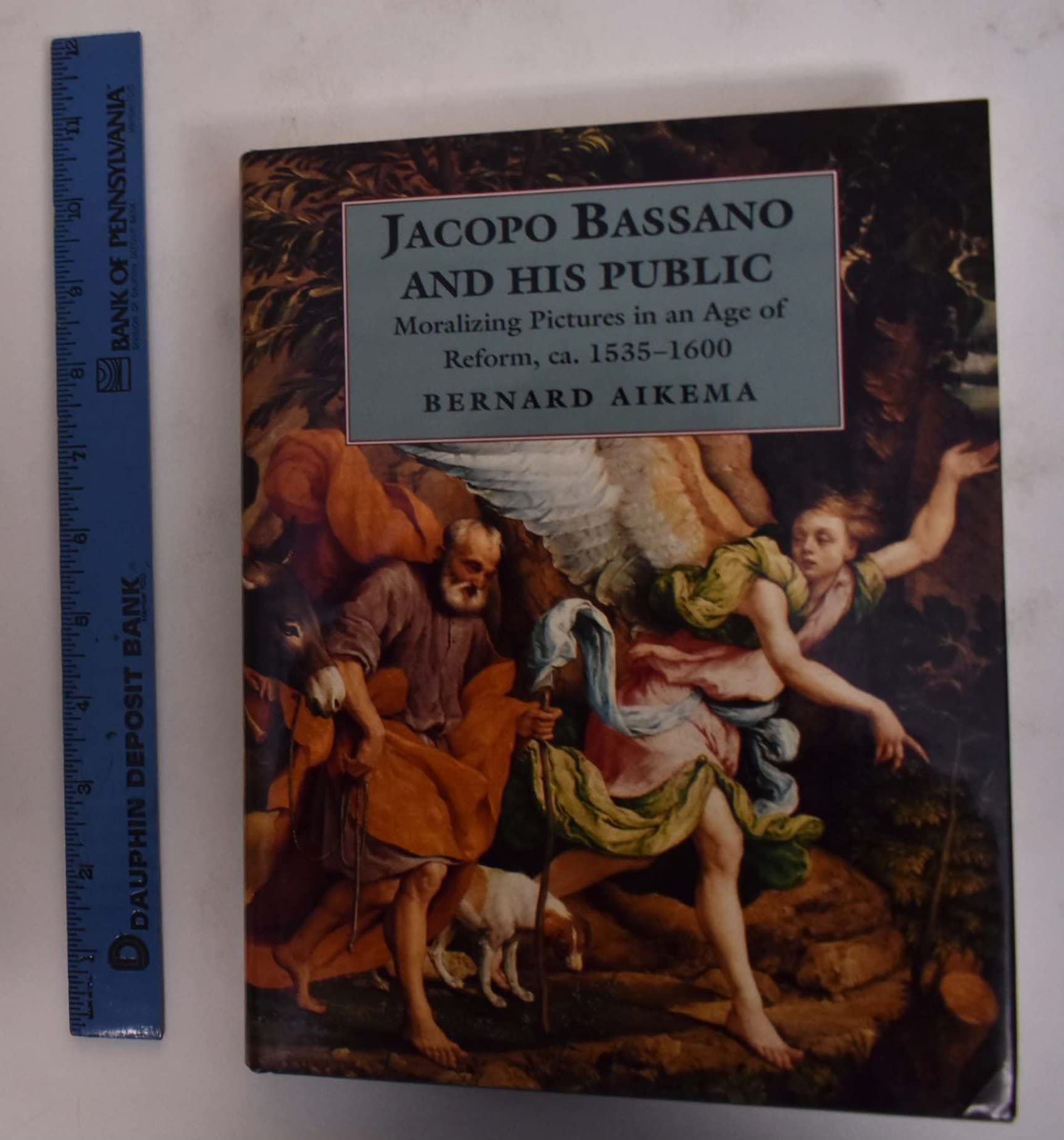
Widely acknowledged as one of the first landscape and genre painters in Italy, Jacopo Bassano (ca. 15101592) was highly regarded during his career for his brilliant treatment of light and color and for his innovative rural themes. Although he can be viewed as a pioneer pointing the way to the Dutch landscape painting of the seventeenth century, this Venetian painter is less known today than many of his contemporaries. In this book, Bernard Aikema uses a contextual approach to perform a muchneeded iconological analysis of Bassano's painterly production. By tracing a remarkably consistent use of imagery grounded in a spiritual perspective, Aikema seeks to change our conception not only of the importance of Bassano's oeuvre, but also of the original function and development of genre and landscape painting in Northern Italy as compared to that in The Netherlands.Aikema argues that Bassano developed an imagery that expressed itself in an antithetical mode of representationin which a good Christian way of life is contrasted with a materialistic concept of human conduct. The author challenges the common belief that Bassano switched to rural settings and genre painting late in life in order to satisfy art collectors' demands for 'pastoral' and 'lowlife' subjects. Even in paintings where the religious scenes are hidden in the background or are lacking altogether, these works had a primarily spiritual function. Aikema shows how such paintings served as visual aids to the changing devotional needs in the second half of the cinquecento.
⚠️ WARNING (California Proposition 65):
This product may contain chemicals known to the State of California to cause cancer,
birth defects, or other reproductive harm.
For MAP (Minimum Advertised Price) violations and Intellectual Property (IP) or Trademark concerns, please contact:
support@ergodebooks.com
⚠️ California Proposition 65 Warning: Some products sold on this website may expose you to chemicals known to the State of California to cause cancer, birth defects, or other reproductive harm. For more information, visit www.P65Warnings.ca.gov.