
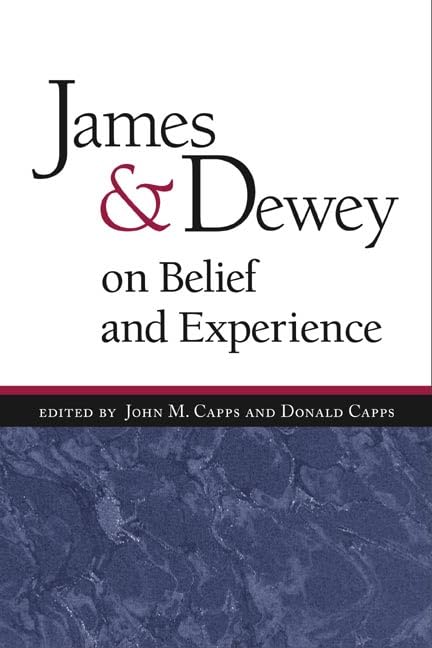
Title
James and Dewey on Belief and Experience,Used
Sold by Ergodebooks, an authorized reseller.
Returns accepted within 30 days | support@ergodebooks.com
Shipping Information
- Free Standard Shipping — United States only
- Processing Time: 3–5 business days
- Estimated Delivery: 6–10 business days after dispatch
- Double-boxed, fully insured & discreetly packaged
- Tracking number sent via email once dispatched
Returns & Refund
Returns accepted within 30 days of delivery.
Damaged or Defective Item
Free return shipping + replacement or full refund
Wrong Item Received
Free return shipping + replacement or full refund
Change of Mind
Return shipping at customer's expense · 25% restocking fee applies
Payment Option

Donald Capps and John Capps's James and Dewey on Belief and Experience juxtaposes the key writings of two philosophical superstars. As fathers of Pragmatism, America's unique contribution to world philosophy, their work has been enormously influential, and remains essential to any understanding of American intellectual history.In these essays, you'll find William James deeply embroiled in debates between religion and science. Combining philosophical charity with logical clarity, he defended the validity of religious experience against crass forms of scientism. Dewey identified the myriad ways in which supernatural concerns distract religious adherents from pressing social concerns, and sought to reconcile the tensions inherent in science's dual embrace of common sense and the aesthetic.James and Dewey on Belief and Experience is divided into two sections: the former showcases James, the latter is devoted to Dewey. Two transitional passages in which each reflects on the work of the other bridge these two main segments. Together, the sections offer a unique perspective on the philosophers' complex relationship of influence and interdependence. An editors' introduction provides biographical information about both men, an overview of their respective philosophical orientations, a discussion of the editorial process, and a brief commentary on each of the selections.Comparing what these foremost pragmatists wrote on both themes illumines their common convictions regarding the nature of philosophical inquiry and simultaneously reveals what made each a distinctive thinker.
⚠️ WARNING (California Proposition 65):
This product may contain chemicals known to the State of California to cause cancer, birth defects, or other reproductive harm.
For more information, please visit www.P65Warnings.ca.gov.