If you have any questions, you are always welcome to contact us. We'll get back to you as soon as possible, withing 24 hours on weekdays.
Customer service
All questions about your order, return and delivery must be sent to our customer service team by e-mail at yourstore@yourdomain.com
Sale & Press
If you are interested in selling our products, need more information about our brand or wish to make a collaboration, please contact us at press@yourdomain.com
Help
If you have any questions, you are always welcome to contact us. We'll get back to you as soon as possible, withing 24 hours on weekdays.
Customer service
All questions about your order, return and delivery must be sent to our customer service team by e-mail at yourstore@yourdomain.com
Sale & Press
If you are interested in selling our products, need more information about our brand or wish to make a collaboration, please contact us at press@yourdomain.com
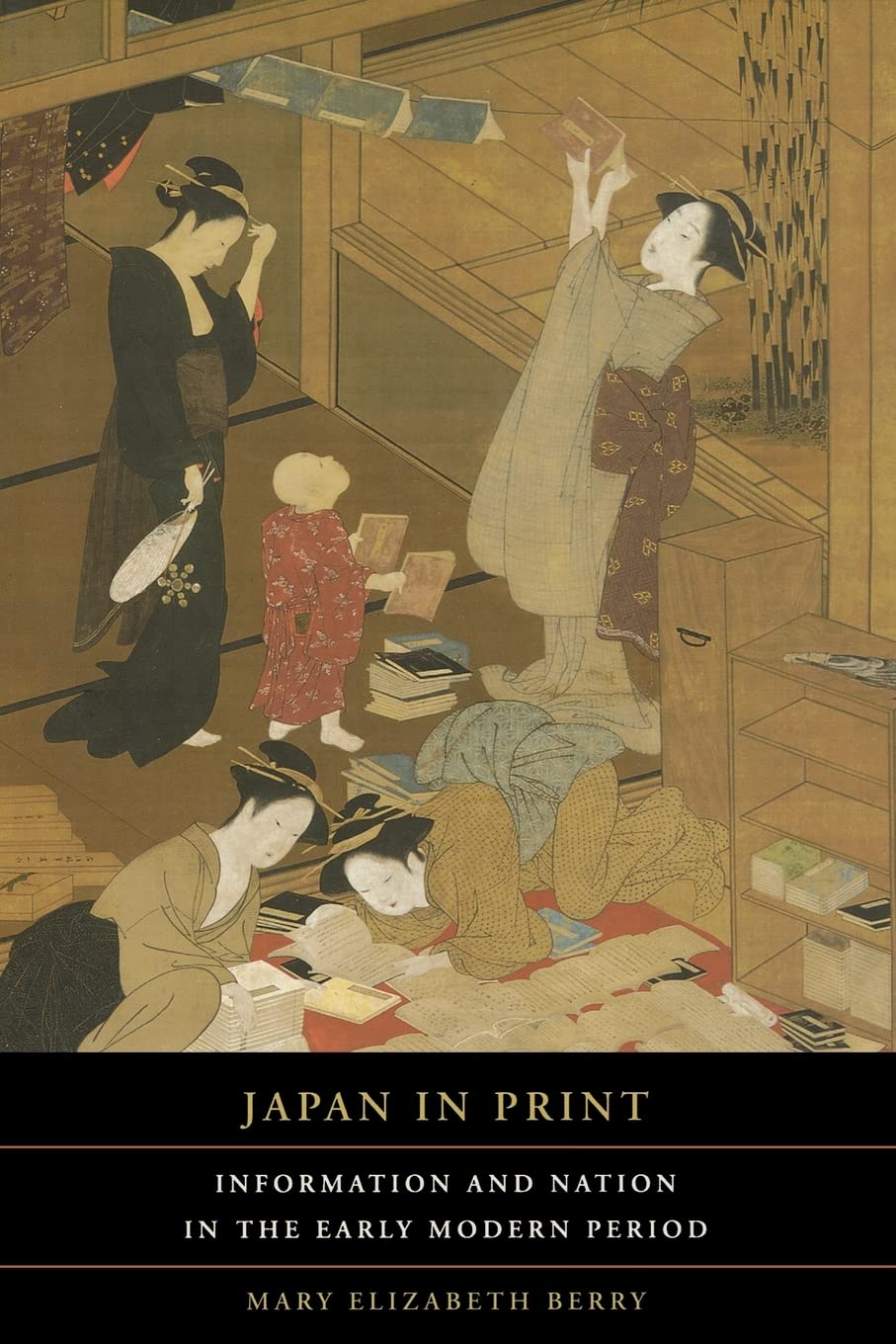
A quiet revolution in knowledge separated the early modern period in Japan from all previous time. After 1600, selfappointed investigators used the model of the land and cartographic surveys of the newly unified state to observe and order subjects such as agronomy, medicine, gastronomy, commerce, travel, and entertainment. They subsequently circulated their findings through a variety of commercially printed texts: maps, gazetteers, family encyclopedias, urban directories, travel guides, official personnel rosters, and instruction manuals for everything from farming to lovemaking. In this original and gracefully written book, Mary Elizabeth Berry considers the social processes that drove the information explosion of the 1600s. Inviting readers to examine the contours and meanings of this transformation, Berry provides a fascinating account of the conversion of the public from an object of state surveillance into a subject of selfknowledge.Japan in Print shows how, as investigators collected and disseminated richly diverse data, they came to presume in their audience a standard of cultural literacy that changed anonymous consumers into an us bound by common frames of reference. This shared space of knowledge made society visible to itself and in the process subverted notions of status hierarchy. Berry demonstrates that the new public texts projected a national collectivity characterized by universal access to markets, mobility, sociability, and selffashioning.
⚠️ WARNING (California Proposition 65):
This product may contain chemicals known to the State of California to cause cancer,
birth defects, or other reproductive harm.
For MAP (Minimum Advertised Price) violations and Intellectual Property (IP) or Trademark concerns, please contact:
support@ergodebooks.com
⚠️ California Proposition 65 Warning: Some products sold on this website may expose you to chemicals known to the State of California to cause cancer, birth defects, or other reproductive harm. For more information, visit www.P65Warnings.ca.gov.