
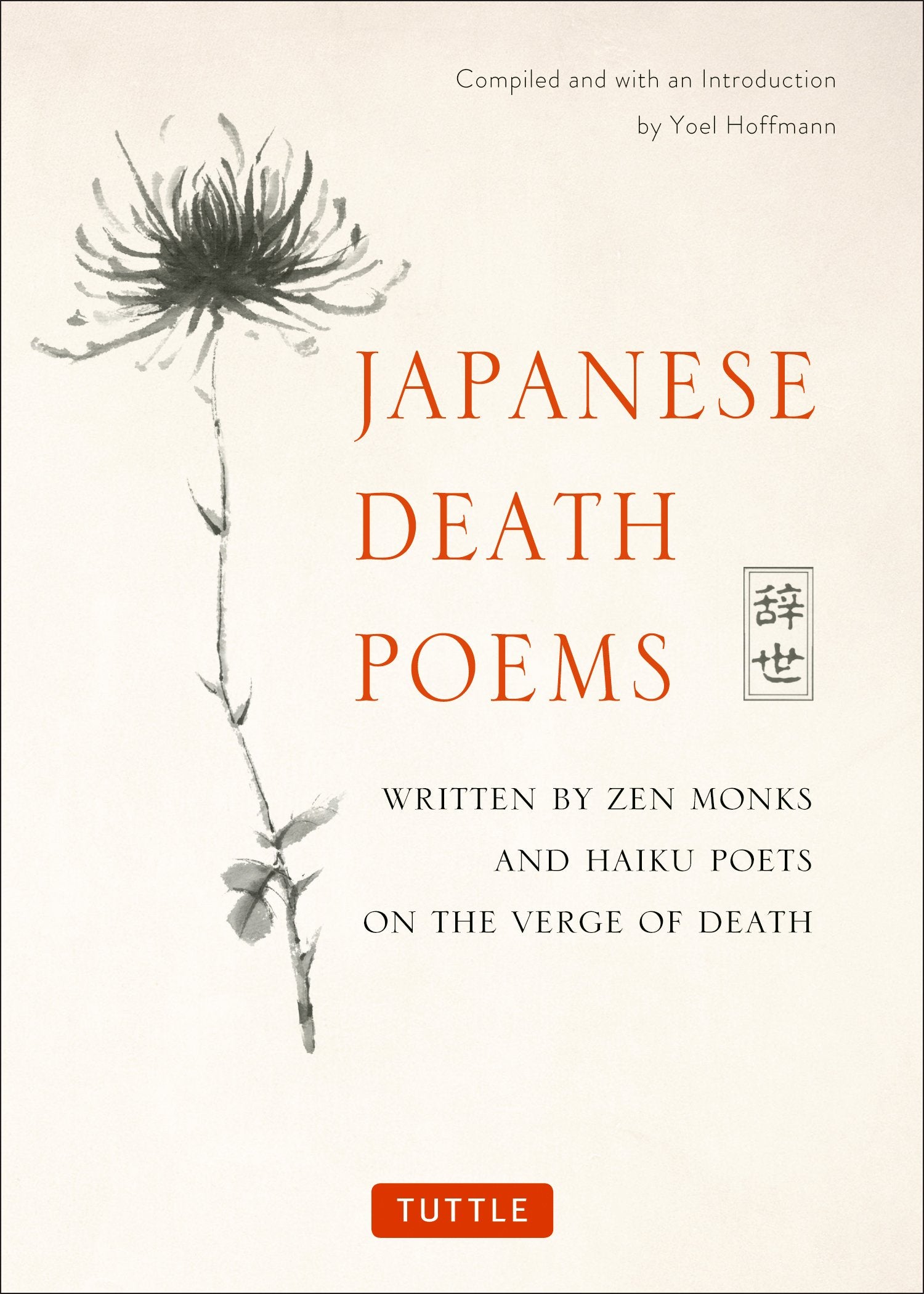
Title
Japanese Death Poems: Written By Zen Monks And Haiku Poets On The Verge Of Death
Sold by Ergodebooks, an authorized reseller.
Returns accepted within 30 days | support@ergodebooks.com
Shipping Information
- Free Standard Shipping — United States only
- Processing Time: 3–5 business days
- Estimated Delivery: 6–10 business days after dispatch
- Double-boxed, fully insured & discreetly packaged
- Tracking number sent via email once dispatched
Returns & Refund
Returns accepted within 30 days of delivery.
Damaged or Defective Item
Free return shipping + replacement or full refund
Wrong Item Received
Free return shipping + replacement or full refund
Change of Mind
Return shipping at customer's expense · 25% restocking fee applies
Payment Option

A Wonderful Introduction The Japanese Tradition Of Jisei, This Volume Is Crammed With Exquisite, Spontaneous Verse And Pithy, Often Hilarious, Descriptions Of The Eccentric And Committed Monastics Who Wrote The Poems. Tricycle: The Buddhist Reviewalthough The Consciousness Of Death Is, In Most Cultures, Very Much A Part Of Life, This Is Perhaps Nowhere More True Than In Japan, Where The Approach Of Death Has Given Rise To A Centuriesold Tradition Of Writing Jisei, Or The Death Poem. Such A Poem Is Often Written In The Very Last Moments Of The Poet'S Life.Hundreds Of Japanese Death Poems, Many With A Commentary Describing The Circumstances Of The Poet'S Death, Have Been Translated Into English Here, The Vast Majority Of Them For The First Time. Compiler Yoel Hoffmann Explores The Attitudes And Customs Surrounding Death In Historical And Presentday Japan And Gives Examples Of How These Have Been Reflected In The Nation'S Literature In General. The Development Of Writing Jisei Is Then Examinedfrom The Longing Poems Of The Early Nobility And The More Masculine Verses Of The Samurai To The Satirical Death Poems Of Later Centuries.Zen Buddhist Ideas About Death Are Also Described As A Preface To The Collection Of Chinese Death Poems By Zen Monks That Are Also Included. Finally, The Last Section Contains Three Hundred Twenty Haiku, Some Of Which Have Never Been Assembled Before, In Translated English And Romanized Japanese.
⚠️ WARNING (California Proposition 65):
This product may contain chemicals known to the State of California to cause cancer, birth defects, or other reproductive harm.
For more information, please visit www.P65Warnings.ca.gov.
- Q: What is the page count of the book? A: The book has three hundred sixty-eight pages. It provides an extensive collection of Japanese death poems and commentary.
- Q: What is the binding type of this book? A: The book is available in paperback binding. This makes it lightweight and portable for readers.
- Q: What are the dimensions of the book? A: The book measures five point twelve inches in length, one point two inches in width, and six point nine inches in height. These dimensions make it easy to handle.
- Q: Who is the author of this book? A: The author of the book is Yoel Hoffmann. He compiles traditional Japanese death poems and provides insights into their significance.
- Q: What category does this book fall under? A: The book is categorized under Japanese and Haiku literature. It focuses on the unique tradition of jisei or death poems.
- Q: How do I read this book? A: You can read this book like any other paperback. Simply open to the page you wish to start from and enjoy the poetry.
- Q: Is this book suitable for beginners in poetry? A: Yes, this book is suitable for beginners. It offers accessible translations and commentary that help new readers understand Japanese death poems.
- Q: Are there any specific themes in the poems? A: Yes, the themes include mortality, reflection, and Zen Buddhist perspectives on death. These themes are prominent throughout the collection.
- Q: How can I store this book to keep it in good condition? A: Store the book in a cool, dry place, away from direct sunlight. Keep it upright on a shelf or in a protective cover to avoid damage.
- Q: Can I clean the book if it gets dirty? A: Yes, you can gently wipe the cover with a soft, dry cloth. Avoid using water or cleaning products as they may damage the pages.
- Q: What is the return policy for this book? A: Typically, the return policy allows returns within thirty days of purchase in original condition. Check with the retailer for specific details.
- Q: What should I do if the book arrives damaged? A: If the book arrives damaged, contact customer support immediately for assistance. They can guide you through the return or replacement process.
- Q: Is this book appropriate for all ages? A: Yes, the book is appropriate for older teens and adults due to its themes of death and reflection. It is not specifically aimed at children.
- Q: How does this book compare to other poetry collections? A: This book uniquely focuses on Japanese death poems, providing cultural insights. Unlike general poetry collections, it explores a specific tradition.
- Q: What makes this book special? A: The book is special because it features many poems translated into English for the first time, offering a rare glimpse into the jisei tradition.