If you have any questions, you are always welcome to contact us. We'll get back to you as soon as possible, withing 24 hours on weekdays.
Customer service
All questions about your order, return and delivery must be sent to our customer service team by e-mail at yourstore@yourdomain.com
Sale & Press
If you are interested in selling our products, need more information about our brand or wish to make a collaboration, please contact us at press@yourdomain.com
Help
If you have any questions, you are always welcome to contact us. We'll get back to you as soon as possible, withing 24 hours on weekdays.
Customer service
All questions about your order, return and delivery must be sent to our customer service team by e-mail at yourstore@yourdomain.com
Sale & Press
If you are interested in selling our products, need more information about our brand or wish to make a collaboration, please contact us at press@yourdomain.com
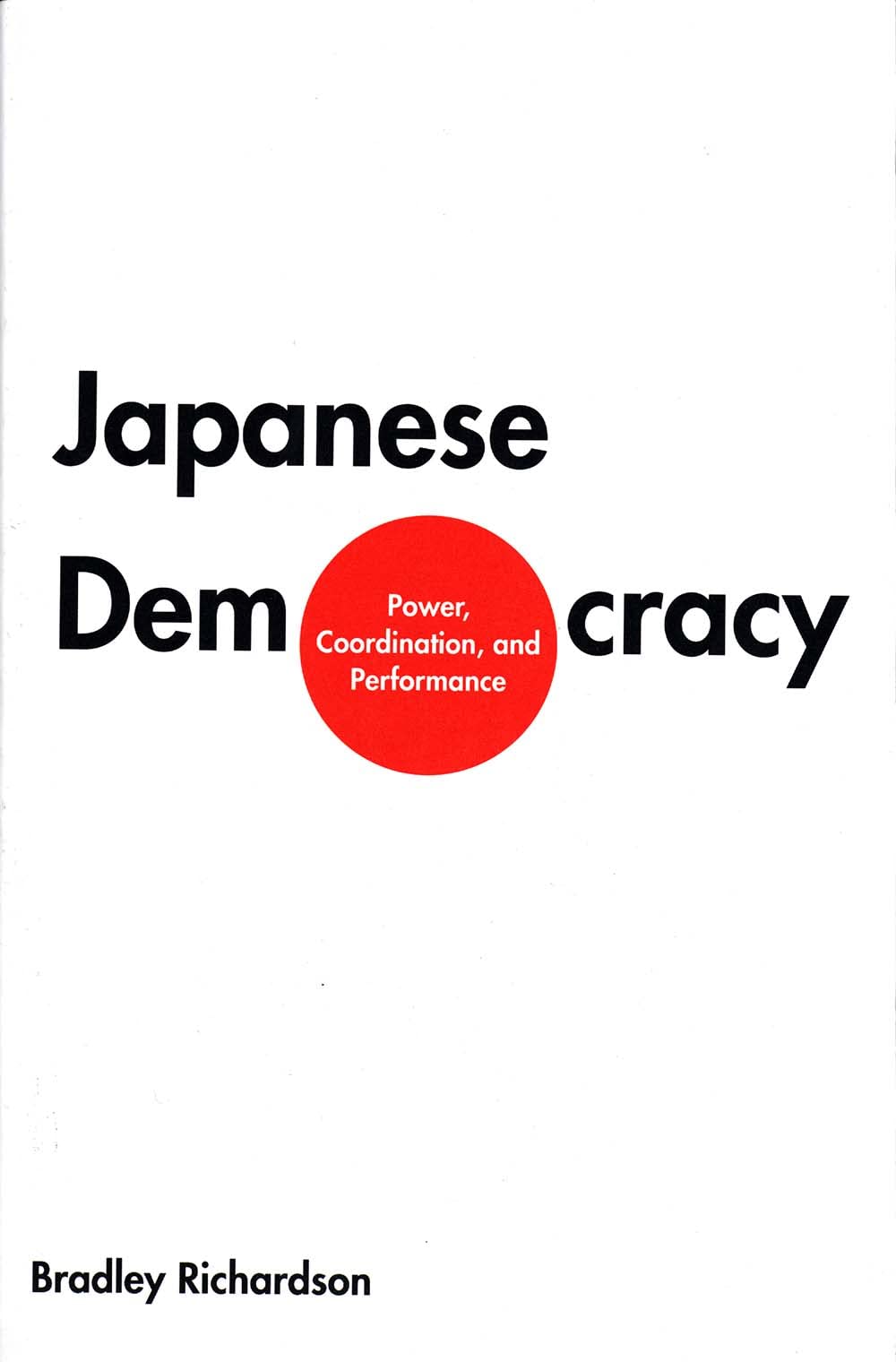
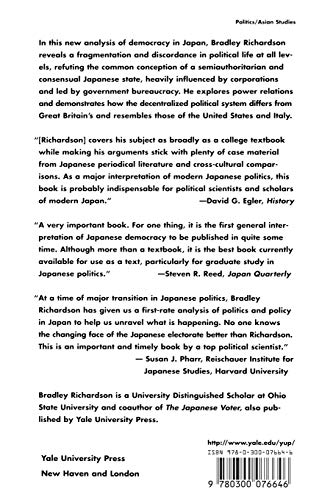
In this new analysis of democracy in Japan, Bradley Richardson refutes the widely accepted hypothesis that postwar Japan has been a semiauthoritarian and consensual state, heavily influenced by corporations and led by the government bureaucracy. On the contrary, Richardson's extensive newspaper and documentary research shows that Japanese political life has been extremely fragmented and discordant at all levelsin the bureaucracy, legislatures, parties, and interest groups, and in business and industry. Even the seemingly invulnerable Liberal Democratic Party (LDP), which ruled Japan for thirtyeight years, experienced rampant internal conflict. Now, the author contends, despite changes in political alignments since the collapse of the LDP in 1993, politics continues much as before.In Japanese Democracy, Richardson explores power relationships and demonstrates how Japan's political system is unlike Great Britain's and similar to those of the United States and Italy, where politics is decentralized and decisions are made at many levels. He draws some important conclusions: that Japan's postwar industrial policy has not always been successful, that the country is as much an economic welfare state as it is an economic 'miracle,' and that the lack of strong leadership has kept Japan from playing a more assertive role in the international arena. As in the United States, private interests hold central policymaking processes hostage, and weak leadership prevails.
⚠️ WARNING (California Proposition 65):
This product may contain chemicals known to the State of California to cause cancer,
birth defects, or other reproductive harm.
For MAP (Minimum Advertised Price) violations and Intellectual Property (IP) or Trademark concerns, please contact:
support@ergodebooks.com
⚠️ California Proposition 65 Warning: Some products sold on this website may expose you to chemicals known to the State of California to cause cancer, birth defects, or other reproductive harm. For more information, visit www.P65Warnings.ca.gov.