
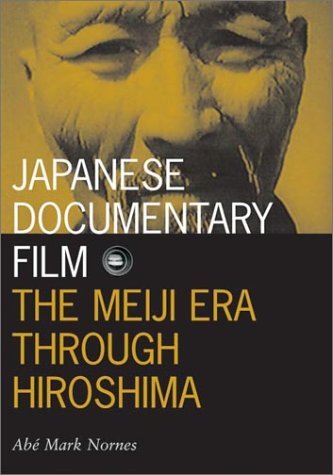
Title

Japanese Documentary Film: The Meiji Era Through Hiroshima (Volume 15) (Visible Evidence)
Processing time: 1-3 days
US Orders Ships in: 3-5 days
International Orders Ships in: 8-12 days
Return Policy: 15-days return on defective items
Payment Option

Among Asian Countrieswhere Until Recently Documentary Filmmaking Was Largely The Domain Of Central Governmentsjapan Was Exceptional For The Vigor Of Its Nonfiction Film Industry. And Yet, For All Its Aesthetic, Historical, And Political Interest, The Japanese Documentary Remains Little Known And Largely Unstudied Outside Of Japan. This Is The First Englishlanguage Study Of The Subject, An Enlightening Close Look At The First Fifty Years Of Documentary Film Theory And Practice In Japan. Beginning With Films Made By Foreigners In The Nineteenth Century And Concluding With The First Two Films Made After Japans Surrender In 1945, Ab Mark Nornes Moves From A Prehistory Of The Documentary, Through Innovations Of The Proletarian Film Movement, To The Hardening Of Style And Conventions That Started With The Manchurian Incident Films And Continued Through The Pacific War. Nornes Draws On A Wide Variety Of Archival Sourcesincluding Japanese Studio Records, Secret Police Reports, Government Memos, Letters, Military Tribunal Testimonies, And Moreto Chart Shifts In Documentary Style Against Developments In The History Of Modern Japan. Ab Mark Nornes Is Associate Professor At The University Of Michigan, Where He Teaches In The Department Of Asian Languages And Cultures And The Program In Film And Video Studies.
⚠️ WARNING (California Proposition 65):
This product may contain chemicals known to the State of California to cause cancer, birth defects, or other reproductive harm.
For more information, please visit www.P65Warnings.ca.gov.
- Q: What is the main focus of 'Japanese Documentary Film: The Meiji Era Through Hiroshima'? A: The book focuses on the history and development of Japanese documentary filmmaking from the nineteenth century through the post-World War II era, highlighting significant shifts in style and practice.
- Q: Who is the author of this book? A: The author is Abé Mark Nornes, who is an associate professor at the University of Michigan specializing in Asian languages and film studies.
- Q: How many pages does the book contain? A: The book contains 288 pages.
- Q: What is the publication date of this book? A: The book was published on July 8, 2003.
- Q: Is this book available in different editions? A: Yes, this book is available in a first edition.
- Q: What type of binding does the book have? A: The book is available in paperback binding.
- Q: What are the key themes addressed in the book? A: Key themes include the evolution of documentary film in Japan, the influence of historical events on filmmaking, and the exploration of archival sources to analyze documentary styles.
- Q: Is this book suitable for readers unfamiliar with Japanese cinema? A: Yes, the book provides an introductory overview of Japanese documentary film history, making it accessible to readers with varying levels of familiarity.
- Q: Does the author use primary sources in this book? A: Yes, Abé Mark Nornes utilizes a variety of archival sources, including studio records and government documents, to support his analysis.
- Q: What genre does this book fall under? A: This book falls under the category of Performing Arts, with a specific focus on film studies.