If you have any questions, you are always welcome to contact us. We'll get back to you as soon as possible, withing 24 hours on weekdays.
Customer service
All questions about your order, return and delivery must be sent to our customer service team by e-mail at yourstore@yourdomain.com
Sale & Press
If you are interested in selling our products, need more information about our brand or wish to make a collaboration, please contact us at press@yourdomain.com
Help
If you have any questions, you are always welcome to contact us. We'll get back to you as soon as possible, withing 24 hours on weekdays.
Customer service
All questions about your order, return and delivery must be sent to our customer service team by e-mail at yourstore@yourdomain.com
Sale & Press
If you are interested in selling our products, need more information about our brand or wish to make a collaboration, please contact us at press@yourdomain.com
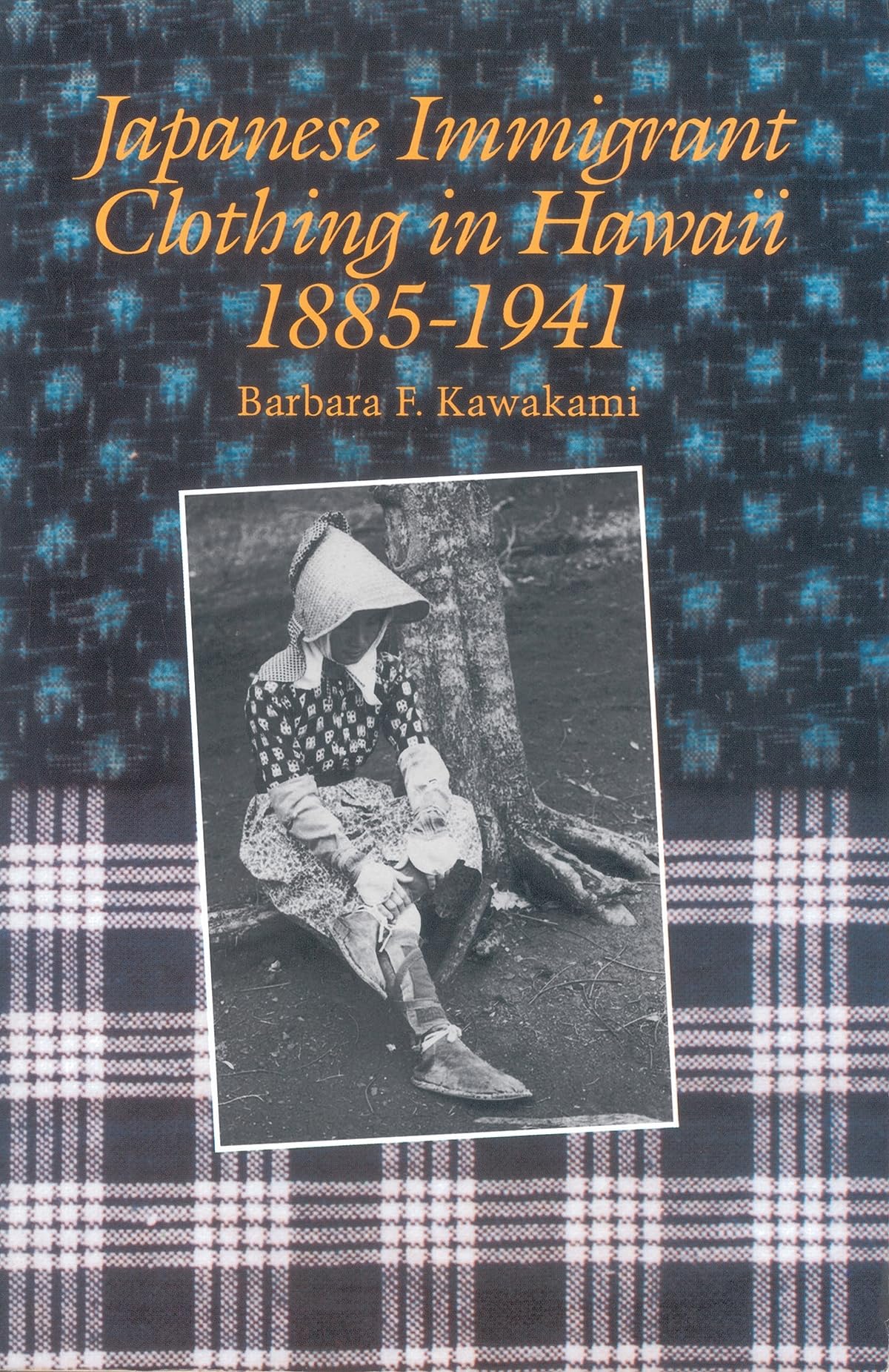
Between 1886 and 1924 thousands of Japanese journeyed to Hawaii to work the sugarcane plantations. First the men came, followed by brides, known only from their pictures, for marriages arranged by brokers. This book tells the story of two generations of plantation workers as revealed by the clothing they brought with them and the adaptations they made to it to accommodate the harsh conditions of plantation labor. Barbara Kawakami has created a vivid picture highlighted by littleknown facts gleaned from extensive interviews, from study of preserved pieces of clothing and how they were constructed, and from the literature. She shows that as the cloth preferred by the immigrants shifted from kasuri (tiedyed fabric from Japan) to palaka (heavy cotton cloth woven in a white plaid pattern on a dark blue background) so too their outlooks shifted from those of foreigners to those of Japanese Americans.Chapters on wedding and funeral attire present a cultural history of the life events at which they were worn, and the examination of work, casual, and children's clothing shows us the social fabric of the issei (firstgeneration Japanese). Changes that occurred in nisei (secondgeneration) tradition and clothing are also addressed.The book is illustrated with rare photographs of the period from family collections.
⚠️ WARNING (California Proposition 65):
This product may contain chemicals known to the State of California to cause cancer,
birth defects, or other reproductive harm.
For MAP (Minimum Advertised Price) violations and Intellectual Property (IP) or Trademark concerns, please contact:
support@ergodebooks.com
⚠️ California Proposition 65 Warning: Some products sold on this website may expose you to chemicals known to the State of California to cause cancer, birth defects, or other reproductive harm. For more information, visit www.P65Warnings.ca.gov.