
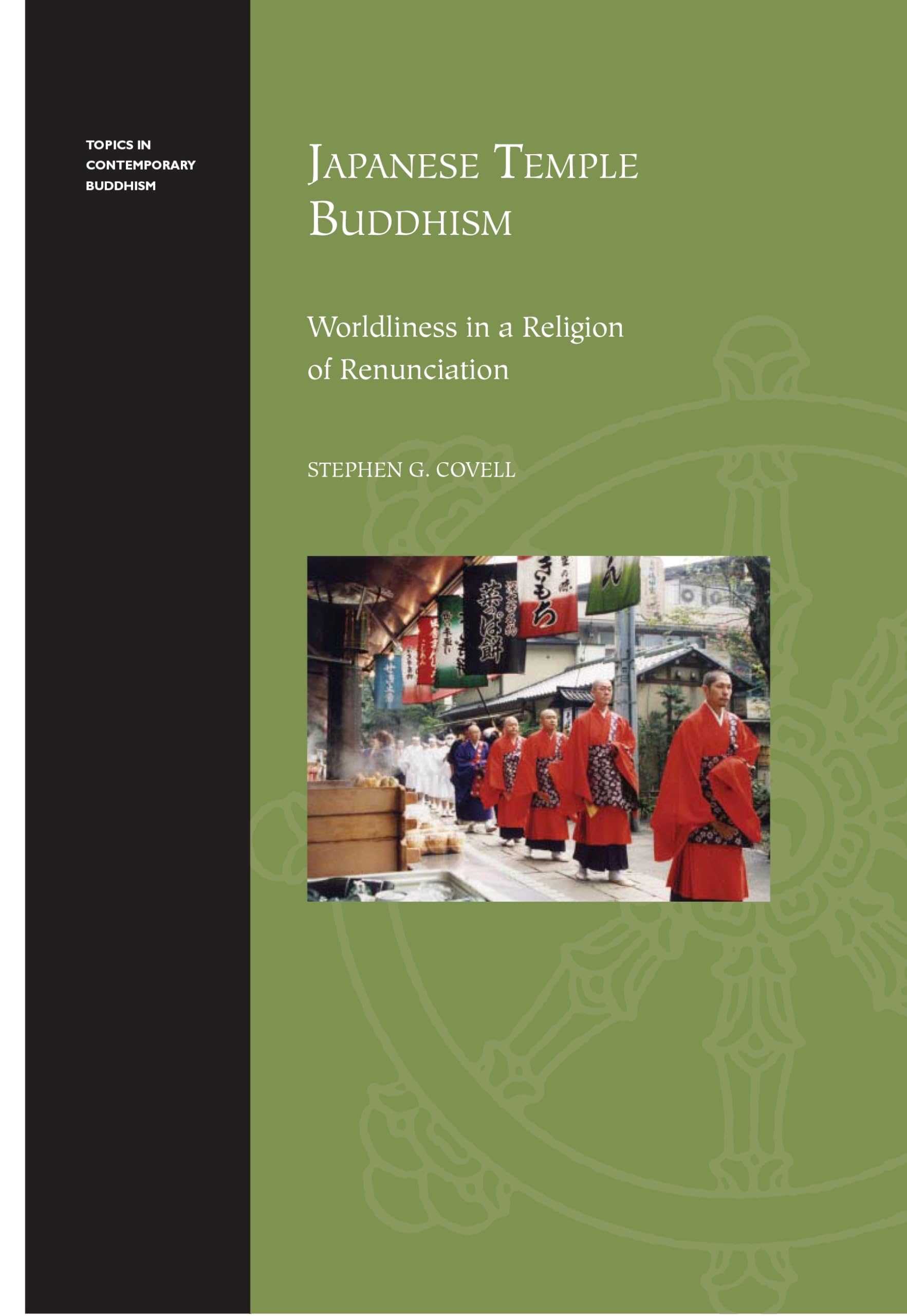
Title
Japanese Temple Buddhism: Worldliness In A Religion Of Renunciation (Topics In Contemporary Buddhism, 8),New
Sold by Ergodebooks, an authorized reseller.
Returns accepted within 30 days | support@ergodebooks.com
Shipping Information
- Free Standard Shipping — United States only
- Processing Time: 3–5 business days
- Estimated Delivery: 6–10 business days after dispatch
- Double-boxed, fully insured & discreetly packaged
- Tracking number sent via email once dispatched
Returns & Refund
Returns accepted within 30 days of delivery.
Damaged or Defective Item
Free return shipping + replacement or full refund
Wrong Item Received
Free return shipping + replacement or full refund
Change of Mind
Return shipping at customer's expense · 25% restocking fee applies
Payment Option

There Have Been Many Studies That Focus On Aspects Of The History Of Japanese Buddhism. Until Now, None Have Addressed Important Questions Of Organization And Practice In Contemporary Buddhism, Questions Such As How Japanese Buddhism Came To Be Seen As A Religion Of Funeral Practices; How Buddhist Institutions Envision The Role Of The Laity; And How A Married Clergy Has Affected Life At Temples And The Image Of Priests. This Volume Is The First To Address Fully Contemporary Buddhist Life And Institutionstopics Often Overlooked In The Conflict Between The Rhetoric Of Renunciation And The Practices Of Clerical Marriage And Householding That Characterize Much Of Buddhism In Todays Japan. Informed By Years Of Field Research And His Own Experiences Training To Be A Tendai Priest, Stephen Covell Skillfully Refutes This 'Corruption Paradigm' While Revealing The Many (Often Contradictory) Facets Of Contemporary Institutional Buddhism, Or As Covell Terms It, Temple Buddhism.Covell Significantly Broadens The Scope Of Inquiry To Include How Buddhism Is Approached By Both Laity And Clerics When He Takes Into Account Temple Families, Community Involvement, And The Commodification Of Practice. He Considers Law And Tax Issues, Temple Strikes, And The Politics Of Temple Boards Of Directors To Shed Light On How Temples Are Run And Viewed By Their Inhabitants, Supporters, And Society In General. In Doing So He Uncovers The Economic Realities That Shape Ritual Practices And Shows How Mundane Factors Such As Taxes Influence The Debate Over Temple Buddhisms Role In Contemporary Japanese Society. In Addition, Through Interviews And Analyses Of Sectarian Literature And Recent Scholarship On Gender And Buddhism, He Provides A Detailed Look At Priests Wives, Who Have Become Indispensable In The Management Of Temple Affairs.
⚠️ WARNING (California Proposition 65):
This product may contain chemicals known to the State of California to cause cancer, birth defects, or other reproductive harm.
For more information, please visit www.P65Warnings.ca.gov.
- Q: What is the page count of this book? A: This book contains two hundred seventy-two pages. It offers an in-depth exploration of contemporary Japanese Buddhism.
- Q: What are the dimensions of this book? A: The book measures six inches in length, zero point seventy-one inches in width, and eight point nine inches in height. This makes it a convenient size for reading.
- Q: What is the binding type of this book? A: This book is published in paperback format. This type of binding is lightweight and flexible, ideal for casual reading.
- Q: Who is the author of the book? A: The author of the book is Stephen G. Covell. He provides insights based on extensive field research and personal experiences.
- Q: What is the main topic of the book? A: The main topic of this book is the organization and practice of contemporary Japanese Buddhism. It addresses themes like clerical marriage and the role of laity.
- Q: How does this book approach the topic of Japanese Buddhism? A: This book critically examines the complexities of modern Buddhist life and institutions. It challenges traditional views and explores contemporary practices.
- Q: Is this book suitable for beginners in Buddhism? A: Yes, this book is suitable for beginners. It provides a comprehensive overview of contemporary issues in Japanese Buddhism.
- Q: Can I read this book if I have no background in Buddhism? A: Yes, you can read this book without prior knowledge of Buddhism. It presents concepts in an accessible manner for general readers.
- Q: What is the focus of the author's research? A: The author's research focuses on the practices and institutions of contemporary Japanese Buddhism. It highlights often-overlooked aspects of temple life.
- Q: How should I care for this paperback book? A: To care for this paperback book, keep it away from moisture and direct sunlight. Store it in a cool, dry place to maintain its condition.
- Q: What is the recommended storage for this book? A: It is recommended to store this book upright on a shelf. This prevents bending and damage to the spine.
- Q: Is this book safe for children? A: Yes, this book is generally safe for older children and teens interested in Buddhism. However, adult supervision is advised for younger readers.
- Q: What if the book arrives damaged? A: If the book arrives damaged, you can contact the seller for a return or replacement. Be sure to keep the original packaging for return purposes.
- Q: How can I return this book if I don't like it? A: You can return the book by following the seller's return policy. Check their website for specific instructions on returns.
- Q: What makes this book different from other Buddhism books? A: This book uniquely addresses the intersection of contemporary practices and traditional beliefs in Japanese Buddhism. It explores real-life implications and challenges.
- Q: Is this book part of a series? A: Yes, this book is part of the 'Topics in Contemporary Buddhism' series. It contributes to the ongoing discussion on modern Buddhist practices.