
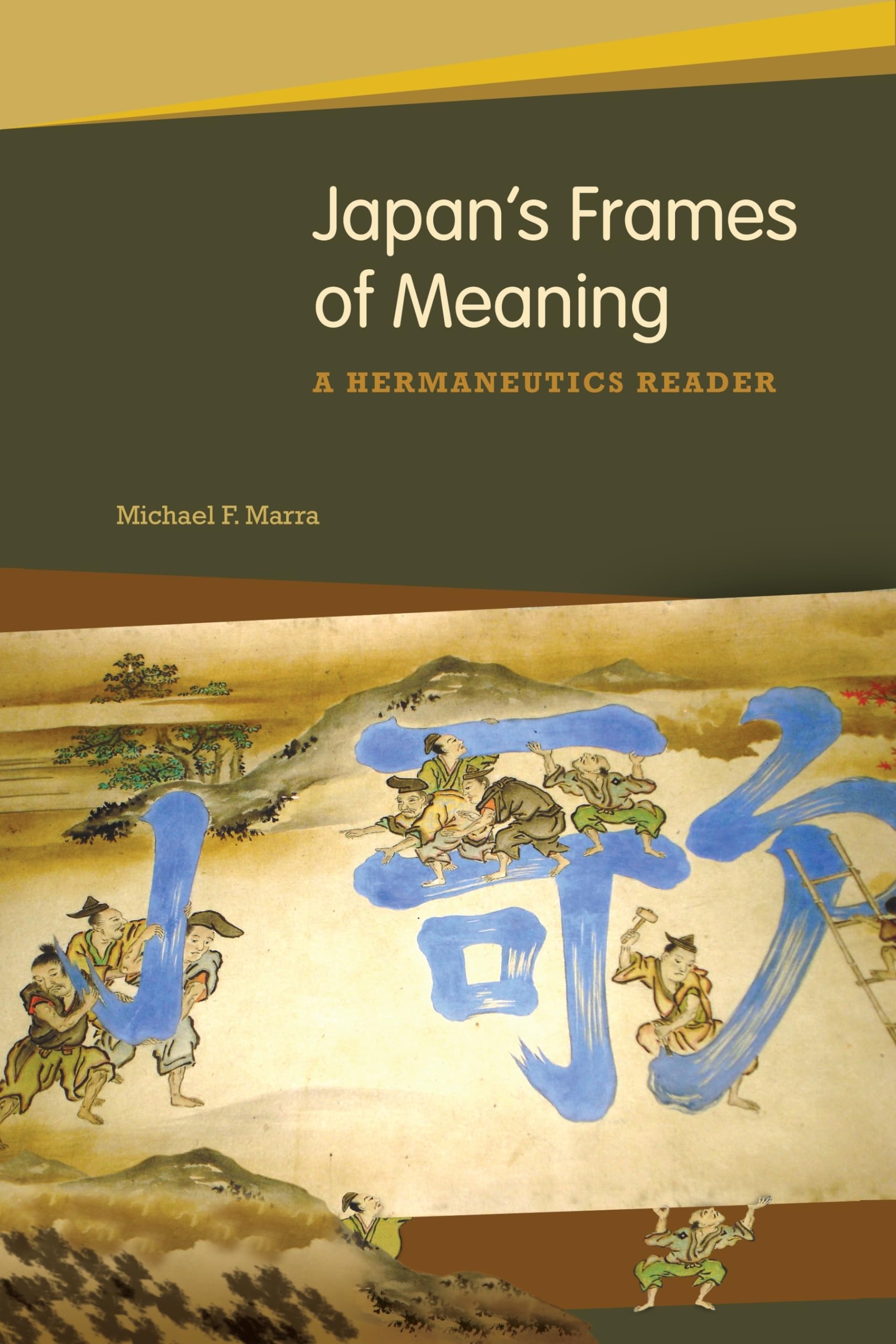
Title
Japans Frames Of Meaning: A Hermeneutics Reader,Used
Sold by Ergodebooks, an authorized reseller.
Returns accepted within 30 days | support@ergodebooks.com
Shipping Information
- Free Standard Shipping — United States only
- Processing Time: 3–5 business days
- Estimated Delivery: 6–10 business days after dispatch
- Double-boxed, fully insured & discreetly packaged
- Tracking number sent via email once dispatched
Returns & Refund
Returns accepted within 30 days of delivery.
Damaged or Defective Item
Free return shipping + replacement or full refund
Wrong Item Received
Free return shipping + replacement or full refund
Change of Mind
Return shipping at customer's expense · 25% restocking fee applies
Payment Option

In Japans Frames Of Meaning, Michael Marra Identifies Interpretative Concepts Central To Discussions Of Hermeneutical Practices In Japan And Presents English Translations Of Works On Basic Hermeneutics By Major Japanese Thinkers. Discussions Of Japanese Thought Tend To Be Centered On Key Western Terms In Light Of Which Japanese Texts Are Examined; Alternatively, A Few Buddhist Concepts Are Presented As Counterparts Of These Western Terms. Marra Concentrates On Japanese Philosophers And Thinkers Who Have Mediated These Two Extremes, Bringing Their Knowledge Of Western Thought To Bear On Philosophical Reinterpretations Of Buddhist Terms That Are, Thus, Presented In Secularized Form.Marra Focuses On Categories Relevant To The Development Of A History Of Japanese Hermeneutics, Calling Attention To Concepts Whose Discussion Sheds Light On How Japanese Thinkers Have Proceeded In Making Sense Of Their Own Culture. The Terms Are Organized Under Three Headings. The First Deals With Koto, Which In Japanese Means Both 'Things' And 'Words.' Koto Is The Center Of A Series Of Interesting Compounds, Such As Kotodama (The Spirit Of Words) And Makoto (Truth), That Have Shaped Japanese Discourses On Philosophy, Ethics, Aesthetics, And Religion. Writings On Koto By Twentiethcentury Philosophers Watsuji Tetsuro (18891960) And Omori Shozo (19211997) And Edoperiod Scholar Fujitani Mitsue (17681823) Are Included. The Second Heading Is Dedicated To Two Wellknown Aesthetic Categories, Yugen And Sabi, Which Point To Notions Of Depth In Physical Space As Well As In The Space Of Interiority. The University Of Kyoto Aesthetician Ueda Juzo (18861973) Guides The Reader Through A History Of These Concepts. In The Third Part Of The Book, Notions Of Time In The Form Of Ku (Emptiness) And Guzen (Contingency) Are Examined Through The Work Of Uedas Colleagues At Kyoto, Nishitani Keiji (19001990) And Kuki Shuzo (18881941).Perceptive And Erudite, Japans Frames Of Meaning Will Become A Landmark Resourcein Particular For The Insights And Provocations It Offers To Contemporary Crosscultural Philosophical Dialoguefor Anyone Interested In Traditional And Modern Japanese Thought.
⚠️ WARNING (California Proposition 65):
This product may contain chemicals known to the State of California to cause cancer, birth defects, or other reproductive harm.
For more information, please visit www.P65Warnings.ca.gov.
- Q: What is the page count of 'Japan’s Frames of Meaning'? A: This book contains four hundred sixty-four pages. It provides a comprehensive exploration of hermeneutical practices in Japan.
- Q: What type of binding does this book have? A: This book is a hardcover edition. Hardcover bindings are known for their durability and aesthetic appeal.
- Q: What are the dimensions of this book? A: This book measures six point two six inches in length, zero point seven five inches in width, and nine point two five inches in height. These dimensions make it a standard-sized book for easy handling.
- Q: Who is the author of 'Japan’s Frames of Meaning'? A: The author is Michael Marra. He is recognized for his expertise in Japanese philosophy and hermeneutics.
- Q: What is the main subject of 'Japan’s Frames of Meaning'? A: The book focuses on hermeneutical practices in Japan. It explores the intersections of Japanese and Western philosophical thought.
- Q: How should I read 'Japan’s Frames of Meaning'? A: You can read this book as a scholarly resource or for personal interest in Japanese philosophy. It is suitable for readers with an interest in hermeneutics.
- Q: Is 'Japan’s Frames of Meaning' suitable for beginners in philosophy? A: Yes, it can be suitable for beginners. The book presents complex ideas in a manner that is accessible to those new to the subject.
- Q: What themes are explored in 'Japan’s Frames of Meaning'? A: The book examines themes such as koto, yugen, and sabi, which relate to Japanese aesthetics and philosophy. These concepts are pivotal for understanding Japanese thought.
- Q: How can I maintain 'Japan’s Frames of Meaning' in good condition? A: To keep this book in good condition, store it upright in a cool, dry place. Avoid exposing it to direct sunlight to prevent fading.
- Q: Is there any special care needed for this hardcover book? A: No special care is needed beyond regular book care. Just handle it gently and keep it away from moisture.
- Q: What if 'Japan’s Frames of Meaning' arrives damaged? A: If the book arrives damaged, you should contact the seller for a return or exchange. Most sellers have policies to handle such issues.
- Q: Can I return 'Japan’s Frames of Meaning' if I don't like it? A: Yes, you can generally return the book. Check the seller's return policy for specific terms and conditions.
- Q: Is there a warranty for 'Japan’s Frames of Meaning'? A: No, books typically do not come with a warranty. However, returns are usually allowed for damaged items.
- Q: How does 'Japan’s Frames of Meaning' compare to other philosophy books? A: This book offers a unique perspective on Japanese hermeneutics, setting it apart from many Western-focused philosophy texts. It bridges cultural gaps in philosophical discussions.
- Q: What makes 'Japan’s Frames of Meaning' valuable for cross-cultural dialogue? A: The insights it provides into Japanese thought make it a valuable resource for anyone interested in cross-cultural philosophical dialogue. It highlights unique interpretations of universal themes.
- Q: Who is the publisher of 'Japan’s Frames of Meaning'? A: The publisher is the University of Hawaii Press. They are known for their scholarly works on Asian studies.