If you have any questions, you are always welcome to contact us. We'll get back to you as soon as possible, withing 24 hours on weekdays.
Customer service
All questions about your order, return and delivery must be sent to our customer service team by e-mail at yourstore@yourdomain.com
Sale & Press
If you are interested in selling our products, need more information about our brand or wish to make a collaboration, please contact us at press@yourdomain.com
Help
If you have any questions, you are always welcome to contact us. We'll get back to you as soon as possible, withing 24 hours on weekdays.
Customer service
All questions about your order, return and delivery must be sent to our customer service team by e-mail at yourstore@yourdomain.com
Sale & Press
If you are interested in selling our products, need more information about our brand or wish to make a collaboration, please contact us at press@yourdomain.com
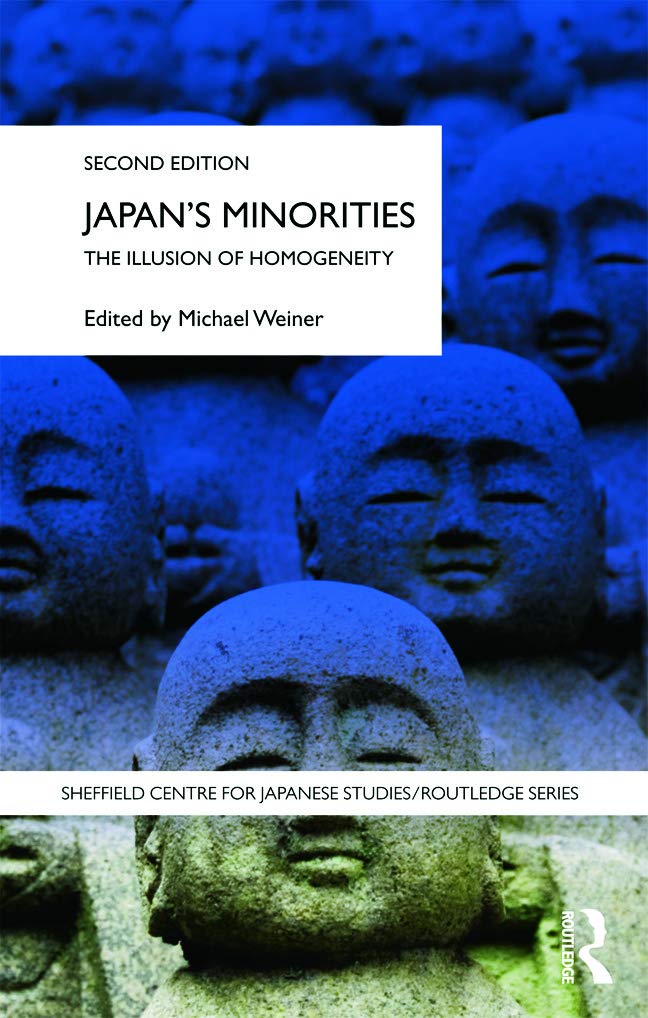
Based On Original Research, Japan'S Minorities Provides A Clear Historical Introduction To The Formation Of Individual Minorities, Followed By An Analysis Of The Contemporary Situation.This Second Edition Identifies And Explores The Six Principal Minority Groups In Japan: The Ainu, The Burakumin, The Chinese, The Koreans, The Nikkeijin And The Okinawans. Examining The Ways In Which The Japanese Have Manipulated Historical Events, Such As Hiroshima And Nagasaki, The Contributors Reveal The Presence Of An Underlying Concept Of Japaneseness That Excludes Members Of These Minorities. The Book Addresses Key Themes Including: The Role Of This Ideology Of Race In The Construction Of The Japanese Identity Historical Memory And Its Suppression Contemporary Labour Migration To Japan The Threehundred Year Existence Of Chinese Communities In Japan Mixedrace Children In Japan The Feminization Of Contemporary Migration To Japan.Still The Only Scholarly Examination Of Issues Of Race, Ethnicity And Marginality In Japan From Both A Historical And Comparative Perspective, This New Edition Will Be Essential Reading For Scholars And Students Of Japanese Studies, Ethnic And Racial Studies, Culture And Society, Anthropology And Politics.
⚠️ WARNING (California Proposition 65):
This product may contain chemicals known to the State of California to cause cancer,
birth defects, or other reproductive harm.
Q: How many pages are in 'Japan's Minorities'?A: There are two hundred fifty-six pages in 'Japan's Minorities'. This book provides comprehensive insights into the historical and contemporary issues faced by minority groups in Japan.
Q: What is the binding type of this book?A: This book is available in paperback binding. Paperback editions are lightweight and flexible, making them easy to carry and read.
Q: What are the dimensions of 'Japan's Minorities'?A: The book measures five point forty-three inches in length, zero point fifty-nine inches in width, and eight point five inches in height. These dimensions make it a manageable size for reading and storage.
Q: Who is the author of 'Japan's Minorities'?A: The author of 'Japan's Minorities' is Michael Weiner. He is known for his research on Japanese studies and minority issues.
Q: What is the main theme of 'Japan's Minorities'?A: The main theme of this book is the exploration of race, ethnicity, and marginality in Japan. It addresses how historical events have shaped the experiences of various minority groups.
Q: Is 'Japan's Minorities' suitable for all ages?A: Yes, 'Japan's Minorities' is suitable for high school students and above. It is a scholarly work meant for those interested in Japanese studies and social issues.
Q: How can I apply the insights from 'Japan's Minorities'?A: You can apply the insights by examining contemporary societal issues regarding race and ethnicity in Japan. The book serves as a foundational text for understanding these complex topics.
Q: What kind of readers would benefit from 'Japan's Minorities'?A: Scholars and students of Japanese studies, ethnic and racial studies, and anthropology would greatly benefit from this book. It provides in-depth analysis and historical context.
Q: Are there any specific minority groups discussed in the book?A: Yes, the book discusses six principal minority groups: the Ainu, Burakumin, Chinese, Koreans, Nikkeijin, and Okinawans. Each group is examined in terms of their history and current situation.
Q: How should I care for my copy of 'Japan's Minorities'?A: To care for your copy, keep it in a cool, dry place and avoid direct sunlight. This will help preserve the quality of the paperback binding and pages.
Q: Is there a warranty or return policy for 'Japan's Minorities'?A: Return policies may vary by seller, but generally, you can return the book within a specified period if it is in new condition. Always check the specific seller’s policy.
Q: What should I do if my copy of 'Japan's Minorities' arrives damaged?A: If your copy arrives damaged, contact the seller immediately for a replacement or refund. Most sellers have procedures to handle such issues.
Q: How does 'Japan's Minorities' compare to other books on Japanese culture?A: Unlike many general books on Japanese culture, 'Japan's Minorities' focuses specifically on race and ethnicity issues, providing a unique perspective on marginalized groups.
Q: What kind of research is presented in 'Japan's Minorities'?A: The book is based on original research and provides a historical introduction along with contemporary analyses. It highlights the complexities of minority experiences in Japan.
Q: What unique insights does 'Japan's Minorities' offer?A: The book offers insights into the concept of ‘Japaneseness’ and how it influences the exclusion of minorities from Japanese identity. It provides a critical examination of historical narratives.
For MAP (Minimum Advertised Price) violations and Intellectual Property (IP) or Trademark concerns, please contact:
support@ergodebooks.com
⚠️ California Proposition 65 Warning: Some products sold on this website may expose you to chemicals known to the State of California to cause cancer, birth defects, or other reproductive harm. For more information, visit www.P65Warnings.ca.gov.