
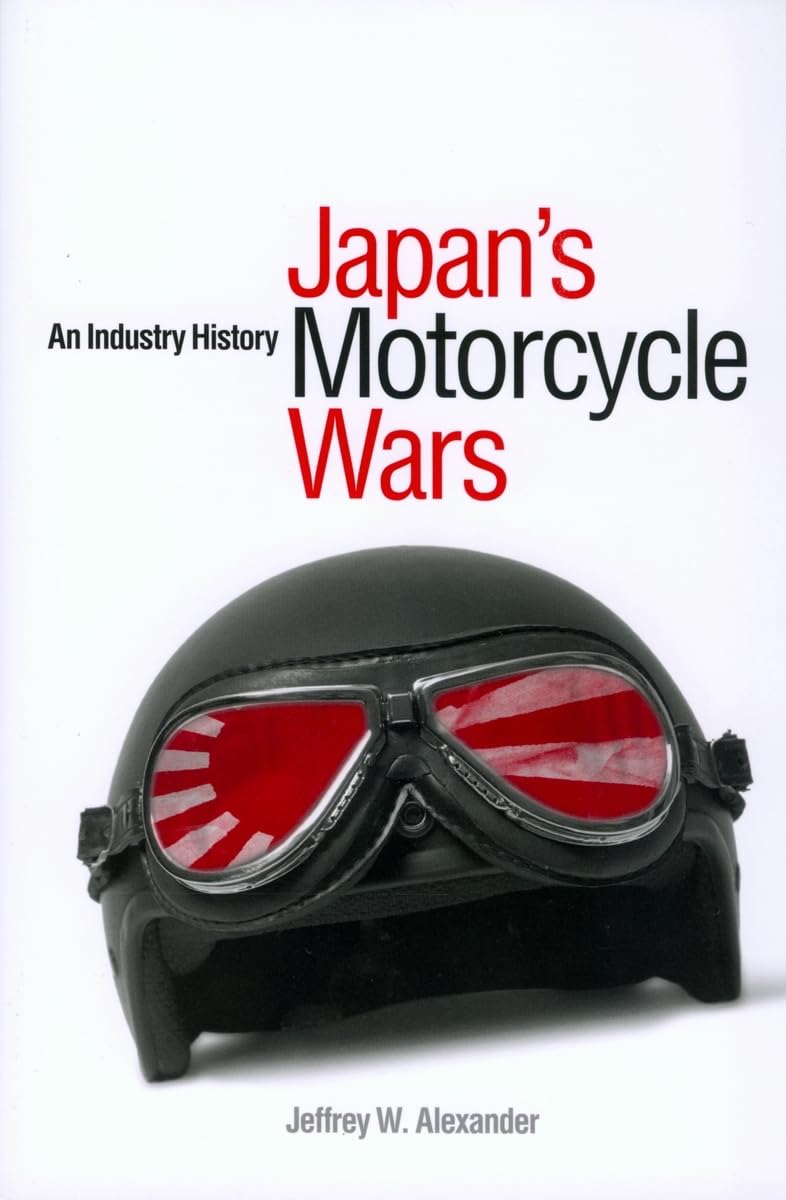
Title
Japan'S Motorcycle Wars: An Industry History,New
Sold by Ergodebooks, an authorized reseller.
Returns accepted within 30 days | support@ergodebooks.com
Shipping Information
- Free Standard Shipping — United States only
- Processing Time: 3–5 business days
- Estimated Delivery: 6–10 business days after dispatch
- Double-boxed, fully insured & discreetly packaged
- Tracking number sent via email once dispatched
Returns & Refund
Returns accepted within 30 days of delivery.
Damaged or Defective Item
Free return shipping + replacement or full refund
Wrong Item Received
Free return shipping + replacement or full refund
Change of Mind
Return shipping at customer's expense · 25% restocking fee applies
Payment Option

Reading This Book Is A Revelation And A Thrill. It Is An Excellent Example Of Business History Done Right. Alexanders Contribution Here Is Thoroughly Original; He Gives Us A Rare Look Into The Experiences Of The Losers As Well As The Winners In Japanese Business. He Will Open The Eyes Of Everyone In The Field To The Significance Of The Motorcycle Industry On Japans Economic And Technological Development.' William Tsutsui, Author Of Manufacturing Ideology: Scientific Management In Twentiethcentury Japan'This Book Is Very Much At The Cutting Edge Of Current Scholarship. Besides Demonstrating The Role Of The Japanese Military And Empire In The Early Development Of The Industry, It Illuminates The Intense Competition Among Motorbike Makers In The First Decade And A Half After The Second World War.' Steven Ericson, Author Of The Sound Of The Whistle: Railroads And The State In Meiji Japanfor Decades A Crown Jewel Of Japans Postwar Manufacturing Industry, Motorcycles Remain One Of Japans Top Exports. Japans Motorcycle Wars Assesses The Historical Development And Societal Impact Of The Motorcycle Industry, From The Influence Of Motor Sports On Vehicle Sales In The Early 1900S To The Postwar Developments That Led To The Massive Wave Of Motorization Sweeping The Asiapacific Region Today.Jeffrey Alexander Brings A Wealth Of Information To Light, Providing English Translations Of Transcripts, Industry Publications, And Company Histories That Have Until Now Been Available Only In Japanese. By Exploring The Industry As A Whole, He Reveals That Japans Motorcycle Industry Was Characterized Not By Communitarian Success But By Misplaced Loyalties, Technical Disasters, And Brutal Competition.
⚠️ WARNING (California Proposition 65):
This product may contain chemicals known to the State of California to cause cancer, birth defects, or other reproductive harm.
For more information, please visit www.P65Warnings.ca.gov.
- Q: How many pages are in 'Japan's Motorcycle Wars: An Industry History'? A: This book contains two hundred eighty-eight pages. It provides an in-depth look into the historical development of the motorcycle industry in Japan.
- Q: What is the binding type of this book? A: The binding type is paperback. This makes it lightweight and easy to handle for reading or transport.
- Q: What are the dimensions of 'Japan's Motorcycle Wars'? A: The book measures six point four six inches in length, zero point seven five inches in width, and eight point nine eight inches in height. These dimensions make it convenient for storage on bookshelves.
- Q: Who is the author of 'Japan's Motorcycle Wars'? A: The author is Jeffrey W. Alexander. His extensive research offers a unique perspective on the motorcycle industry's impact on Japan.
- Q: What category does this book fall under? A: The book falls under the Transportation category. It specifically focuses on the history and development of the motorcycle industry.
- Q: Is this book suitable for academic studies? A: Yes, this book is suitable for academic studies. It provides original insights and extensive references that can benefit students and scholars in business history.
- Q: How should I handle and store this paperback book? A: Store the book upright on a shelf to prevent warping. Avoid exposing it to moisture and direct sunlight to maintain its condition.
- Q: Is 'Japan's Motorcycle Wars' safe for children? A: Yes, the book is safe for older children and teens interested in history and industry. However, parental guidance is recommended for younger readers due to complex themes.
- Q: What is the recommended reading level for this book? A: The recommended reading level is upper high school and above. The content is scholarly and may be challenging for younger audiences.
- Q: How do I clean this book if it gets dirty? A: To clean the book, gently wipe the cover with a dry cloth. Avoid using water or cleaning agents to prevent damage.
- Q: Are there any safety concerns regarding this book? A: No, there are no safety concerns regarding this book. It contains historical content and does not include harmful materials.
- Q: What should I do if the book arrives damaged? A: If the book arrives damaged, contact the retailer for a return or exchange. Most retailers have policies in place for such issues.
- Q: How does this book compare to other histories of Japanese industry? A: This book offers a unique perspective by focusing on the motorcycle industry's losers and winners. It differs from other texts that may focus solely on successful companies.
- Q: Is this book a good choice for someone new to the topic? A: Yes, this book is a good choice for beginners. It provides a comprehensive overview of the motorcycle industry's history in Japan.
- Q: Can I find more information about the motorcycles discussed in this book? A: Yes, the book includes English translations of industry publications and company histories that provide more context about the motorcycles.
- Q: What makes this book unique in its field? A: This book is unique due to its thorough examination of both successful and unsuccessful companies in the Japanese motorcycle industry, offering a balanced view.