
Title
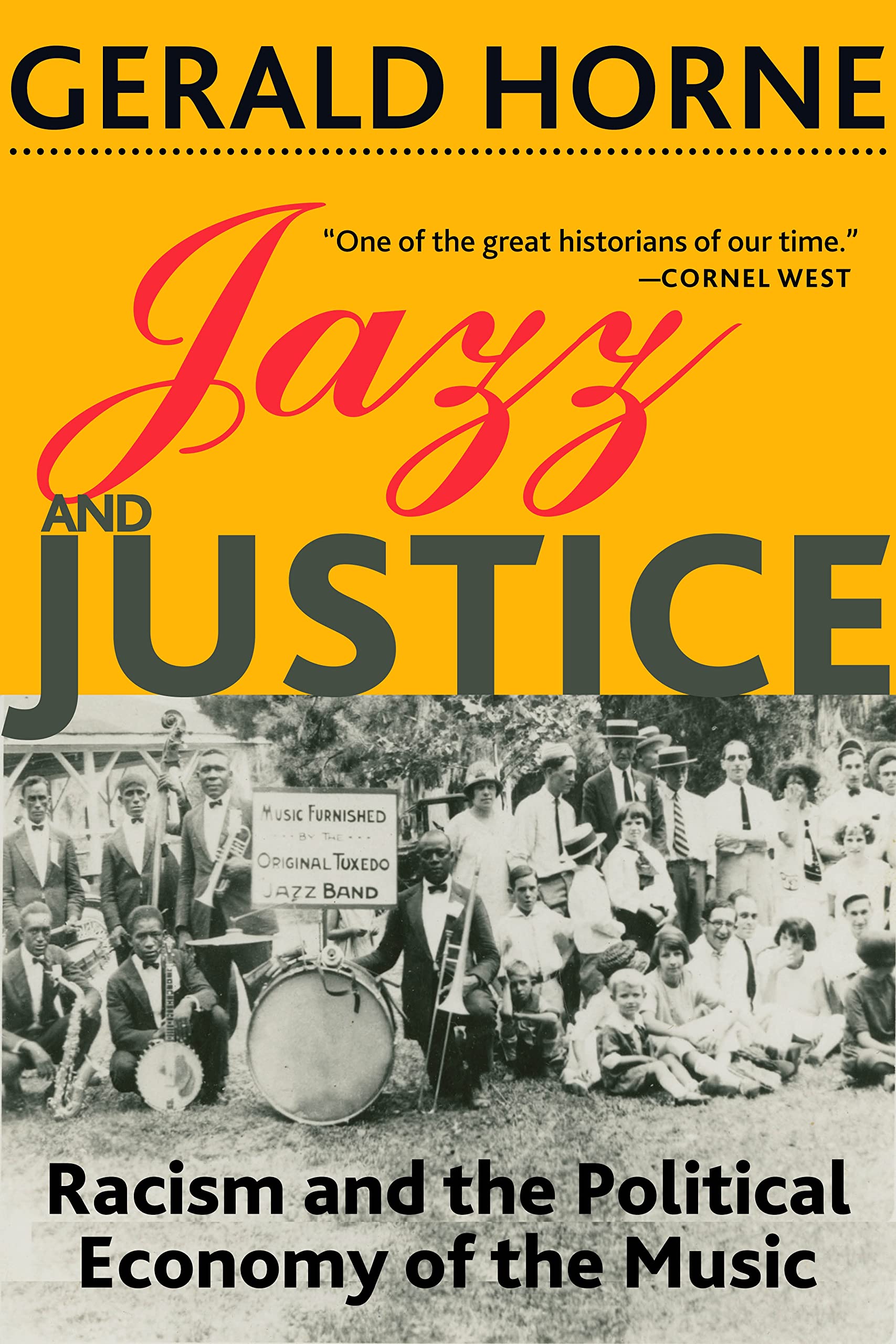
Jazz and Justice: Racism and the Political Economy of the Music,Used
Sold by Ergodebooks, an authorized reseller.
Returns accepted within 30 days | support@ergodebooks.com
Shipping Information
- Free Standard Shipping — United States only
- Processing Time: 3–5 business days
- Estimated Delivery: 6–10 business days after dispatch
- Double-boxed, fully insured & discreetly packaged
- Tracking number sent via email once dispatched
Returns & Refund
Returns accepted within 30 days of delivery.
Damaged or Defective Item
Free return shipping + replacement or full refund
Wrong Item Received
Free return shipping + replacement or full refund
Change of Mind
Return shipping at customer's expense · 25% restocking fee applies
Payment Option

A galvanizing history of how jazz and jazz musicians flourished despite rampant cultural exploitationThe music we call jazz arose in late nineteenth century North Americamost likely in New Orleansbased on the musical traditions of Africans, newly freed from slavery. Grounded in the music known as the blues, which expressed the pain, sufferings, and hopes of Black folk then pulverized by Jim Crow, this new music entered the world via the instruments that had been abandoned by departing military bands after the Civil War. Jazz and Justice examines the economic, social, and political forces that shaped this music into a phenomenal USand Black Americancontribution to global arts and culture.Horne assembles a galvanic story depicting what may have been the eras most virulent economicand racistexploitation, as jazz musicians battled organized crime, the Ku Klux Klan, and other variously malignant forces dominating the nightclub scene where jazz became known. Horne pays particular attention to women artists, such as pianist Mary Lou Williams and trombonist Melba Liston, and limns the contributions of musicians with Native American roots. This is the story of a beautiful lotus, growing from the filth of the crassest form of human immiseration.
⚠️ WARNING (California Proposition 65):
This product may contain chemicals known to the State of California to cause cancer, birth defects, or other reproductive harm.
For more information, please visit www.P65Warnings.ca.gov.
- Q: What is the main theme of 'Jazz and Justice'? A: The book explores the intersection of jazz music with issues of racism and economic exploitation, illustrating how jazz musicians navigated social and political challenges.
- Q: Who is the author of 'Jazz and Justice'? A: The author is Gerald Horne, a prominent historian and scholar.
- Q: What type of binding does 'Jazz and Justice' have? A: This edition of 'Jazz and Justice' is available in paperback binding.
- Q: How many pages are in the book? A: The book contains 512 pages.
- Q: When was 'Jazz and Justice' published? A: It was published on June 18, 2019.
- Q: Is 'Jazz and Justice' suitable for academic study? A: Yes, the book provides a detailed historical analysis that is suitable for academic study of jazz, race, and political economy.
- Q: Does the book discuss contributions from women in jazz? A: Yes, it highlights the contributions of women artists, including Mary Lou Williams and Melba Liston.
- Q: What is the target audience for 'Jazz and Justice'? A: The book is targeted toward readers interested in music history, social justice, and cultural studies.
- Q: Are there any notable historical events mentioned in the book? A: Yes, it discusses significant events such as the impact of organized crime and the Ku Klux Klan on jazz musicians.
- Q: Is this book a good source for understanding the cultural significance of jazz? A: Absolutely, it provides in-depth insights into how jazz has been shaped by and has responded to cultural and economic forces.