
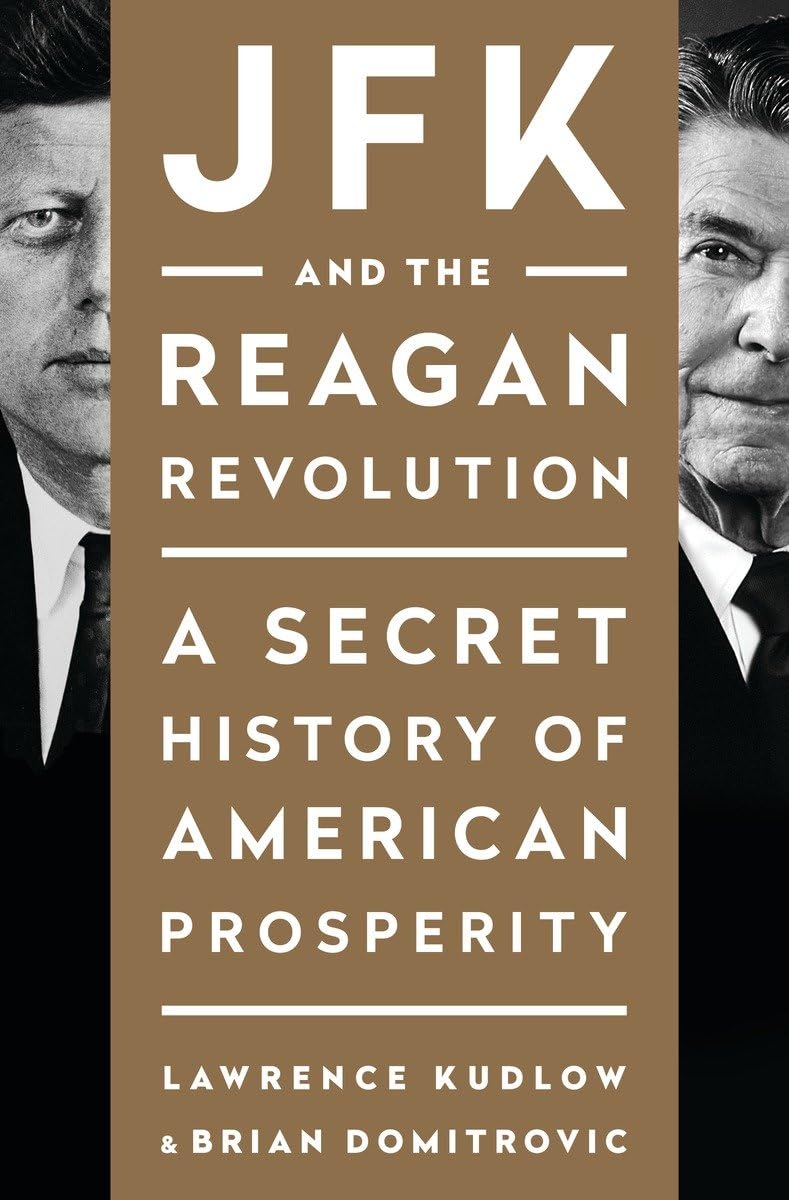
Title
Jfk And The Reagan Revolution: A Secret History Of American Prosperity
Sold by Ergodebooks, an authorized reseller.
Returns accepted within 30 days | support@ergodebooks.com
Shipping Information
- Free Standard Shipping — United States only
- Processing Time: 3–5 business days
- Estimated Delivery: 6–10 business days after dispatch
- Double-boxed, fully insured & discreetly packaged
- Tracking number sent via email once dispatched
Returns & Refund
Returns accepted within 30 days of delivery.
Damaged or Defective Item
Free return shipping + replacement or full refund
Wrong Item Received
Free return shipping + replacement or full refund
Change of Mind
Return shipping at customer's expense · 25% restocking fee applies
Payment Option

The Fascinating, Suppressed History Of How Jfk Pioneered Supplyside Economics.John F. Kennedy Was The First President Since The 1920S To Slash Tax Rates Acrosstheboard, Becoming One Of The Earliest Supplysiders. Sadly, Todays Democrats Have Ignored Jfks Taxcut Legacy And Have Opted Instead For An Antigrowth, Taxhiking Redistribution Program, Undermining Americas Economy.One Person Who Followed Jfks Taxcut Growth Model Was Ronald Reagan. This Is The Neverbeforetold Story Of The Link Between Jfk And Ronald Reagan. This Is The Secret History Of American Prosperity.Jfk Realized That High Taxes That Punished Success And Fanned Class Warfare Harmed The Economy. In The 1950S, When High Tax Rates Prevailed, America Endured Recessions Every Two Or Three Years And The Ranks Of The Unemployed Swelled. Only In The 1960S Did An Uninterrupted Boom At A High Rate Of Growth (Averaging 5 Percent Per Year) Drive A Tremendous Increase In Jobs For The Long Term. The Difference Was Kennedys Economic Policy, Particularly His Push For Sweeping Taxrate Cuts.Kennedy Was So Successful In The 60S That He Directly Inspired Ronald Reagans Tax Cut Revolution In The 1980S, Which Rejuvenated The Economy And Gave Us Another Boom That Lasted For Two Decades.Lawrence Kudlow And Brian Domitrovic Reveal The Secret History Of American Prosperity By Exploring The Littleknown Battles Within The Kennedy Administration. They Show Why Jfk Rejected The Advice Of His Keynesian Advisors, Turning Instead To The Ideas Proposed By The Nonkeynesians On His Team Of Rivals.We Meet A Fascinating Cast Of Characters, Especially Treasury Secretary Douglas Dillon, A Republican. Dillons Opponents, Such As Liberal Economists Paul Samuelson, James Tobin, And Walter Heller, Fought To Maintain The High Tax Ratesincluding An Astonishing 91% Top Ratethat Were Smothering The Economy. In A Wrenching Struggle For The Mind Of The President, Dillon Convinced Jfk Of The Longterm Dangers Of Nosebleed Incometax Rates, Big Spending, And Loose Money. Ultimately, Jfk Chose Dillons Tax Cuts And Sounddollar Policies And Rejected Samuelson And Heller.In Response To Kennedys Revolutionary Tax Cut, The Economy Soared. But As The 1960S Wore On, The Departed Presidents Priorities Were Undone By The Governmentexpanding And Taxhiking Mistakes Of Presidents Johnson, Nixon, Ford, And Carter. The Resulting Recessions And The Stagflation Of The 1970S Took The Nation Off Its Natural Course Of Growth And Prosperity Until Jfks True Heirs Returned To The White House In The Reagan Era.Kudlow And Domitrovic Make A Convincing Case That The Solutions Needed To Solve The Long Economic Stagnation Of The Early Twentyfirst Century Are Once Again The Freemarket Principles Of Limited Government, Low Tax Rates, And A Strong Dollar. We Simply Need To Embrace The Bipartisan Wisdom Of Two Great Presidents, Unleash Prosperity, And Recover The Greatness Of America.
⚠️ WARNING (California Proposition 65):
This product may contain chemicals known to the State of California to cause cancer, birth defects, or other reproductive harm.
For more information, please visit www.P65Warnings.ca.gov.
- Q: What are the dimensions of the book? A: The book measures six point two six inches in length, nine point three one inches in height, and zero point nine one inches in width.
- Q: How many pages does the book have? A: The book contains two hundred fifty-six pages, providing a comprehensive exploration of its subject matter.
- Q: What type of binding does this book have? A: This book is bound in hardcover, ensuring durability and longevity for readers.
- Q: Who is the author of the book? A: The book is authored by Lawrence Kudlow, known for his insights on economic policies.
- Q: What is the main theme of the book? A: The main theme revolves around economic prosperity through supply-side economics as demonstrated by JFK and Ronald Reagan.
- Q: Is this book suitable for beginners in economics? A: Yes, the book is accessible for beginners and offers insights into complex economic principles in an engaging manner.
- Q: What age group is this book appropriate for? A: The book is suitable for adults and older teens interested in history and economics.
- Q: How should I store the book? A: Store the book in a cool, dry place, upright on a shelf to maintain its condition and prevent damage.
- Q: Can the book be read in a digital format? A: No, this specific listing is for a hardcover edition; check for digital formats separately.
- Q: What if my book arrives damaged? A: If your book arrives damaged, contact customer support within thirty days for a replacement or refund.
- Q: Is there a warranty for this book? A: No, books typically do not come with a warranty, but customer satisfaction guarantees may apply.
- Q: How do I clean the book if it gets dirty? A: To clean the book, gently wipe the cover with a soft, dry cloth to remove dust and smudges.
- Q: Is this book suitable for someone interested in political history? A: Yes, the book provides an in-depth look at political history through the lens of economic policies.
- Q: What makes this book unique? A: This book offers a unique perspective on the connection between JFK’s and Reagan’s economic policies, a topic not widely covered.
- Q: Are there any notable figures mentioned in the book? A: Yes, the book mentions key figures such as Treasury Secretary Douglas Dillon and several prominent economists.
- Q: What type of reader would enjoy this book? A: Readers interested in economics, American history, or the political landscape of the 20th century would enjoy this book.