
Title

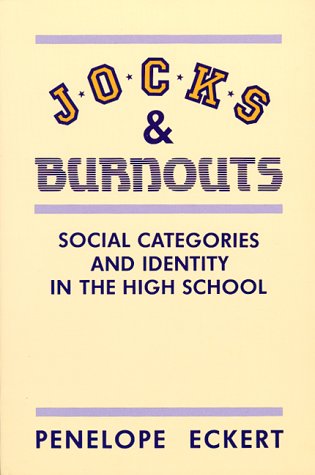
Jocks and Burnouts: Social Categories and Identity in the High School,Used
Sold by Ergodebooks, an authorized reseller.
Returns accepted within 30 days | support@ergodebooks.com
Shipping Information
- Free Standard Shipping — United States only
- Processing Time: 3–5 business days
- Estimated Delivery: 6–10 business days after dispatch
- Double-boxed, fully insured & discreetly packaged
- Tracking number sent via email once dispatched
Returns & Refund
Returns accepted within 30 days of delivery.
Damaged or Defective Item
Free return shipping + replacement or full refund
Wrong Item Received
Free return shipping + replacement or full refund
Change of Mind
Return shipping at customer's expense · 25% restocking fee applies
Payment Option

This ethnographic study of adolescent social structure in a Michigan high school provides a brilliant new perspective on classbased reactions between individual students and the school. Dr. Eckert shows how the schools institutional environment fosters the formation of opposed class cultures in the student population, which in turn serve as a social tracking system.
⚠️ WARNING (California Proposition 65):
This product may contain chemicals known to the State of California to cause cancer, birth defects, or other reproductive harm.
For more information, please visit www.P65Warnings.ca.gov.
- Q: What is the page count of the book? A: The book has two hundred eight pages. This length provides a comprehensive exploration of social categories and identity in high school.
- Q: What are the dimensions of this book? A: The book measures six inches in length, zero point five one inches in thickness, and nine point zero two inches in height. These dimensions make it a convenient size for reading.
- Q: What type of binding does this book have? A: The book is paperback bound. This binding style is lightweight and flexible, making it easy to handle.
- Q: How do I read this book? A: You simply open the book and start reading. It is suitable for anyone interested in adolescent social structures.
- Q: Is this book appropriate for high school students? A: Yes, this book is appropriate for high school students. It provides insights into social categories that are relevant to their experiences.
- Q: What age group is this book suitable for? A: This book is suitable for readers aged sixteen and older. It addresses complex social dynamics that adolescents face.
- Q: How should I store this book? A: Store the book in a cool, dry place. Keeping it upright on a shelf will help prevent bending or damage.
- Q: Can this book be cleaned? A: Yes, you can clean the book by gently wiping the cover with a dry cloth. Avoid using water to prevent damage to the pages.
- Q: How do I keep this book in good condition? A: To keep the book in good condition, handle it carefully and avoid exposing it to direct sunlight. This prevents fading and wear.
- Q: What makes this book unique? A: This book offers a unique ethnographic perspective on social categories in high school. It explores class-based reactions among students.
- Q: Is this book well-reviewed? A: Yes, the book has received positive reviews for its insightful analysis and engaging writing style. Readers appreciate its contribution to social sciences.
- Q: Who is the author of this book? A: The author of the book is Penelope Eckert. She is known for her research in linguistic and social anthropology.
- Q: What genre does this book belong to? A: This book belongs to the Social Sciences genre. It specifically focuses on sociology and education.
- Q: Is this book suitable for academic use? A: Yes, this book is suitable for academic use. It can be a valuable resource for students and researchers in social sciences.
- Q: What topics does this book cover? A: The book covers topics related to adolescent identity, social categories, and institutional environments in schools. It provides a comprehensive analysis of class cultures.