
Title
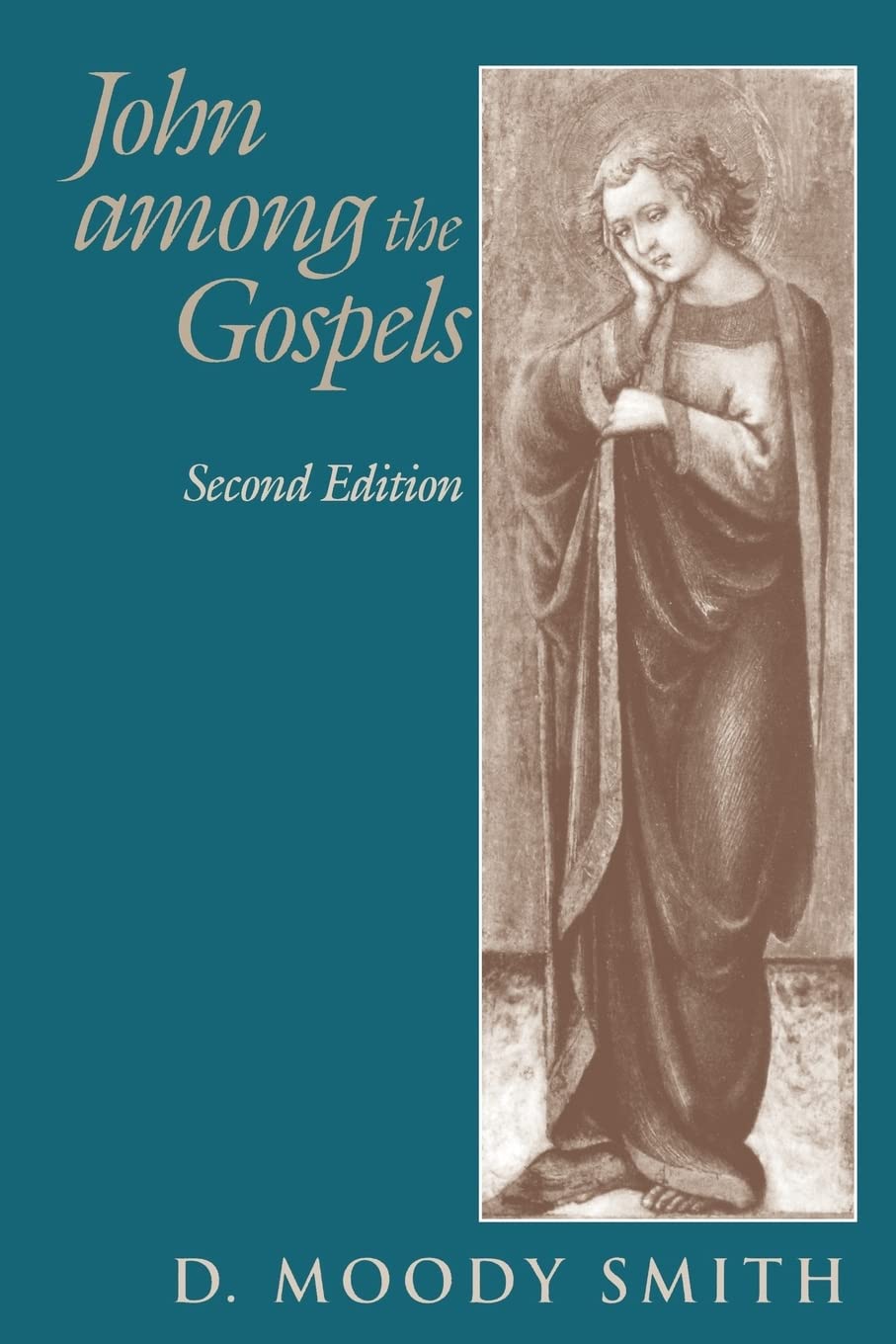
John Among the Gospels (Second Edition),New
Sold by Ergodebooks, an authorized reseller.
Returns accepted within 30 days | support@ergodebooks.com
Shipping Information
- Free Standard Shipping — United States only
- Processing Time: 3–5 business days
- Estimated Delivery: 6–10 business days after dispatch
- Double-boxed, fully insured & discreetly packaged
- Tracking number sent via email once dispatched
Returns & Refund
Returns accepted within 30 days of delivery.
Damaged or Defective Item
Free return shipping + replacement or full refund
Wrong Item Received
Free return shipping + replacement or full refund
Change of Mind
Return shipping at customer's expense · 25% restocking fee applies
Payment Option

A balanced and provocative exploration of how the relationship of the Fourth Gospel to the Synoptics has been perceived in ancient and modern timesJohn's relationship to the other canonical Gospels has from Christian antiquity been the subject of serious discussion and debate. Did John know them? Did he use them as sources for his own 'spiritual' gospel? If so, can his eccentricities in using them be explained? In John among the Gospels D. Moody Smith confronts these questions, describing how the relationship of the Fourth Gospel to the Synoptics has been understood, particularly in modern biblical scholarship.John's difference from the other gospel narratives was recognized by such ancient Christian writers as Clement of Alexandria in the late second century, Origen in the early third century, and Eusebius in the early fourth century, who set the stage for opposing views of John's relation to the Synoptics. John was deemed either compatible with, if supplementary to, the other canonical Gospels, as Clement and Eusebius believed, or obviously at odds historically with the companion works, according to Origen's opposing view.These two essential interpretive views have played out to the present day. Smith summarizes the theories and countertheories that have driven Johannine scholarship since the time of the early church, clarifying the interrelationship among commentators at the same time that he offers an insightful overview of this key issue in Johannine studies.The most recent shift in the critics' appraisal of the Gospel of John has its roots in the 1970s. Against the predominant view that the Fourth Gospel was a composition independent of the Synoptics, scholars began to point out that elements of the redaction or composition of the Synoptics themselves appear in itan insight that led back to the conclusion that John knew and used one or more of the Synoptics in their present, canonical form.In a new, final chapter included in the second edition of John among the Gospels, Smith emphasizes the difficulty of determining what constitutes redaction and how the apparently redactional or compositional elements found their way into the Gospel of John. Using the Gospel of Mark as his primary point of reference, Smith probes the difficulties involved in discerning how John understood and used the Synoptics, if indeed John knew or used them at all.
⚠️ WARNING (California Proposition 65):
This product may contain chemicals known to the State of California to cause cancer, birth defects, or other reproductive harm.
For more information, please visit www.P65Warnings.ca.gov.