
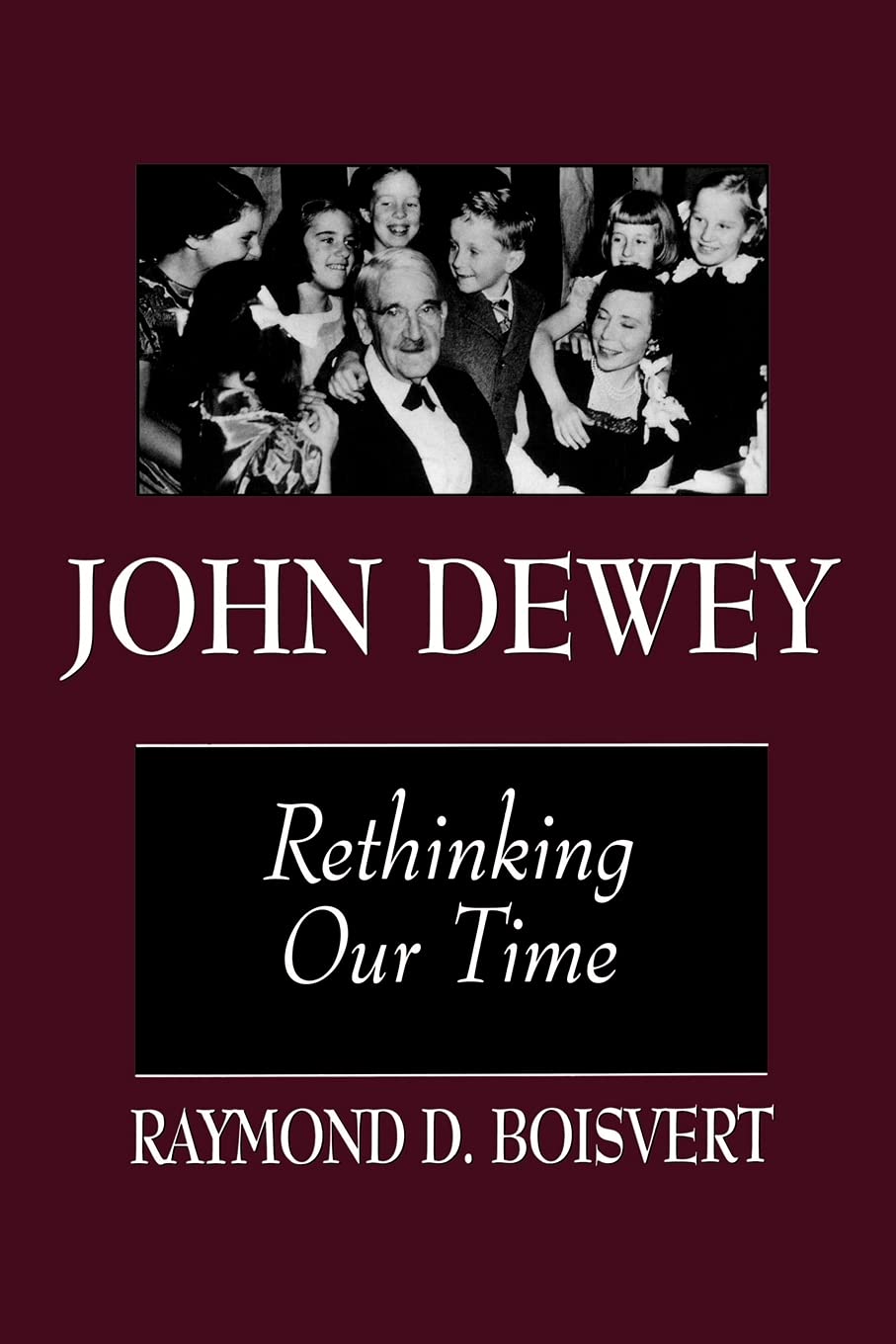
Title
John Dewey (S U N Y SERIES IN PHILOSOPHY OF EDUCATION),Used
Sold by Ergodebooks, an authorized reseller.
Returns accepted within 30 days | support@ergodebooks.com
Shipping Information
- Free Standard Shipping — United States only
- Processing Time: 3–5 business days
- Estimated Delivery: 6–10 business days after dispatch
- Double-boxed, fully insured & discreetly packaged
- Tracking number sent via email once dispatched
Returns & Refund
Returns accepted within 30 days of delivery.
Damaged or Defective Item
Free return shipping + replacement or full refund
Wrong Item Received
Free return shipping + replacement or full refund
Change of Mind
Return shipping at customer's expense · 25% restocking fee applies
Payment Option

A concise, eminently readable introduction to the thought of America's most prominent philosopher.Written in a manner accessible to nonspecialists, this book provides an introduction to all areas central to John Dewey's philosophy: aesthetics, social and political philosophy, education, the philosophy of religion, and theory of knowledge. Boisvert situates Dewey as a thinker who could appreciate the advance of science while remaining an 'empirical naturalist' committed to the revelatory powers of lived experience.Ray Boisvert describes his little book as a primer, whose aim is to serve as a brief and generally accessible introduction to Deweys philosophy. He succeeds admirably Boisvert, while also limiting himself to exposition, attempts to articulate Deweys thinking in terms of the philosophic and public discourse of our time. International Studies in Philosophy'This book is superbly written: clear, elegant, scholarly. It is a model of lucidity by a major Dewey scholar. It is far better than anything else in print as an introduction to the thought of John Dewey. Boisvert illuminates themes in Dewey with a variety of highly interesting examples drawn from literature, contemporary French and British philosophy, and science. This will be the book people will buy to get an overview of a major American philosopher.' Thomas Alexander, Southern Illinois University at Carbondale'This book helpfully integrates Dewey's diverse theories in terms of three central themes that reappear throughout his wideranging thought: the rejection of simple, monistic solutions, the challenging of purificationist reductions, and the refusal of disembodied idealisms. The author touches on all of the major areas where Dewey made a significant contribution to philosophy, from metaphysics and theory of knowledge to ethics, politics, and the philosophy of art, education, and religion.' Richard Shusterman, Temple University
⚠️ WARNING (California Proposition 65):
This product may contain chemicals known to the State of California to cause cancer, birth defects, or other reproductive harm.
For more information, please visit www.P65Warnings.ca.gov.