
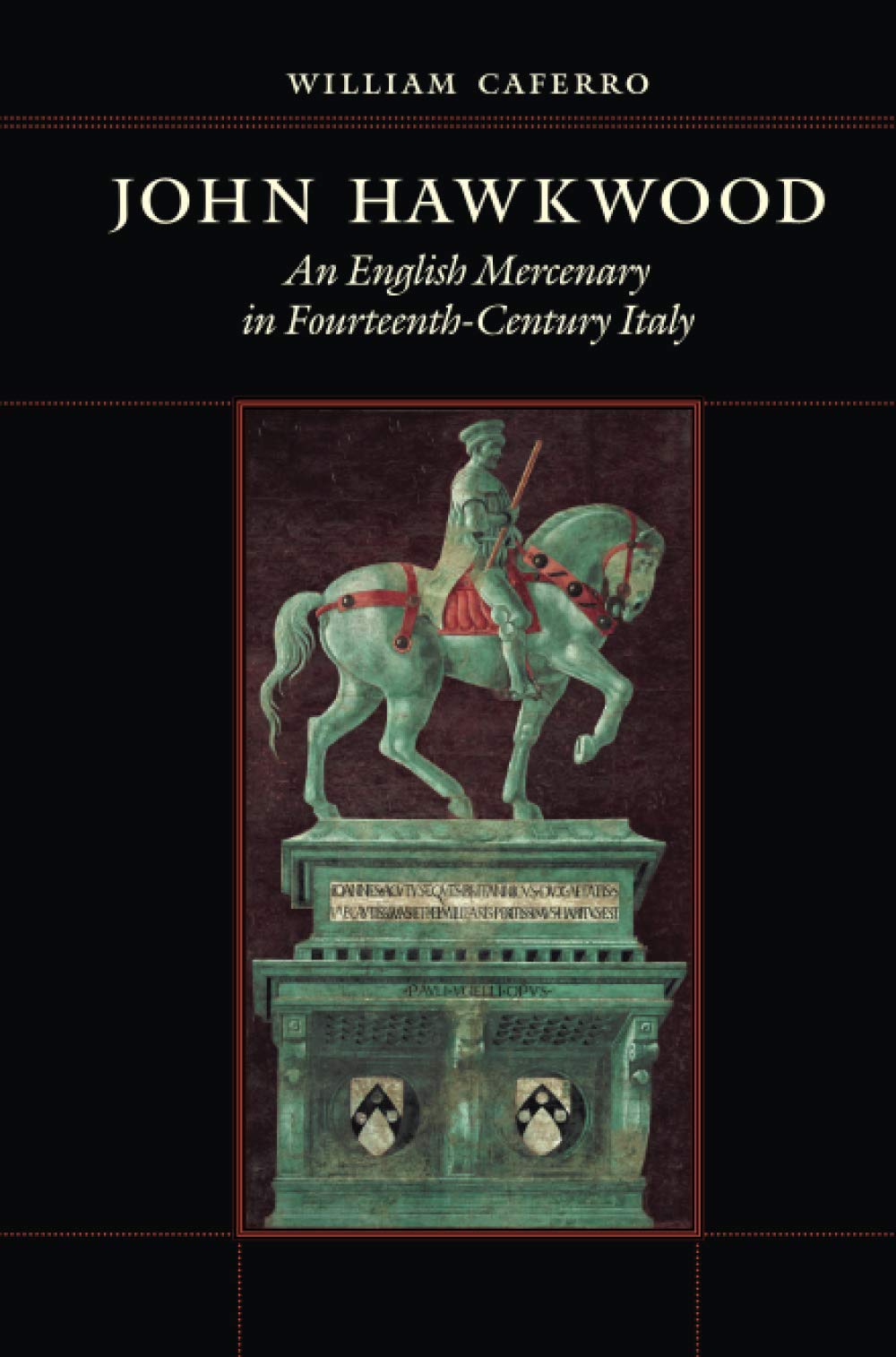
Title
John Hawkwood: An English Mercenary in FourteenthCentury Italy,Used
Sold by Ergodebooks, an authorized reseller.
Returns accepted within 30 days | support@ergodebooks.com
Shipping Information
- Free Standard Shipping — United States only
- Processing Time: 3–5 business days
- Estimated Delivery: 6–10 business days after dispatch
- Double-boxed, fully insured & discreetly packaged
- Tracking number sent via email once dispatched
Returns & Refund
Returns accepted within 30 days of delivery.
Damaged or Defective Item
Free return shipping + replacement or full refund
Wrong Item Received
Free return shipping + replacement or full refund
Change of Mind
Return shipping at customer's expense · 25% restocking fee applies
Payment Option

Winner, 2008 Otto Grndler Book Prize, The Medieval InstituteWinner, 2008 Otto Grndler Book Prize, The Medieval InstituteNotorious for his cleverness and daring, John Hawkwood was the most feared mercenary in early Renaissance Italy. Born in England, Hawkwood began his career in France during the Hundred Years' War and crossed into Italy with the famed White Company in 1361. From that time until his death in 1394, Hawkwood fought throughout the peninsula as a captain of armies in times of war and as a commander of marauding bands during times of peace. He achieved international fame, and citystates constantly tried to outbid each other for his services, for which he received money, land, and, in the case of Florence, citizenshipa most unusual honor for an Englishman. When Hawkwood died, the Florentines buried him with great ceremony in their cathedral, an honor denied their greatest poet, Dante.William Caferro's ambitious account of Hawkwood is both a biography and a study of warfare and statecraft. Caferro has mined more than twenty archives in Britain and Italy, creating an authoritative portrait of Hawkwood as an extraordinary military leader, if not always an admirable human being.
⚠️ WARNING (California Proposition 65):
This product may contain chemicals known to the State of California to cause cancer, birth defects, or other reproductive harm.
For more information, please visit www.P65Warnings.ca.gov.
- Q: What is the main focus of 'John Hawkwood: An English Mercenary in Fourteenth-Century Italy'? A: The book provides an in-depth biography of John Hawkwood, detailing his life as a mercenary in Italy during the fourteenth century, his military strategies, and his impact on warfare and statecraft.
- Q: Who is the author of this book? A: The author of the book is William Caferro, a historian who has extensively researched Hawkwood's life using over twenty archives in Britain and Italy.
- Q: What are the key themes explored in the book? A: The key themes include mercenary warfare, statecraft, and the historical context of early Renaissance Italy, highlighting Hawkwood’s duality as a military leader and a complex individual.
- Q: How many pages does the book contain? A: The book has a total of 480 pages.
- Q: What is the publication date of this book? A: The book was published on August 1, 2015.
- Q: Is this book available in different formats? A: This edition of the book is available in paperback format.
- Q: What awards has the book received? A: The book won the Otto Gründler Book Prize in 2008 from The Medieval Institute.
- Q: What makes John Hawkwood a notable historical figure? A: John Hawkwood is notable for being one of the most feared mercenaries in Italy, known for his clever tactics and the high demand for his military services from various city-states.
- Q: Is there a specific audience that would benefit from this book? A: This book is ideal for readers interested in medieval history, military strategy, and biographies of significant historical figures.
- Q: Are there any notable features of the book's writing style? A: William Caferro's writing combines thorough research with engaging narrative, making the complex historical context accessible and compelling for readers.