
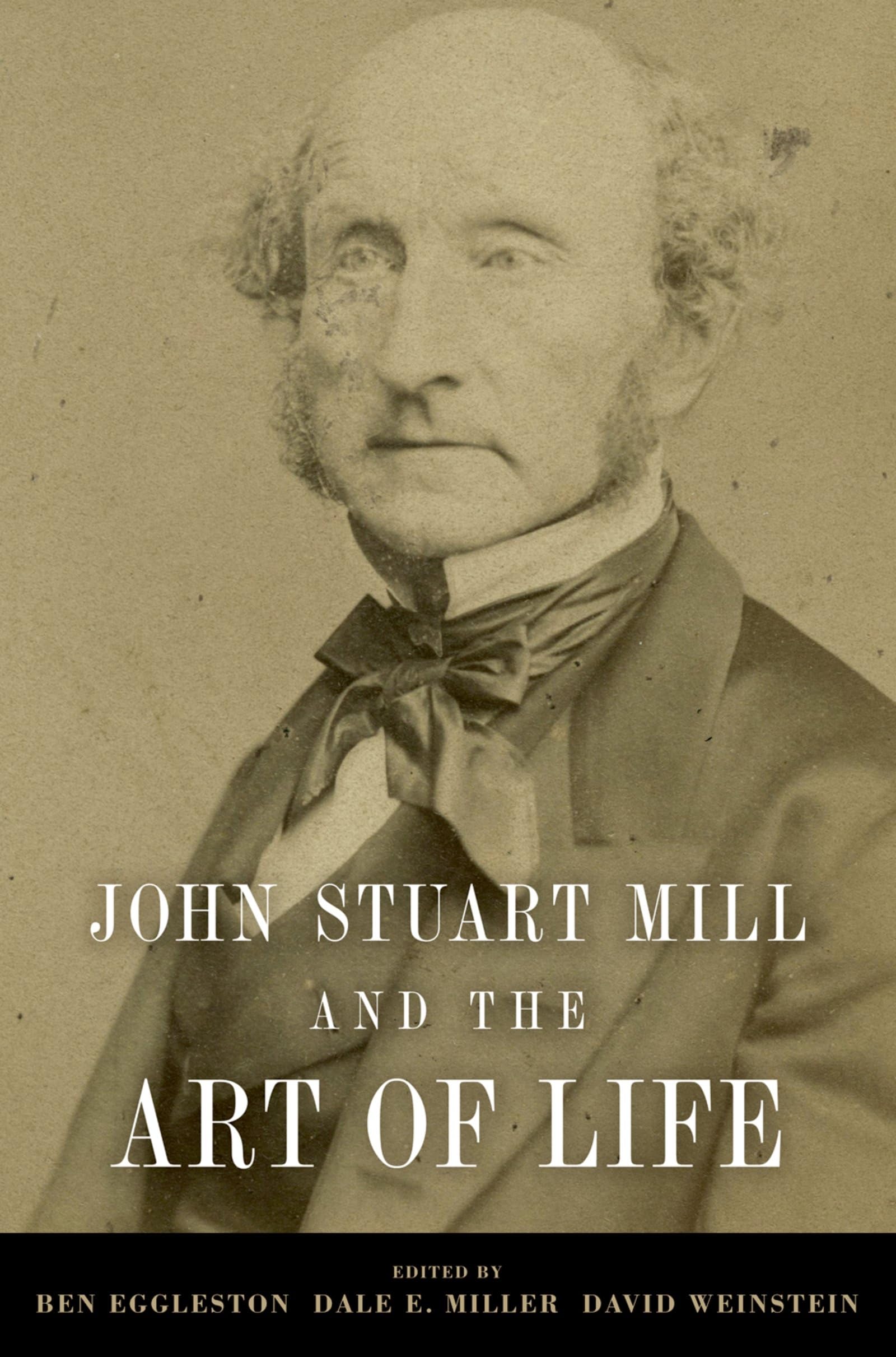
Title
John Stuart Mill and the Art of Life,Used
Sold by Ergodebooks, an authorized reseller.
Returns accepted within 30 days | support@ergodebooks.com
Shipping Information
- Free Standard Shipping — United States only
- Processing Time: 3–5 business days
- Estimated Delivery: 6–10 business days after dispatch
- Double-boxed, fully insured & discreetly packaged
- Tracking number sent via email once dispatched
Returns & Refund
Returns accepted within 30 days of delivery.
Damaged or Defective Item
Free return shipping + replacement or full refund
Wrong Item Received
Free return shipping + replacement or full refund
Change of Mind
Return shipping at customer's expense · 25% restocking fee applies
Payment Option

The "Art of Life" is John Stuart Mill's name for his account of practical reason. In this volume, eleven leading scholars elucidate this fundamental, but widely neglected, element of Mill's thought. Mill divides the Art of Life into three "departments": "Morality, Prudence or Policy, and Aesthetics."In the volume's first section, Rex Martin, David Weinstein, Ben Eggleston, and Dale E. Miller investigate the relation between the departments of morality and prudence. Their papers ask whether Mill is a rule utilitarian and, if so, whether his practical philosophy must be incoherent.The second section contains papers by Jonathan Riley and Wendy Donner, who explore the relation between the departments of morality and aesthetics. They discuss issues ranging from supererogation to aesthetic pleasure and humanity's relationship with nature.The papers in the third section consider the Art of Life's axiological first principle, the principle of utility. Elijah Millgram contends that Mill's own life refutes his claim that the Art of Life has a single axiological first principle. Philip Kitcher maintains that Mill has a dynamic axiology requiring us to continually refine our conception of the good. In the final section, three papers address what it means to put the Art of Life into practice. Robert Haraldsson locates an 'Art of Ethics' in On Liberty that is in tension with the Art of Life. Nadia Urbinati plumbs the classical roots of Mill's view of the good life. Finally, Colin Heydt develops Mill's suggestion that we regard our own lives as works of art.
⚠️ WARNING (California Proposition 65):
This product may contain chemicals known to the State of California to cause cancer, birth defects, or other reproductive harm.
For more information, please visit www.P65Warnings.ca.gov.