
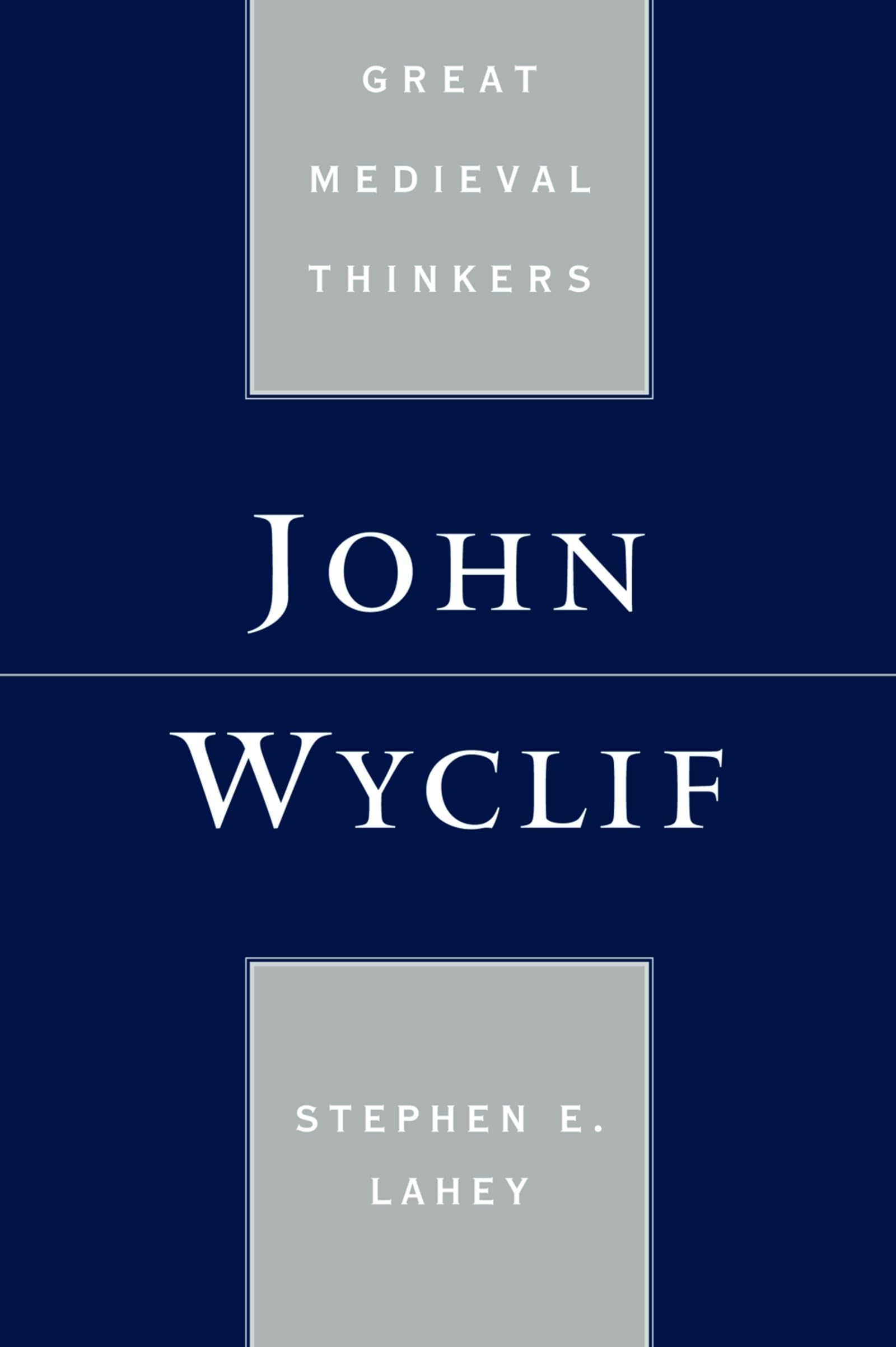
Title
John Wyclif (Great Medieval Thinkers),Used
Sold by Ergodebooks, an authorized reseller.
Returns accepted within 30 days | support@ergodebooks.com
Shipping Information
- Free Standard Shipping — United States only
- Processing Time: 3–5 business days
- Estimated Delivery: 6–10 business days after dispatch
- Double-boxed, fully insured & discreetly packaged
- Tracking number sent via email once dispatched
Returns & Refund
Returns accepted within 30 days of delivery.
Damaged or Defective Item
Free return shipping + replacement or full refund
Wrong Item Received
Free return shipping + replacement or full refund
Change of Mind
Return shipping at customer's expense · 25% restocking fee applies
Payment Option

John Wyclif (d.1384) has too frequently been described as "Morning Star of the Reformation" and only recently begun to be studied as a fourteenthcentury English philosopher and theologian. This work draws on recent scholarship situating Wyclif in his fourteenthcentury milieu to present a survey of his thought and writings as a coherent theological position arising from Oxford's "Golden Age" of theology.Lahey argues that many of Wyclif's best known critiques of the fourteenthcentury Church arise from his philosophical commitment to an Augustinian realism evocative of the thought of Robert Grosseteste and Anselm of Canterbury. This realism is comprehensible in terms of Wyclif's sustained focus on semantics and the properties of terms and propositions, a "linguistic turn" characterizing postOckham philosophical theology. Arising from this propositional realism is a strong emphasis on the place of Scripture in both formal and applied theology, which was the starting point for many of Wyclif's quarrels with the ecclesiastical status quo in late fourteenthcentury England.This survey takes into account both Wyclif's earlier, philosophical works and his later works, including sermons and Scripture commentary. Wyclif's belief that Scripture is the eternal and perfect divine word, the paradigm of human discourse and the definitive embodiment of truth in creation is central to an understanding of the ties he believes relate theoretical and practical philosophy to theology. This connection links Wyclif's interest in the propositional structure of reality to his realism, his hermeneutic program, and to his agenda for reform of the Church. Lahey's survey also highlights Wyclif's rejection of Bradwardine's determinism in favor of a model of human freedom in light of God's perfect foreknowledge, and also explores the relation of Wyclif's spatiotemporal atomism to his rejection of transubstantiation. This is the first booklength, comprehensive survey of Wyclif's thought, and will be of interest to students of later medieval theology, philosophy, history, and literature.
⚠️ WARNING (California Proposition 65):
This product may contain chemicals known to the State of California to cause cancer, birth defects, or other reproductive harm.
For more information, please visit www.P65Warnings.ca.gov.