
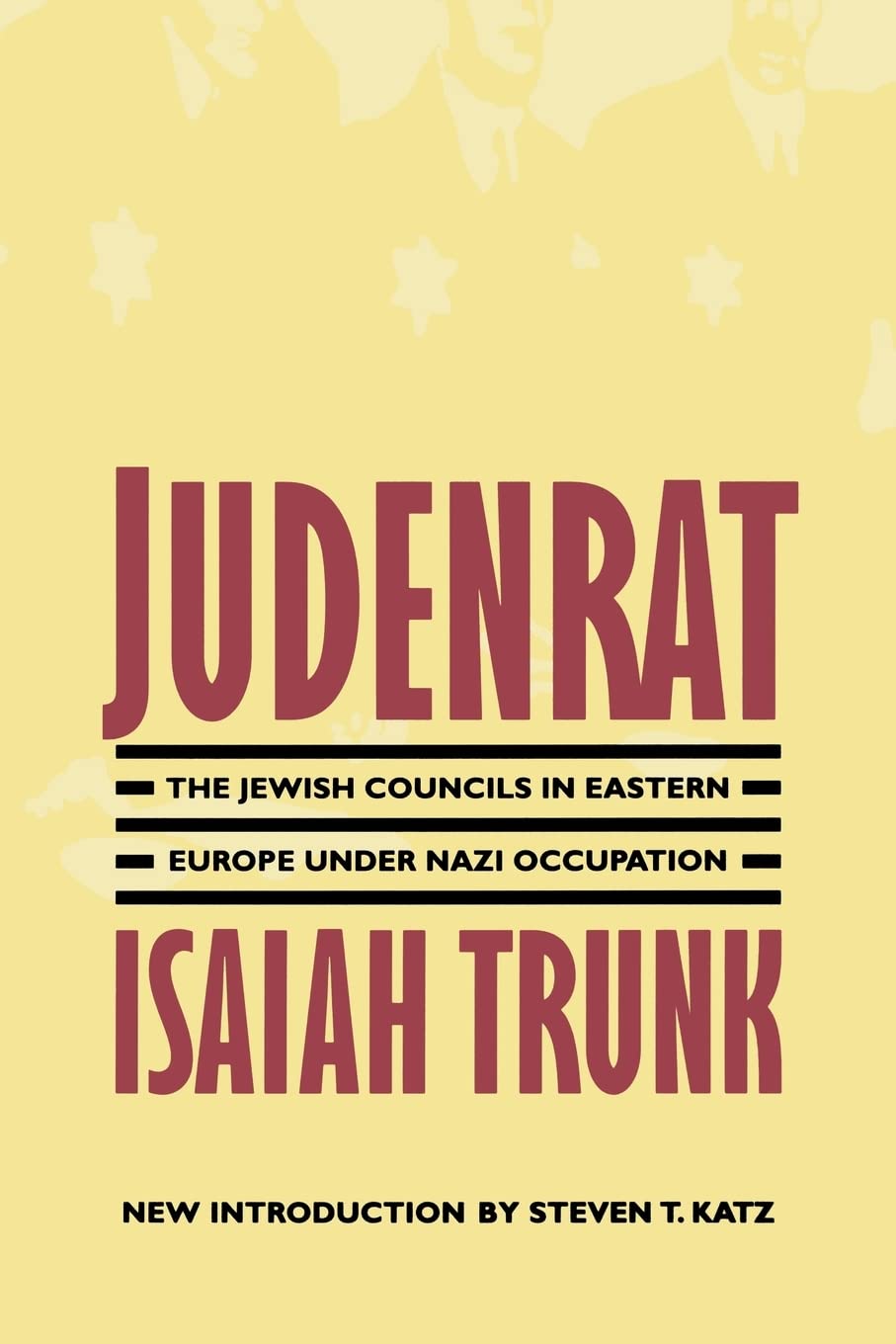
Title
Judenrat: The Jewish Councils In Eastern Europe Under Nazi Occupation,New
Sold by Ergodebooks, an authorized reseller.
Returns accepted within 30 days | support@ergodebooks.com
Shipping Information
- Free Standard Shipping — United States only
- Processing Time: 3–5 business days
- Estimated Delivery: 6–10 business days after dispatch
- Double-boxed, fully insured & discreetly packaged
- Tracking number sent via email once dispatched
Returns & Refund
Returns accepted within 30 days of delivery.
Damaged or Defective Item
Free return shipping + replacement or full refund
Wrong Item Received
Free return shipping + replacement or full refund
Change of Mind
Return shipping at customer's expense · 25% restocking fee applies
Payment Option

During World War Ii, More Than Five Million Jews Lived Under Nazi Rule In Eastern Europe. In Occupied Poland, The Baltic Countries, Byelorussia, And Ukraine, They Were Stripped Of Property And Resettled In Ghettos. The German Authorities Established In Each Ghetto A Jewish Council, Or Judenrat, To Maintain Minimal Living Standards. The Judenrat Was Required To Carry Out Nazi Directives Against Other Jews, To Supply Forced Labor, And Eventually To Cooperate In The Final Solution.Did The Jewish Leaders Of The Ghettos, Who Were Also Victims, Assist Their Murderers? If Cooperation With The Nazi Oppressors Was Morally Defensible During The First Stage In Organizing The Ghettos, What About Later, When Deportations To Death Camps Began? Trunk Analyzes Situations Where The Councils And Ghetto Police Were Forced To Send Their Own Communities To Death. Some Council Members Chose Suicide Rather Than Supply Lists To The Nazis; Others Used Delaying Tactics. Some Handed Over The Lists. Some Joined Their Families In The Gas Chamber. In Assessing Guilt And Innocence, Trunk Never Allows The Reader To Forget That The Impossible Choices Facing The Jewish Leaders Were Created By The Nazis.
⚠️ WARNING (California Proposition 65):
This product may contain chemicals known to the State of California to cause cancer, birth defects, or other reproductive harm.
For more information, please visit www.P65Warnings.ca.gov.
- Q: What is the page count of this book? A: This book has six hundred sixty-three pages. It provides a comprehensive analysis of the Jewish Councils during World War II.
- Q: What are the dimensions of this book? A: The book measures six point twenty-six inches in length, one point five inches in width, and nine point zero two inches in height. These dimensions make it a standard paperback size.
- Q: What binding type does this book have? A: This book is available in paperback binding. Paperback books are typically more affordable and easier to handle than hardcover editions.
- Q: Who is the author of this book? A: The book is authored by Isaiah Trunk. He is known for his in-depth research on the Holocaust and Jewish history.
- Q: What is the main theme of this book? A: The main theme revolves around the role of Jewish Councils in Nazi-occupied Eastern Europe. It explores moral dilemmas faced by Jewish leaders during the Holocaust.
- Q: Is this book suitable for academic study? A: Yes, this book is suitable for academic study. It offers extensive research and analysis, making it a valuable resource for students and scholars.
- Q: How can I best utilize this book for research? A: To utilize this book effectively for research, focus on its detailed case studies of Jewish Councils. Take notes on the moral complexities discussed throughout the chapters.
- Q: Is this book appropriate for young readers? A: No, this book is not appropriate for young readers. It covers difficult topics related to the Holocaust and moral complexities of survival.
- Q: What additional resources complement this book? A: Books on Holocaust studies and memoirs from survivors complement this book well. They provide personal perspectives alongside historical analysis.
- Q: How should I store this book to keep it in good condition? A: Store this book in a cool, dry place, away from direct sunlight. Keep it on a shelf upright or flat to avoid bending the pages.
- Q: Can I clean the book's cover if it gets dirty? A: Yes, you can gently wipe the cover with a soft, dry cloth. Avoid using water or cleaners that can damage the paper.
- Q: What if the book arrives damaged? A: If the book arrives damaged, contact the seller for a return or exchange. Most sellers have policies to handle damaged items.
- Q: Is there a warranty for this book? A: No, there is typically no warranty for books. However, ensure you check the return policy when purchasing.
- Q: How does this book compare to others in its genre? A: This book stands out due to its in-depth analysis of Jewish Councils, unlike many others that focus broadly on Holocaust narratives.
- Q: What are the key takeaways from this book? A: Key takeaways include understanding the moral dilemmas faced by Jewish leaders and the complexities of survival under Nazi oppression.
- Q: Is this book part of a series? A: No, this book is not part of a series. It is a standalone work focused on the specific topic of Jewish Councils during the Holocaust.