If you have any questions, you are always welcome to contact us. We'll get back to you as soon as possible, withing 24 hours on weekdays.
Customer service
All questions about your order, return and delivery must be sent to our customer service team by e-mail at yourstore@yourdomain.com
Sale & Press
If you are interested in selling our products, need more information about our brand or wish to make a collaboration, please contact us at press@yourdomain.com
Help
If you have any questions, you are always welcome to contact us. We'll get back to you as soon as possible, withing 24 hours on weekdays.
Customer service
All questions about your order, return and delivery must be sent to our customer service team by e-mail at yourstore@yourdomain.com
Sale & Press
If you are interested in selling our products, need more information about our brand or wish to make a collaboration, please contact us at press@yourdomain.com
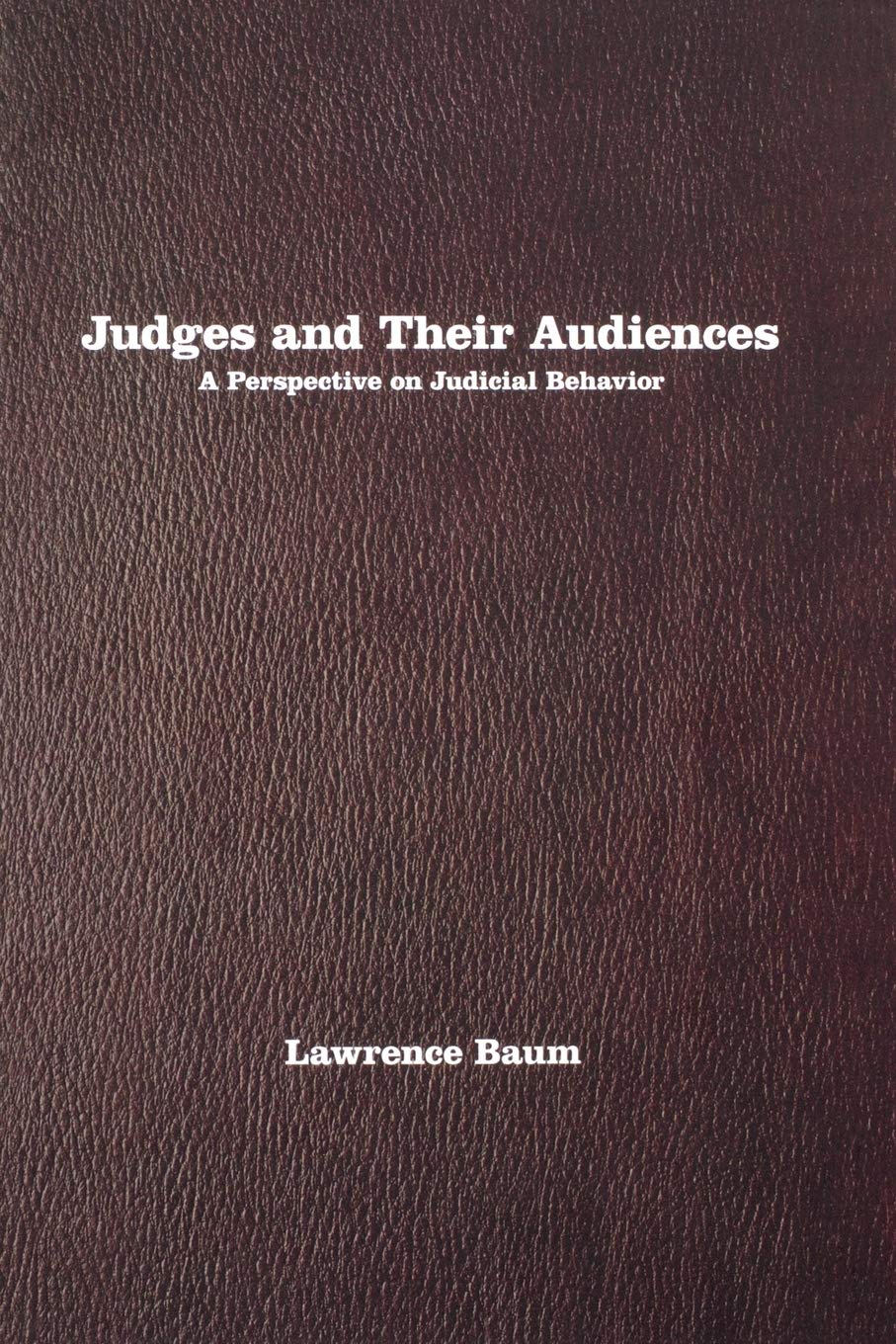
What motivates judges as decision makers? Political scientist Lawrence Baum offers a new perspective on this crucial question, a perspective based on judges' interest in the approval of audiences important to them.The conventional scholarly wisdom holds that judges on higher courts seek only to make good law, good policy, or both. In these theories, judges are influenced by other people only in limited ways, in consequence of their legal and policy goals. In contrast, Baum argues that the influence of judges' audiences is pervasive. This influence derives from judges' interest in popularity and respect, a motivation central to most people. Judges care about the regard of audiences because they like that regard in itself, not just as a means to other ends. Judges and Their Audiences uses research in social psychology to make the case that audiences shape judges' choices in substantial ways. Drawing on a broad range of scholarship on judicial decisionmaking and an array of empirical evidence, the book then analyzes the potential and actual impact of several audiences, including the public, other branches of government, court colleagues, the legal profession, and judges' social peers.Engagingly written, this book provides a deeper understanding of key issues concerning judicial behavior on which scholars disagree, identifies aspects of judicial behavior that diverge from the assumptions of existing models, and shows how those models can be strengthened.
⚠️ WARNING (California Proposition 65):
This product may contain chemicals known to the State of California to cause cancer,
birth defects, or other reproductive harm.
For MAP (Minimum Advertised Price) violations and Intellectual Property (IP) or Trademark concerns, please contact:
support@ergodebooks.com
⚠️ California Proposition 65 Warning: Some products sold on this website may expose you to chemicals known to the State of California to cause cancer, birth defects, or other reproductive harm. For more information, visit www.P65Warnings.ca.gov.