
Title
Judging Statutes,Used
Sold by Ergodebooks, an authorized reseller.
Returns accepted within 30 days | support@ergodebooks.com
Shipping Information
- Free Standard Shipping — United States only
- Processing Time: 3–5 business days
- Estimated Delivery: 6–10 business days after dispatch
- Double-boxed, fully insured & discreetly packaged
- Tracking number sent via email once dispatched
Returns & Refund
Returns accepted within 30 days of delivery.
Damaged or Defective Item
Free return shipping + replacement or full refund
Wrong Item Received
Free return shipping + replacement or full refund
Change of Mind
Return shipping at customer's expense · 25% restocking fee applies
Payment Option

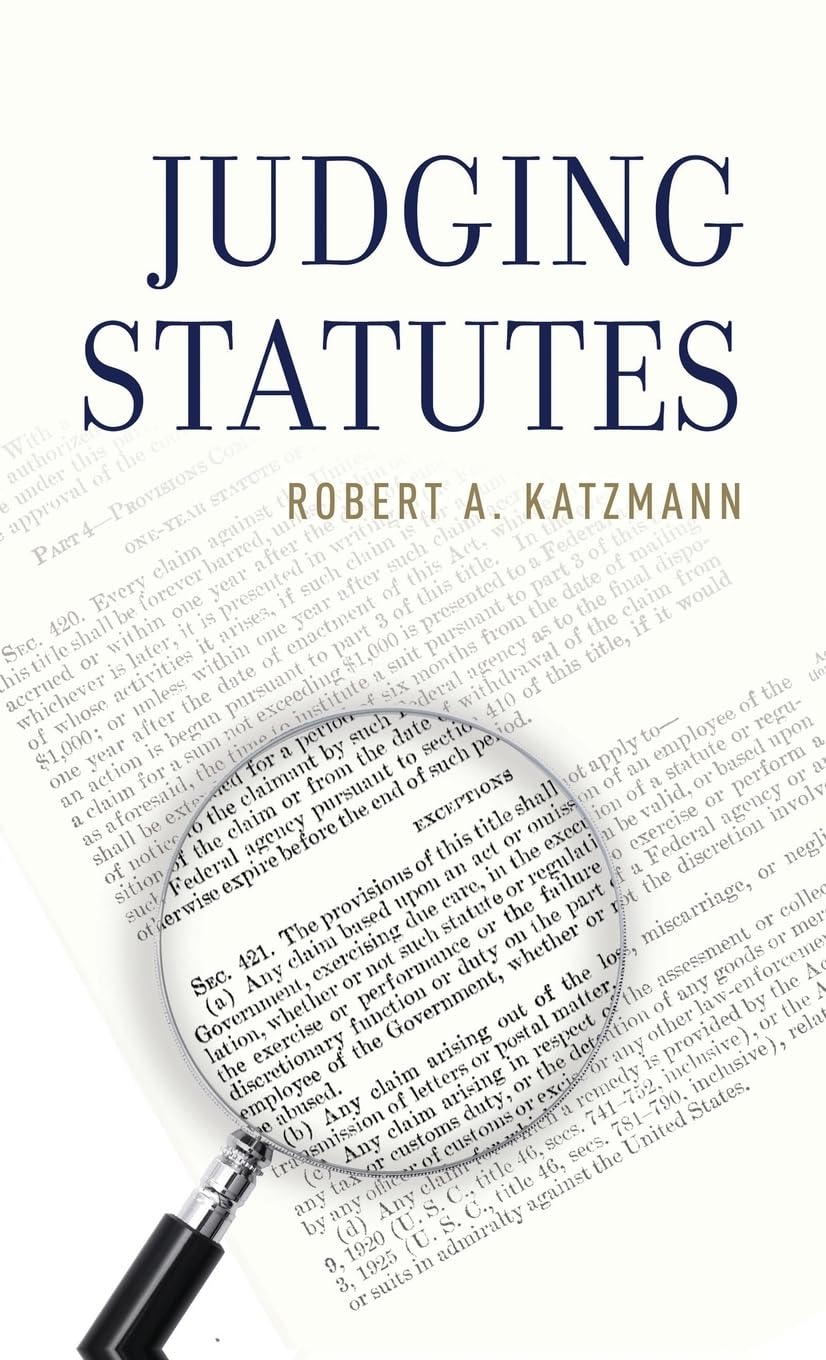
In an ideal world, the laws of Congressknown as federal statuteswould always be clearly worded and easily understood by the judges tasked with interpreting them. But many laws feature ambiguous or even contradictory wording. How, then, should judges divine their meaning? Should they stick only to the text? To what degree, if any, should they consult aids beyond the statutes themselves? Are the purposes of lawmakers in writing law relevant?Some judges, such as Supreme Court Justice Antonin Scalia, believe courts should look to the language of the statute and virtually nothing else. Chief Judge Robert A. Katzmann of the U.S. Court of Appeals for the Second Circuit respectfully disagrees. In Judging Statutes, Katzmann, who is a trained political scientist as well as a judge, argues that our constitutional system charges Congress with enacting laws; therefore, how Congress makes its purposes known through both the laws themselves and reliable accompanying materials should be respected. He looks at how the American government works, including how laws come to be and how various agencies construe legislation. He then explains the judicial process of interpreting and applying these laws through the demonstration of two interpretative approaches, purposivism (focusing on the purpose of a law) and textualism (focusing solely on the text of the written law). Katzmann draws from his experience to show how this process plays out in the real world, and concludes with some suggestions to promote understanding between the courts and Congress.When courts interpret the laws of Congress, they should be mindful of how Congress actually functions, how lawmakers signal the meaning of statutes, and what those legislators expect of courts construing their laws. The legislative record behind a law is in truth part of its foundation, and therefore merits consideration.
⚠️ WARNING (California Proposition 65):
This product may contain chemicals known to the State of California to cause cancer, birth defects, or other reproductive harm.
For more information, please visit www.P65Warnings.ca.gov.