
Title
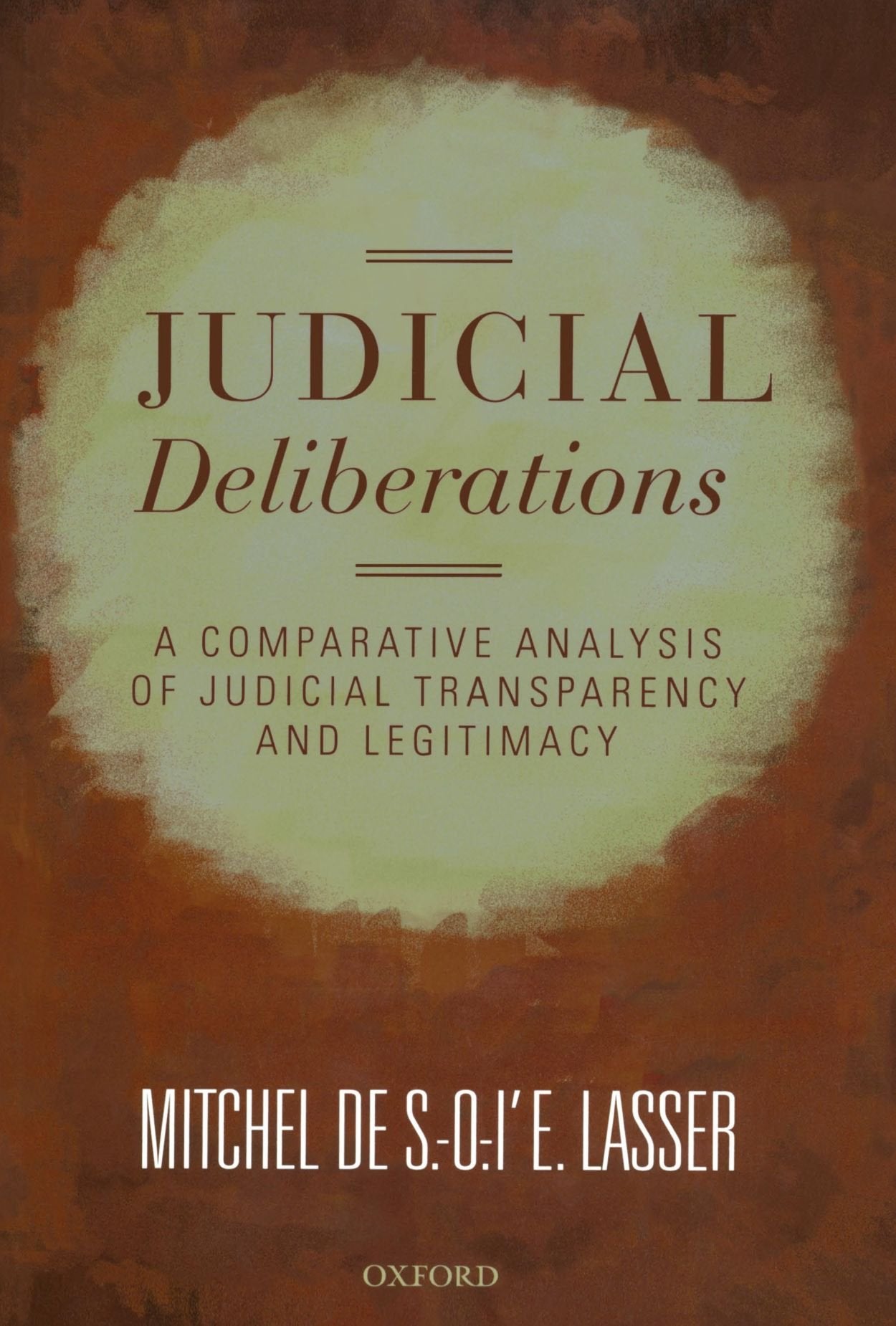
Judicial Deliberations: A Comparative Analysis of Transparency and Legitimacy (Oxford Studies in European Law),Used
Sold by Ergodebooks, an authorized reseller.
Returns accepted within 30 days | support@ergodebooks.com
Shipping Information
- Free Standard Shipping — United States only
- Processing Time: 3–5 business days
- Estimated Delivery: 6–10 business days after dispatch
- Double-boxed, fully insured & discreetly packaged
- Tracking number sent via email once dispatched
Returns & Refund
Returns accepted within 30 days of delivery.
Damaged or Defective Item
Free return shipping + replacement or full refund
Wrong Item Received
Free return shipping + replacement or full refund
Change of Mind
Return shipping at customer's expense · 25% restocking fee applies
Payment Option

Judicial Deliberations compares how and why the European Court of Justice, the French Cour de cassation and the US Supreme Court offer different approaches for generating judicial accountability and control, judicial debate and deliberation, and ultimately judicial legitimacy.Examining the judicial argumentation of the United States Supreme Court and of the French Cour de cassation, the book first reorders the traditional comparative understanding of the difference between French civil law and American common law judicial decisionmaking. It then uses this analysis to offer the first detailed comparative examination of the interpretive practice of the European Court of Justice.Lasser demonstrates that the French judicial system rests on a particularly unified institutional and ideological framework founded on explicitly republican notions of meritocracy and managerial expertise. Lawmaking per se may be limited to the legislature; but significant judicial normative administration is entrusted to State selected, trained, and sanctioned elites who are policed internally through hierarchical institutional structures. The American judicial system, by contrast, deploys a more participatory and democratic approach that reflects a more populist vision. Shunning the unifying, controlling, and hierarchical French structures, the American judicial system instead generates its legitimacy primarily by argumentative means. American judges engage in extensive debates that subject them to public scrutiny and control. The ECJ hovers delicately between the institutional/argumentative and republican/democratic extremes. On the one hand, the ECJ reproduces the hierarchical French discursive structure on which it was originally patterned. On the other, it transposes this structure into a transnational context of fractured political and legal assumptions. This drives the ECJ towards generating legitimacy by adopting a somewhat more transparent argumentative approach.
⚠️ WARNING (California Proposition 65):
This product may contain chemicals known to the State of California to cause cancer, birth defects, or other reproductive harm.
For more information, please visit www.P65Warnings.ca.gov.