If you have any questions, you are always welcome to contact us. We'll get back to you as soon as possible, withing 24 hours on weekdays.
Customer service
All questions about your order, return and delivery must be sent to our customer service team by e-mail at yourstore@yourdomain.com
Sale & Press
If you are interested in selling our products, need more information about our brand or wish to make a collaboration, please contact us at press@yourdomain.com
Help
If you have any questions, you are always welcome to contact us. We'll get back to you as soon as possible, withing 24 hours on weekdays.
Customer service
All questions about your order, return and delivery must be sent to our customer service team by e-mail at yourstore@yourdomain.com
Sale & Press
If you are interested in selling our products, need more information about our brand or wish to make a collaboration, please contact us at press@yourdomain.com
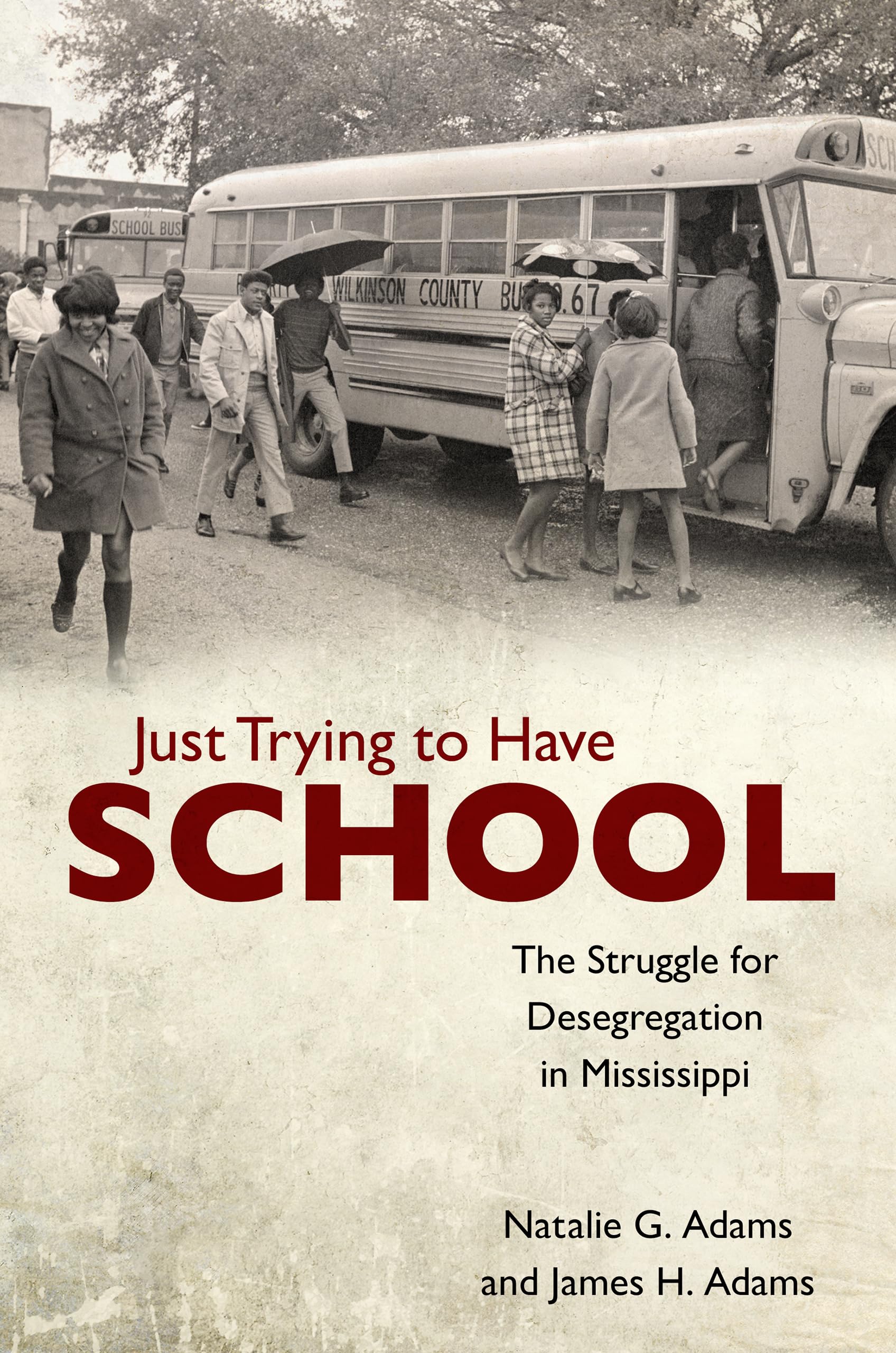
After the 1954 Brown v. Board of Education ruling, no state fought longer or harder to preserve segregated schools than Mississippi. This massive resistance came to a crashing halt in October 1969 when the Supreme Court ruled in Alexander v. Holmes Board of Education that 'the obligation of every school district is to terminate dual school systems at once and to operate now and hereafter only unitary schools.'Thirty of the thirtythree Mississippi districts named in the case were ordered to open as desegregated schools after Christmas break. With little guidance from state officials and no formal training or experience in effective school desegregation processes, ordinary people were thrown into extraordinary circumstances. However, their stories have been largely ignored in desegregation literature.Based on meticulous archival research and oral history interviews with over one hundred parents, teachers, students, principals, superintendents, community leaders, and school board members, Natalie G. Adams and James H. Adams explore the arduous and complex task of implementing school desegregation. How were bus routes determined? Who lost their position as principal? Who was assigned to what classes?Without losing sight of the important macro forces in precipitating social change, the authors shift attention to how the daily work of 'just trying to have school' helped shape the contours of school desegregation in communities still living with the decisions made fifty years ago.
⚠️ WARNING (California Proposition 65):
This product may contain chemicals known to the State of California to cause cancer,
birth defects, or other reproductive harm.
For MAP (Minimum Advertised Price) violations and Intellectual Property (IP) or Trademark concerns, please contact:
support@ergodebooks.com
⚠️ California Proposition 65 Warning: Some products sold on this website may expose you to chemicals known to the State of California to cause cancer, birth defects, or other reproductive harm. For more information, visit www.P65Warnings.ca.gov.