
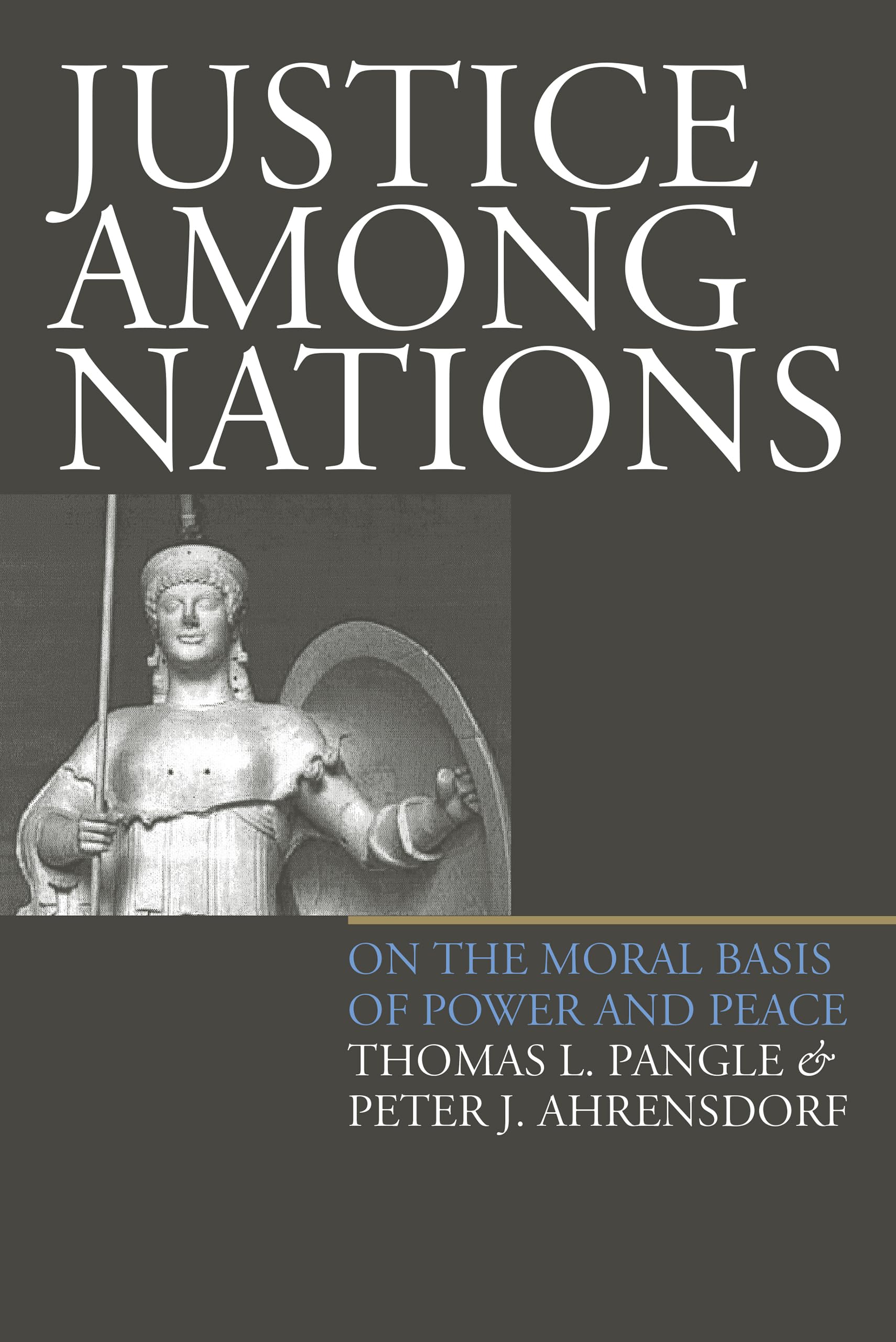
Title
Justice Among Nations: On the Moral Basis of Power and Peace,Used
Sold by Ergodebooks, an authorized reseller.
Returns accepted within 30 days | support@ergodebooks.com
Shipping Information
- Free Standard Shipping — United States only
- Processing Time: 3–5 business days
- Estimated Delivery: 6–10 business days after dispatch
- Double-boxed, fully insured & discreetly packaged
- Tracking number sent via email once dispatched
Returns & Refund
Returns accepted within 30 days of delivery.
Damaged or Defective Item
Free return shipping + replacement or full refund
Wrong Item Received
Free return shipping + replacement or full refund
Change of Mind
Return shipping at customer's expense · 25% restocking fee applies
Payment Option

In the postCold War era, we have lost the clarity that once characterized our vision of international conflict. Foreign affairs are no longer defined solely by the ideological battles fought between capitalism and communism or by the competition between two great nuclear superpowers. That oversimplified view has been replaced by an increasing awareness of the moral and political complexity surrounding international relations.To help us deal with this new reality, Thomas Pangle and Peter Ahrensdorf provide a critical introduction to the most important conceptions of international justice, spanning 2,500 years of intellectual history from Thucydides and Plato to Morgenthau and Waltz. Their study shows how older traditions of political philosophy remain relevant to current debates in international relations, and how political thinkers through the centuries can help us deepen our understanding of today's stalemate between realism and idealism.Pangle and Ahrensdorf guide the reader through a sequence of theoretical frameworks for understanding the moral basis of international relations: the cosmopolitan vision of the classical philosophers, the "just war" teachings of medieval theologians, the revolutionary realism of Machiavelli, the Enlightenment idealism of Kant, and the neorealism of twentiethcentury theorists. They clarify the core of each philosopher's conceptions of international relations, examine the appeal of each position, and bring these alternatives into mutually illuminating juxtaposition.The authors clearly show that appreciating the fundamental questions pursued by these philosophers can help us avoid dogmatism, abstraction, or oversimplification when considering the moral character of international relations. Justice Among Nations restores the study of the great works of political theory to its natural place within the discipline of international relations as it retrieves the question of international justice as a major theme of political philosophy. It provides our moral compass with new points of orientation and invites serious readers to grapple with some of the most perplexing issues of our time.
⚠️ WARNING (California Proposition 65):
This product may contain chemicals known to the State of California to cause cancer, birth defects, or other reproductive harm.
For more information, please visit www.P65Warnings.ca.gov.
- Q: How many pages does this book have? A: This book has three hundred seventy-two pages. It offers a comprehensive exploration of international justice across various philosophical perspectives.
- Q: What is the binding type of this book? A: The binding type is paperback. This makes it lightweight and easy to handle, suitable for casual reading.
- Q: What are the dimensions of this book? A: The dimensions are six inches in length, one inch in width, and nine point zero two inches in height. These measurements make it a standard size for paperback books.
- Q: Who are the authors of this book? A: The authors are Thomas Pangle and Peter Ahrensdorf. They provide a critical introduction to the moral basis of international relations.
- Q: What is the main theme of this book? A: The main theme is the moral basis of power and peace in international relations. It examines how historical philosophical frameworks apply to contemporary issues.
- Q: Is this book suitable for academic study? A: Yes, this book is suitable for academic study. It provides scholarly insights into international justice and political philosophy.
- Q: How can I apply the theories in this book? A: You can apply the theories by engaging with contemporary debates in international relations. The book encourages critical thinking about moral complexities in foreign affairs.
- Q: Is this book appropriate for beginners in political philosophy? A: Yes, it is appropriate for beginners. The authors guide readers through complex ideas in an accessible manner.
- Q: What kind of audience would benefit from this book? A: Students, scholars, and anyone interested in international relations would benefit from this book. It addresses both theoretical and practical aspects.
- Q: How should I store this book? A: Store this book in a cool, dry place away from direct sunlight. This helps preserve the quality of the paperback binding and pages.
- Q: Can I return this book if I am not satisfied? A: Yes, you can return the book if you are not satisfied. Check the retailer's return policy for specific details on the process.
- Q: What should I do if the book arrives damaged? A: If the book arrives damaged, contact the seller for a replacement or refund. Document the damage with photos for support.
- Q: Is there a warranty for this book? A: No, there is no warranty for books. However, returns and exchanges are typically possible through the retailer.
- Q: How do I clean this book? A: To clean this book, gently wipe the cover with a soft, dry cloth. Avoid using water or cleaning solutions.
- Q: What if I have questions about the content of the book? A: If you have questions about the content, consider reaching out to academic forums or discussion groups focused on political philosophy and international relations.
- Q: Is this book suitable for a general audience? A: Yes, it is suitable for a general audience. The authors present complex ideas in a way that is engaging and informative.