
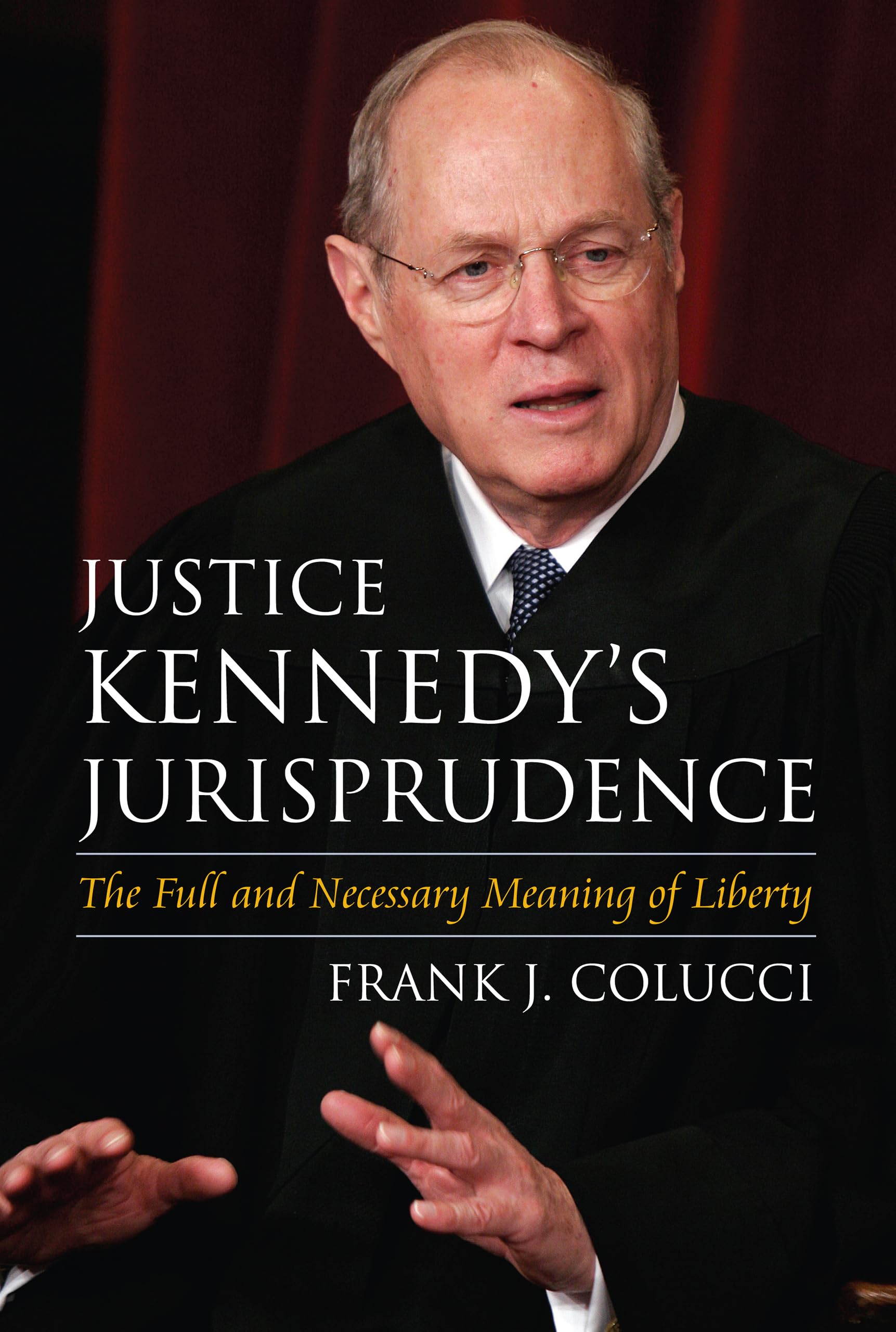
Title
Justice Kennedy's Jurisprudence: The Full and Necessary Meaning of Liberty,Used
Sold by Ergodebooks, an authorized reseller.
Returns accepted within 30 days | support@ergodebooks.com
Shipping Information
- Free Standard Shipping — United States only
- Processing Time: 3–5 business days
- Estimated Delivery: 6–10 business days after dispatch
- Double-boxed, fully insured & discreetly packaged
- Tracking number sent via email once dispatched
Returns & Refund
Returns accepted within 30 days of delivery.
Damaged or Defective Item
Free return shipping + replacement or full refund
Wrong Item Received
Free return shipping + replacement or full refund
Change of Mind
Return shipping at customer's expense · 25% restocking fee applies
Payment Option

To understand today's Supreme Court, it is essential to understand the judicial philosophy of its swing vote. For twenty years, Justice Anthony M. Kennedy has voted with the majority more than any of his colleagues. He has provided the deciding vote in cases involving politically charged issues such as affirmative action, the 2000 presidential election, religious expression, gay rights, and executive power to detain suspected terrorists. With a record reliably neither liberal nor conservative, Kennedy has generally been viewed as a capricious, indecisive moderate.Frank Colucci, however, argues that Kennedy indeed displays a coherent approach to constitutional interpretation. Colucci digs deep into the Justice's record, offering a close analysis of not only of Kennedy's opinions on the Court but also his prior opinions on the 9th Circuit Court of Appeals, his offthebench speeches delivered before becoming a Justice, and his testimony at confirmation hearings. Colucci identifies Kennedy's core belief: that judges have a duty to ensure the word liberty in the Constitution be given its full and necessary meaning.Colucci shows that Kennedy rejects theories of originalism and judicial restraint. Instead, Kennedy adopts a moral reading of the Constitutionsimilar to that championed by Ronald Dworkin and Randy Barnett as well as former Justice William J. Brennanin which liberty and human dignity trump even democracy.Depicting Kennedy as seeking an alternative to the perceived excesses of both the Warren Court and originalist overreaction, Colucci also compares Kennedy's rhetoric to Catholic teaching and shows him as struggling to disassociate his personal beliefs from his official duties. Separate chapters offer close readings of Kennedy's jurisprudence regarding abortion, free speech, equality, and government structure.Colucci's persuasive account offers readers a more nuanced understanding of Justice Kennedy's arguments about the nature of personal liberty and the proper role of courts in defining and enforcing it.
⚠️ WARNING (California Proposition 65):
This product may contain chemicals known to the State of California to cause cancer, birth defects, or other reproductive harm.
For more information, please visit www.P65Warnings.ca.gov.