
Title

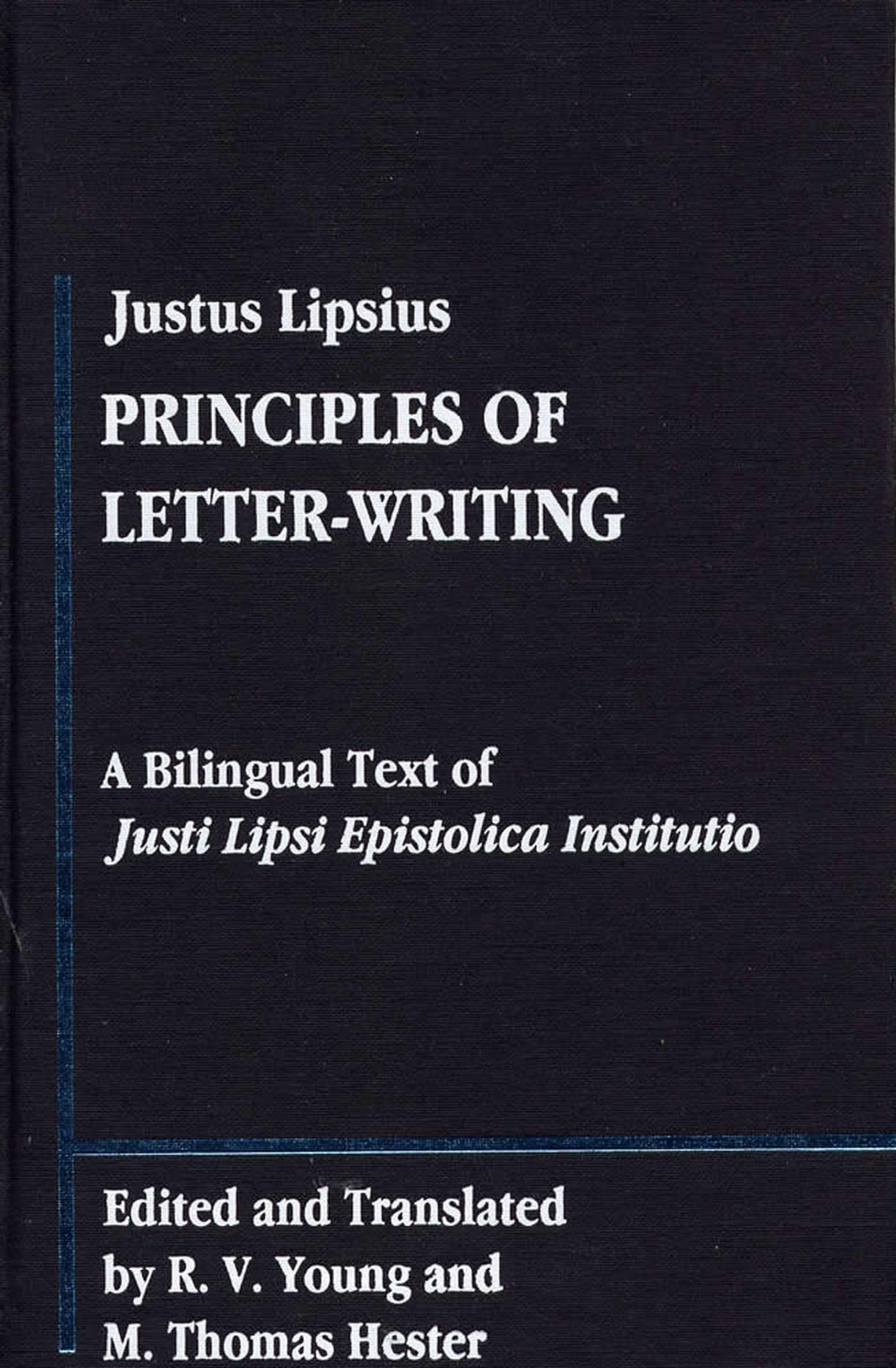
Justus Lipsius: Principles Of Letterwriting: A Bilingal Text Of Justi Lipsi Epistolica Institutio (Library Of Renaissance Human
Sold by Ergodebooks, an authorized reseller.
Returns accepted within 30 days | support@ergodebooks.com
Shipping Information
- Free Standard Shipping — United States only
- Processing Time: 3–5 business days
- Estimated Delivery: 6–10 business days after dispatch
- Double-boxed, fully insured & discreetly packaged
- Tracking number sent via email once dispatched
Returns & Refund
Returns accepted within 30 days of delivery.
Damaged or Defective Item
Free return shipping + replacement or full refund
Wrong Item Received
Free return shipping + replacement or full refund
Change of Mind
Return shipping at customer's expense · 25% restocking fee applies
Payment Option

As Part Of The Sixteenth Centurys Intellectual Triumvirate, Which Included Joseph Scaliger And Isaac Casaubon, Justus Lipsius Formulated A Humanist Scholarship Aimed Ultimately At Practical Application In Both Public And Personal Affairs.Justus Lipsius Distinguished Himself As A Student Of The Classics, First At The Jesuit College At Cologne And Then At The University In Leuven (Louvain). In 1569, Soon After Completing His Studies, He Published A Precocious Volume Of Varia Lectiones, A Collection Of Philological Observations On Classical Texts. This Initial Work Had Significant And Lasting Effects On His Career, The Most Immediate Being An Appointment As Latin Secretary To Cardinal Granvelle, Chief Minister Of Philip Ii In The Low Countries, Who Took The Young Man To Rome, Where He Was Introduced To International Power Politics As Well As To The Treasures Of Italian Libraries, Including The Vaticans. After Two Years In Rome, Lipsius Began His Uneasy Roaming, Traveling From Vienna To Jena To Cologne, Serving In A Variety Of Posts. In 1579, He Accepted A Position At Leiden University In Holland, Where He Found A Haven From His Home Province For Nearly Thirteen Years. It Was There That He Delivered The Lectures On Letterwriting That Later Became Epistolica Institutio. In 1591, When Leiden University Became Too Stridently Calvinist For Lipsius, He Returned To Leuven As Professor Of Latin And Was Once Again Reconciled With The Catholic Church. There He Remained For The Rest Of His Life, Resisting Numerous Appeals From Foreign Courts And Especially From Italian Churchmen.As A Particularly Suitable Commentator On The Letter, Lipsius, Like So Many Humanist Scholars, Was A Prolific Correspondent And Published Many Of His Own Letters. In The Manner Typical Of His Age, He Used The Published Letter As A Kind Of Forerunner To The Scholarly Article. Yet His Chief Distinction As An Epistolary Theorist Lies In His View Of The Letter As A Means Of Personal Expression. His Purpose Was To Recover The Classical Roman View Of The Letter As Written Conversation, A Conception Lost During The Middle Ages And Only Imperfectly Restored During The Earlier Renaissance. Hence, The Epistolica Institutio Assumes An Important Position In The Lipsius Canon: As An Effort To Restore The Authentic Features Of The Classical Genre, It Bespeaks The Humanist Scholar; In Marking Out A Space For Individual Selfdefinition During A Period Of Increasingly Powerful And Alienating Social And Religious Pressures, It Anticipates The Ideological Preoccupations Of The Contemporary World.
⚠️ WARNING (California Proposition 65):
This product may contain chemicals known to the State of California to cause cancer, birth defects, or other reproductive harm.
For more information, please visit www.P65Warnings.ca.gov.
- Q: How many pages does the book have? A: This book has one hundred thirty-six pages. It is a hardcover edition published by Southern Illinois University Press.
- Q: What are the dimensions of the book? A: The book measures five point five one inches in length, zero point six two inches in width, and eight point five inches in height.
- Q: What is the binding type of this book? A: The book is a hardcover edition. This type of binding offers durability and a classic appearance.
- Q: Who is the author of this book? A: The author of this book is Justus Lipsius. He was a prominent figure in Renaissance humanism.
- Q: What genre does this book belong to? A: This book belongs to the Classics genre. It focuses on humanist scholarship and letter-writing.
- Q: How do I read this book? A: You can read this book by simply opening it and following the text. It is suitable for anyone interested in Renaissance literature and epistolary theory.
- Q: Is this book appropriate for beginners in literature? A: Yes, this book is appropriate for beginners. It provides insights into classical letter-writing and humanist thought.
- Q: What themes are explored in this book? A: This book explores themes of personal expression, humanism, and the evolution of letter-writing. It reflects on the importance of written communication.
- Q: Can I use this book for academic purposes? A: Yes, this book can be used for academic purposes. It offers valuable insights for students and scholars of Renaissance literature.
- Q: How should I store this book? A: Store this book in a cool, dry place away from direct sunlight. This will help preserve its condition over time.
- Q: Can I clean the book if it gets dirty? A: No, it's not advisable to clean the book. Instead, keep it in a protective cover to avoid dirt and damage.
- Q: Is there a warranty for this book? A: No, there is typically no warranty for books. However, check with the retailer for their return policy.
- Q: What if the book arrives damaged? A: If the book arrives damaged, you should contact the seller immediately for a possible return or exchange.
- Q: Where can I buy this book? A: You can buy this book from various retailers, including online bookstores and local shops that specialize in classics.
- Q: Is this book available in other formats? A: No, this book is currently available only in hardcover format. There are no other editions listed.