
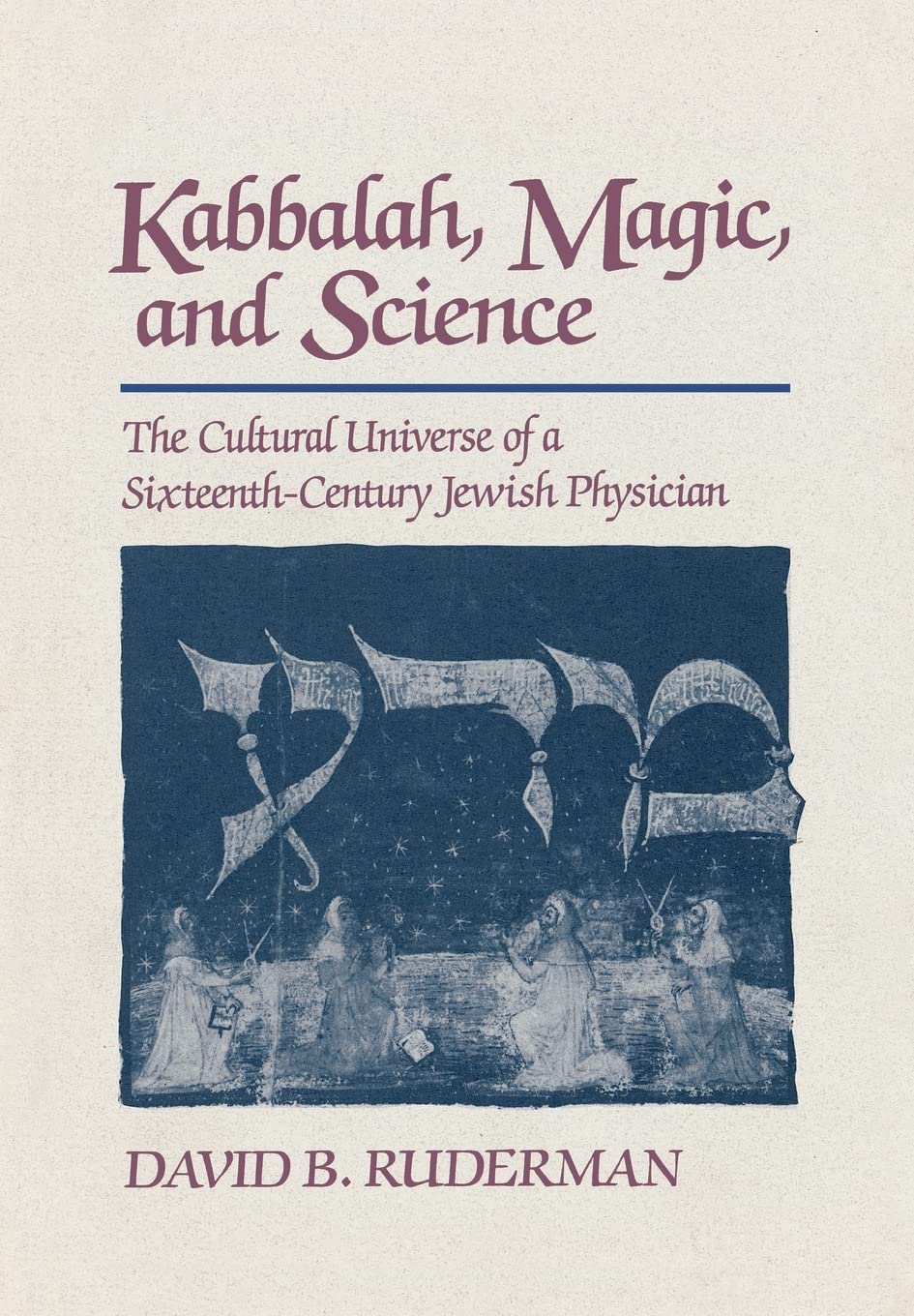
Title
Kabbalah, Magic and Science: The Cultural Universe of a SixteenthCentury Jewish Physician,Used
Sold by Ergodebooks, an authorized reseller.
Returns accepted within 30 days | support@ergodebooks.com
Shipping Information
- Free Standard Shipping — United States only
- Processing Time: 3–5 business days
- Estimated Delivery: 6–10 business days after dispatch
- Double-boxed, fully insured & discreetly packaged
- Tracking number sent via email once dispatched
Returns & Refund
Returns accepted within 30 days of delivery.
Damaged or Defective Item
Free return shipping + replacement or full refund
Wrong Item Received
Free return shipping + replacement or full refund
Change of Mind
Return shipping at customer's expense · 25% restocking fee applies
Payment Option

In describing the career of Abraham Yagel, a Jewish physician, kabbalist, and naturalist who lived in northern Italy from 1553 to about 1623, David Ruderman observes the remarkable interplay between early modern scientific thought and religious and occult traditions from a wholly new perspective: that of Jewish intellectual life.Whether he was writing about astronomical discoveries, demons, marvelous creatures and prodigies of nature, the uses of magic, or reincarnation, Yagel made a consistent effort to integrate empirical study of nature with kabbalistic and rabbinic learning. Yagel's several interests were united in his belief in the interconnectedness of all thinga belief, shared by many Renaissance thinkers, that turns natural phenomena into signatures of the divine unity of all things. Ruderman argues that Yagel and his coreligionists were predisposed to this prevalent view because of occult strains in traditional Jewish thought He also suggests that underlying Yagel's passion for integrating and correlating all knowledge was a powerful psychological need to gain cultural respect and acceptance for himself and for his entire community, especially in a period of increased antiSemitic agitation in Italy.Yagel proposed a bold new agenda for Jewish culture that underscored the religious value of the study of nature, reformulated kabbalist traditions in the language of scientific discourse so as to promote them as the highest form of human knowledge, and advocated the legitimate role of the magical arts as the ultimate expression of human creativity in Judaism. This portrait of Yagel and his intellectual world will well serve all students of late Renaissance and early modern Europe.
⚠️ WARNING (California Proposition 65):
This product may contain chemicals known to the State of California to cause cancer, birth defects, or other reproductive harm.
For more information, please visit www.P65Warnings.ca.gov.