
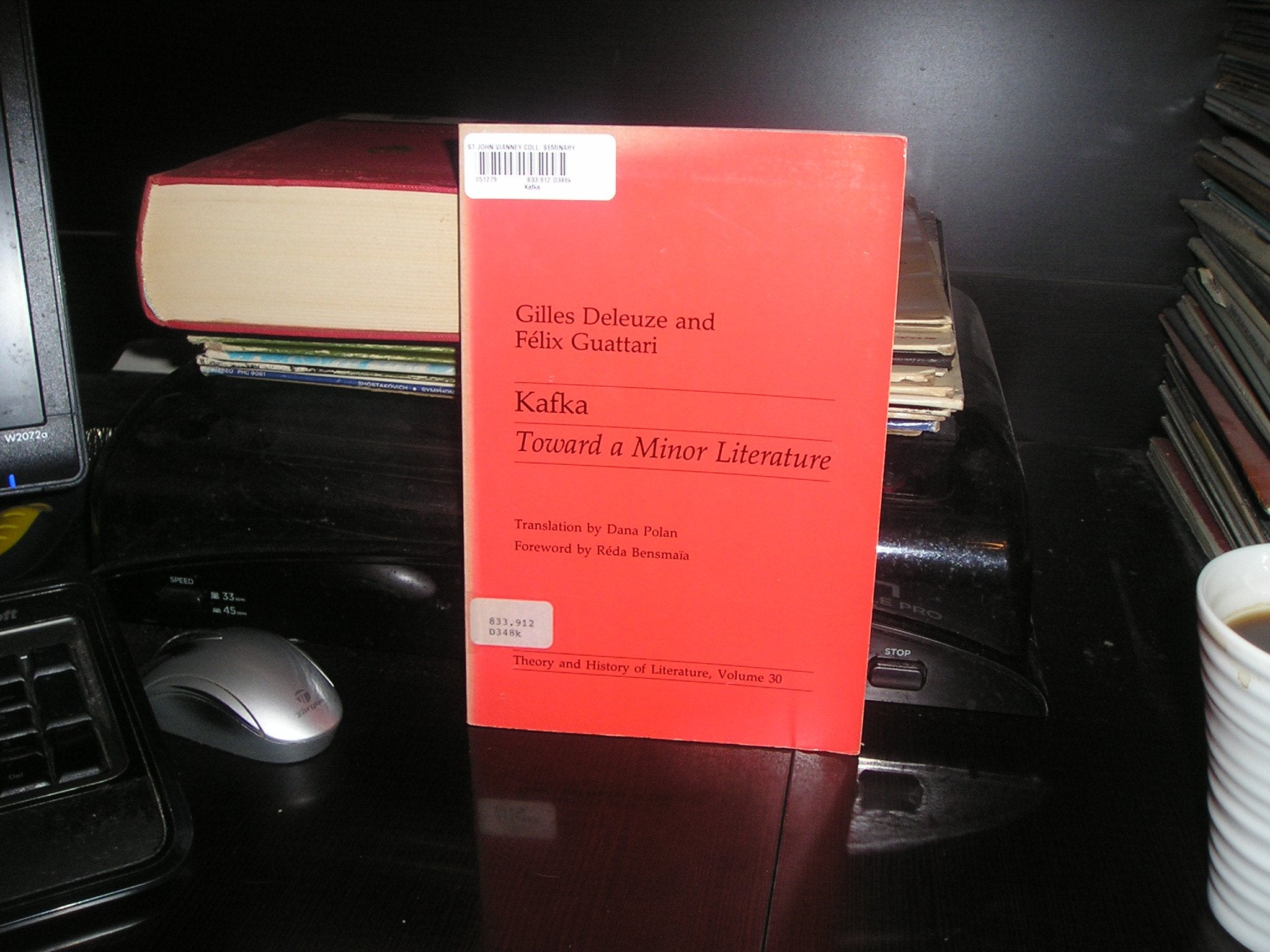
Kafka: Toward A Minor Literature (Volume 30) (Theory And History Of Literature),New
$33.32
Title
Kafka: Toward A Minor Literature (Volume 30) (Theory And History Of Literature),New
Free Standard Shipping Across USA
Quantity
Sold by Ergodebooks, an authorized reseller.
Returns accepted within 30 days | support@ergodebooks.com
Shipping Information
- Free Standard Shipping — United States only
- Processing Time: 3–5 business days
- Estimated Delivery: 6–10 business days after dispatch
- Double-boxed, fully insured & discreetly packaged
- Tracking number sent via email once dispatched
Returns & Refund
Returns accepted within 30 days of delivery.
Damaged or Defective Item
Free return shipping + replacement or full refund
Wrong Item Received
Free return shipping + replacement or full refund
Change of Mind
Return shipping at customer's expense · 25% restocking fee applies
All returns require a Return Authorization (RA) number before sending.
View Full Return & Refund Policy
Payment Option

Kafka: Toward A Minor Literature (Volume 30) (Theory And History Of Literature)
⚠️ WARNING (California Proposition 65):
This product may contain chemicals known to the State of California to cause cancer, birth defects, or other reproductive harm.
For more information, please visit www.P65Warnings.ca.gov.
- Q: What is the page count of this book? A: This book has one hundred thirty-six pages. It provides an in-depth analysis of Kafka's work and the concept of minor literature.
- Q: What are the dimensions of this book? A: The book measures five point eight eight inches in length, zero point three nine inches in width, and nine point zero two inches in height. These dimensions make it a portable paperback.
- Q: Who is the author of this book? A: The author of this book is Gilles Deleuze. He is well-known for his contributions to philosophy and literary theory.
- Q: What genre does this book belong to? A: This book falls under the category of Criticism and Theory. It explores literary analysis and critical thought.
- Q: What is the binding type of this book? A: This book is available in paperback binding. This makes it lightweight and flexible for reading.
- Q: How do I read and understand this book? A: To read this book, approach it with an interest in literary theory and criticism. It's suitable for readers with a background in literature or philosophy.
- Q: Is this book suitable for beginners in literary theory? A: Yes, this book can be suitable for beginners, but some familiarity with literary concepts may enhance understanding. It presents complex ideas about Kafka's work.
- Q: What themes are explored in this book? A: The book explores themes of subversion in language and culture, particularly through Kafka’s use of German. It emphasizes how language can be a site of resistance.
- Q: How should I care for this paperback book? A: To care for this book, keep it in a dry place and avoid exposing it to direct sunlight. This will help preserve its condition.
- Q: Is this book safe for children? A: No, this book is primarily aimed at adults and may not be suitable for children due to its complex themes and critical analysis.
- Q: How do I store this book to keep it in good condition? A: Store this book upright on a shelf away from moisture and extreme temperatures. This will protect it from damage and wear.
- Q: Can I return this book if I'm not satisfied? A: Yes, most retailers offer a return policy for unsatisfied customers. Be sure to check the specific return conditions.
- Q: What if the book arrives damaged? A: If the book arrives damaged, contact the retailer's customer service for options on returns or exchanges. They typically provide support for such issues.
- Q: How does this book compare to other works on Kafka? A: This book offers a unique perspective on Kafka by introducing the concept of minor literature, which may not be covered in other works. It provides a fresh analytical lens.
- Q: Is this book well-reviewed by scholars? A: Yes, this book is highly regarded in literary circles for its innovative ideas and critical insights into Kafka's work. Many scholars praise its depth and originality.
- Q: What makes this book a classic of critical thought? A: This book is considered a classic because it challenges conventional interpretations and presents groundbreaking ideas about literature and language. Its influence is significant in literary theory.